Episode Transcript
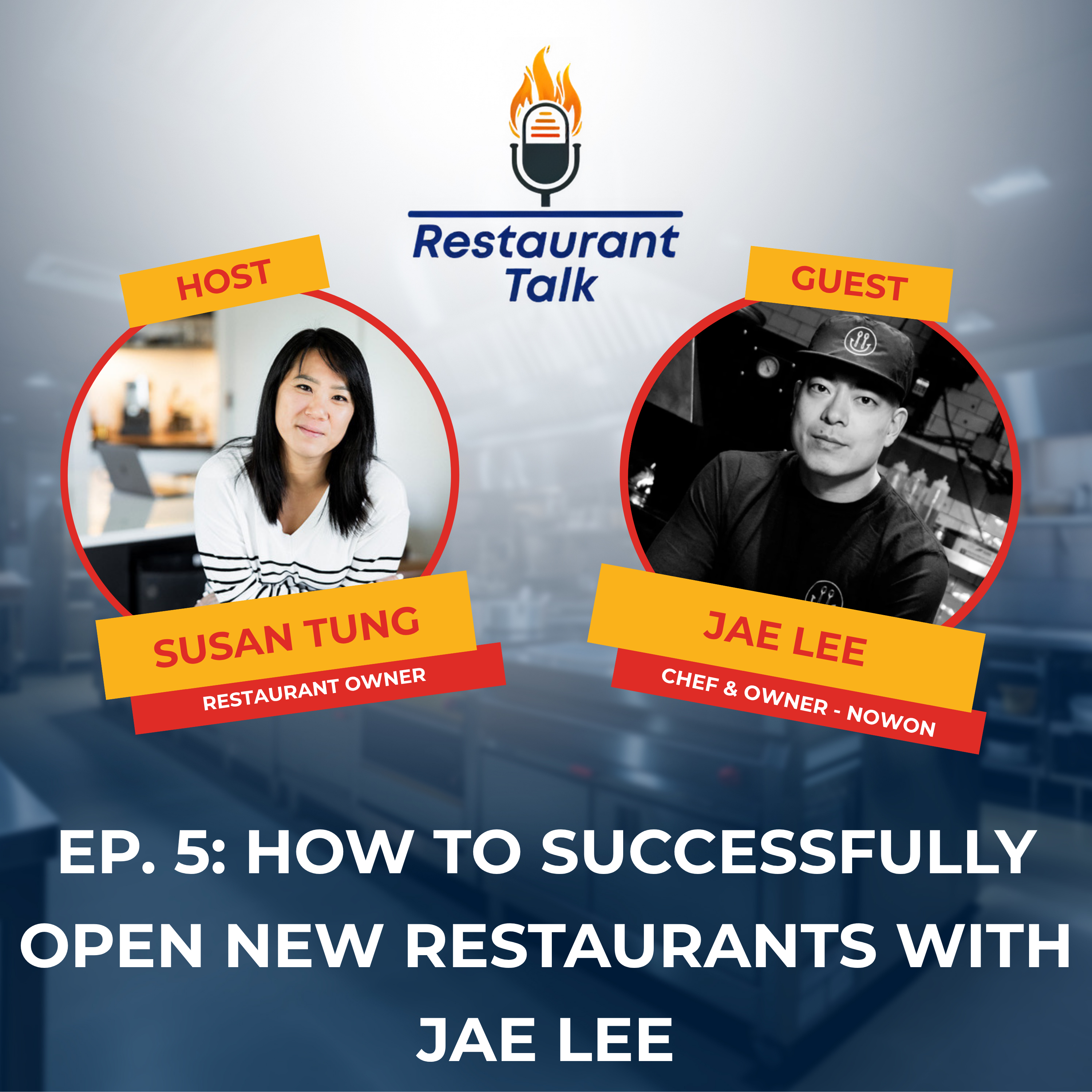
[00:00:03] Speaker A: Hey, guys. Welcome to Restaurant Talk, the podcast where we get real about the wins, the struggles, and everything in between when it comes to running a restaurant. I'm your host, Susan Tung, restaurant owner, industry advocate, and someone who's been in the trenches just like you.
This show is all about honest conversations that help you work smarter, not harder.
We'll dive into stories from operators, share practical tips, and explore tools that can make your restaurant more profitable and sustainable.
Restaurant Talk is proudly produced by Save Fry Oil, the team behind Frylo, a game changing Japanese ceramic technology that helps you cut your oil use by up to 50%, can fry at lower temperatures and plate lighter, crispier food, all without extra labor or complicated equipment.
If you're tired of wasting time, money, or oil, you are in the right place. Let's get into it. So today I'm here with Jay from no.
[00:01:04] Speaker B: 1.
[00:01:04] Speaker A: Hi, Jay. How are you?
[00:01:05] Speaker B: Good, how are you?
[00:01:07] Speaker A: I'm good. I'm super excited to chat with you one on one and learn more about your business and kind of what's going on. So you're based out of New York, right?
[00:01:19] Speaker B: Yeah, New York City.
[00:01:20] Speaker A: New York City, right in the heart of everything.
[00:01:23] Speaker B: That's right.
[00:01:24] Speaker A: Amazing. Tell us a little bit about the business.
[00:01:27] Speaker B: So I own a concept called no. 1.
It's the name of my hometown in Seoul, South Korea.
Korean American restaurant.
We basically do Korean takes or we add Korean flavors to American classics like, like burgers, fried chicken, things like that.
I currently have three locations.
First location's in East Village, Manhattan. Second one was in Bushwick, Brooklyn, and third is now in Boston Seaport.
So it's been a fun ride so far.
[00:02:04] Speaker A: When did you start the original location?
[00:02:06] Speaker B: I started the first one. I opened three months, three and a half months before COVID in New York City.
[00:02:13] Speaker A: Okay. So like myself, you kind of started off, you know, just before everything got really crazy. And now you have three locations. So that's such a huge success story. And, you know, a lot of restaurants were closing, but you're over here just opening more up.
What was the. What. What do you feel like contributed to your success of being able to expand?
[00:02:39] Speaker B: Well, I'm a. I'm a chef by trade, so I've been cooking in kitchens since 2007.
And my dream for all line cooks, I'm sure it's the same for every line cook in the world. Your dream is to open up your own restaurant.
And when I opened my first restaurant.
Now what? Now I need another goal to keep me going because I found myself in a state of complacency Got a little comfortable.
Like I thought I was, I was the man, you know what I mean? And I was like, what am I doing? Like, I can't get comfortable. I can't get complacent. I need to chase after challenges.
So then I decided to hire a manager or promote. Promote someone from within.
That way I can.
I don't. I'm not the person running the business day to day.
And once I saw that and I was able to see the restaurant kind of sustain itself, then I said, okay, let me go out and start looking for a second restaurant. But the true moment for me was when I went on my first vacation with my fiance, my wife, who was my, you know, we were engaged. Then we went to Jamaica, Jamaica on like a, like a seven day resort vacation. First one ever.
And I said, if I don't get any emails, I don't get any messages, and I come back and the restaurant didn't burn down. I'm gonna go out and start looking for a second rest, second location. And that's exactly what I did.
[00:04:15] Speaker A: That's amazing. So then, so first one, kind of just before COVID What was the timeline for the second one?
[00:04:21] Speaker B: Second one I opened two years ago, so 2023. So four.
I would say three. It took three and a half years or so to open up a second one.
[00:04:32] Speaker A: And then third location was pretty recently, I think I saw from Instagram.
[00:04:36] Speaker B: Yeah, third location. We opened April this year. So three months ago.
[00:04:40] Speaker A: Okay, so that, that, that timeline is starting to like shrink a little bit. So, you know, maybe a fourth location in like a year now.
[00:04:48] Speaker B: Maybe. Yeah.
[00:04:51] Speaker A: So the concept based on what you've kind of described is it is the concept that revolved around yourself. Can you tell me a little bit about what was the inspiration there?
[00:05:02] Speaker B: Yeah. So, you know, I'm Korean and I'm also an immigrant, so I moved to the. I moved to New York when I was 8 years old.
So I grew up eating Korean food, and that was my comfort food. But once I discovered food in New York City, you know, it's a melting pot. And when I had the chance to create my own concept from my restaurant, I thought to myself, and I've never worked in a Korean restaurant in my life. It was always like French, American, Italian American, Japanese, you know, things like that. But I said, you know, I have to cook something. That's true to me. And although I've never worked in a Korean restaurant, I know Korean flavors. And I felt at the time that like, the middle tier Korean concepts like there's high end Korean restaurants, Michelin star tasting menus, where there's like the hole in the wall, like traditional restaurants. But what about in between?
I saw this void and I'm like, man, there's an opportunity there.
That's what I wanted to do. So that's exactly what I did. Something that was approachable, creative, fun, playful, that bridged the gap. New York and Korea, the way I see it.
And I thought it was a fun concept.
And it's not like a.
We tap into nostalgia. That's my thing. So we play hip hop from, you know, late 90s, early 2000s.
It's dimly lit.
You know, I want to capture a moment for everyone that comes in. They experience no one. They're like, wow, you don't have to be Korean, but you. You'll resonate with some part of the restaurant.
[00:06:46] Speaker A: Yeah, that's awesome. Can you describe a few menu items? Like, what are we talking here? When we talk, you know, we're blending flavors together. And.
[00:06:56] Speaker B: I'll give you a few. First one or the best example would be our chopped cheese rice cakes. So we make tteokbokki, which is a Korean street food, but I flavor it like a chopped cheese sandwich from New York City, from Harlem.
So for me, it was like street food in Korea to me was like tteokbokki or rice cake served in this sweet and spicy red sauce that's literally sold in the street. So that's our street food. But I wanted to present it in a way where the flavors were, I guess, flavors for people that taste it. It tastes like home, tastes like New York City, but the texture of it is so different. Like rice cakes. What the heck is this rice cake? Isn't cake supposed to be sweet? No, it's like a gnocchi. You know, it's chewy, it's crispy on the outside, it's chewy, it's fun, and it's gluten free.
So that's one example. Another example is we're known for our burgers. We do a double smash burger, but we add roasted kids kimchi in it, homemade with kimchi special sauce. And we've won a lot of like, burger competitions with this burger.
[00:08:07] Speaker A: Well, that's so awesome. Yeah, no doubt. I mean, like, Korean flavors are top tier and everyone loves a burger. So it's like you're taking winning aspects of different cultures and, you know, marrying them together.
Would you say a lot of your menu is spicy?
[00:08:28] Speaker B: I can't even eat spicy food. My food, I would say, is like.
[00:08:32] Speaker A: What kind of Korean are you?
[00:08:34] Speaker B: Yeah, more American now, it seems like.
Yeah, it's not that spicy. No, it's like, it's spiced, but it's not spicy.
[00:08:43] Speaker A: Okay, cool. Yeah. Because you mentioned approachable, so I was kind of curious about.
Yeah. That. That spice element often, like. So I have a Vietnamese restaurant, and when people come in that I've never been here before, they're like, that's the first thing they assume is everything spicy? It's like, literally nothing is spicy unless you ask for it to be.
So that's a very common misconception in where you grew up. Were you kind of, like, the only Asian kid? What was that like?
[00:09:08] Speaker B: Yeah, I was. I was probably one of the two Asian kids. When I first moved to New York, I moved to Jamaica, Queens, which was, like, mostly African American, Indian. Indian American.
And I was in third grade. I remember this.
And I don't speak English. I just moved here.
My teacher, her name is Mrs. Black, but she's a brunette. But I thought black people were black. Right. But her name is Mrs. Black. So I'm so confused as a kid, and I don't speak English, and my teacher wanted me to talk to another student or have someone translate for me or translate to me.
So she brought another student, a girl one grade above me. She came up to me, and she started speaking to me in Mandarin. And I had no idea what was going on, so I just stood there, like, saying in silence.
And I don't even know if Mrs. Black knew that I didn't speak that language. I don't know. Maybe she thought that I was just, like, you know, not.
[00:10:08] Speaker A: They're all the same.
[00:10:09] Speaker B: Yeah. Like, I just don't. I don't want to talk to anybody, you know, I don't know.
So that's amazing.
[00:10:15] Speaker A: They're like. Maybe they thought you were just, like, deaf.
[00:10:17] Speaker B: Yeah.
[00:10:18] Speaker A: Seriously, he can't hear.
[00:10:19] Speaker B: Yeah. So it was. It was a culture shock, you know, because I came in Korea. I was.
I was the vice president of my class. Like, I was actually pretty popular to now in Jamaica, Queens. I have no friends. I don't speak the language. I'm just trying to fit in or find a way to fit in.
[00:10:39] Speaker A: And how did food.
Did you. Did you find that you had, like, any lunchbox trauma? Did you ever have any of those kind of issues?
[00:10:49] Speaker B: I didn't. Well, I didn't pack any. I didn't pack any food to school.
I just remember, like, eating school lunches, you know, like, eating sloppy joe for the first time. With, like, a carton of, like, chocolate milk, that kind of thing.
Yeah. I mean, no trauma there.
[00:11:07] Speaker A: That's good. I. I will admit I actually didn't have a PB&J sandwich till I was, like, 18.
[00:11:12] Speaker B: Oh, my gosh.
Yeah.
[00:11:14] Speaker A: Well, like, you know, did you like it when you're. No.
[00:11:17] Speaker B: Yeah.
[00:11:18] Speaker A: No, it's.
[00:11:18] Speaker B: You're probably. What is this?
[00:11:20] Speaker A: Yeah, like, you know, my parents would normally send me with, like, a thermos with, like, rice and, like, Chinese sausage and, like, that kind of stuff. So then my classmates are eating, like, processed cheese sandwiches with, like, ham, and I'm like, I don't know. That doesn't look very good.
[00:11:35] Speaker B: Yeah.
[00:11:37] Speaker A: So back to the restaurant. Like, what would you say is kind of like, your biggest challenge right now?
[00:11:44] Speaker B: The biggest challenge right now is I've never operated two restaurants ever in my life. This is the first time. Right. So just trying to see how I can operate it. Lean and mean.
Lean and mean. That's. That's the game right now. Because we're also down year over year, our revenues down across the board. I think most restaurants are going through this and.
And outdoor dining is.
We've lost four months out of the season for outdoor dining because a new out dining out program launched this year, so we couldn't have outdoor dining from late November to early April. So we lost four months of revenue for outdoor seating the previous. The past two, three years, we were able to have outdoor structure, like, year round. And even when it was winter, we kind of enclosed it with some heaters so we were able to see guests out there. But not this year. So we lost seating, we lost revenue. People are spending less. People are coming out less. So now I gotta operate. In a way. It's a business at the end, right? You're not doing this just to, like, pass time like you're trying to. You try to make money. You have to profit.
So I'm figuring out how I can step in.
Right now. I'm in this transitional phase. I'm like, all right. Because I wasn't in the business in a long time, in probably. Probably like three, three plus years, I would pop in for meetings and stuff like that. But I never, like, expoed or, you know, things like that.
What kind of Asian am I? That's pretty bad, right? I think. I think all my family members like, what are you doing? Right.
[00:13:32] Speaker A: So don't you have to work?
[00:13:35] Speaker B: Yeah.
But now my executive chef, who I just promoted, had to. He quit last week because he had a family issue, so he had to leave he had to just leave. All of a sudden, I'm like, I can't hide. I'm not gonna hire someone, like, desperately. I'm just gonna fill in the role, and I'm gonna kind of assess the situation where that's at. And no one knows the food better than I do. No one knows the kitchen's better than I do. No one knows what. What I want better than I do. So, you know, I'm stepping in more. Last week, like, I went. I went into the room, restaurant, expo, a couple of days, like, till late at night. And the team. The team that I have in the kitchen, most of them don't even, you know, they know of me. They, you know, we've said hello to each other, but they never work with me. So I think it's great. Like, they're understanding. Like, you know, I'm tweaking things on the fly, and, you know, there's. There's no checks and balances. It's like, all right, let's just change it right now. That's what we're doing, you know, so it's great.
So the challenge is how can I continue to push forward, work lean and mean without overworking myself, keeping the morale high amongst all the team members and add and increase our bottom line? That's the challenge.
[00:14:50] Speaker A: Yeah.
Yeah, for sure. I mean, with the US there's so much going on, right? Because I'm in Canada. Like, you know, we're watching from up here, and it seems like every week there's a new headline about some policy or, you know, I. With, like, all the things you're hearing about ICE right now, and, you know, let's be. Let's be real. Kitchens are fueled by immigrant labor.
Right. So do you have any concerns with kind of the political climate as well?
[00:15:21] Speaker B: I do, I do. And, you know, most of my staff is. Are immigrants, right? Most of them are. And, you know, it's my job to keep. Keep people employed, give them enough. Enough hours, you know, make sure that they're happy and they're, you know, coming into work content, they're able to walk away with a paycheck that they're happy with. Right.
So I'm focused a lot on the things that I could control, because a lot of these things, like, a lot of them's out of our hands. It's really.
It's things we can control, and, you know, the whole tariff situation, too. There's a local news reporter that reached out to me.
He's like, chef J, can I talk to you tomorrow? I'M talking to a lot of, like, you know, chef restaurant, chef owners, Chef chef operators in New York City, and everyone's, like, stocking up on sriracha. Like, stocking up on whatever, whatever. Can I interview you to see what you're doing, what measures you're taking? And I'm like, I'm not taking any measures. I'm just. What am I. You know what we're gonna.
I said, we went through Covid.
If we went. If I went through Covid, and I have three restaurants right now, we're gonna be okay. Like, no matter what comes, it's. You can't freak out. You gotta just make the best decisions. Don't. Don't react. Respond, but don't react and be. And make calm, cool, collective decisions.
So, yeah, that's my. That's my take on it right now.
[00:17:02] Speaker A: I don't think panic buying has ever really helped anyone, because at the end of the day, right, like, what are you gonna do? Have shipping containers full of sriracha in your backyard? Like, that doesn't. It's not a solution. Right.
And I. I totally agree with you. Having grown my business through Covid, it's like, for restaurant owners, this is just another. It's another challenge. It's another hoop we have to jump through.
[00:17:24] Speaker B: That's it.
[00:17:26] Speaker A: Something you said that really stood out to me was you want people to take home a paycheck they're happy with.
As someone that comes from the back of house. Right. You understand the inequities and the challenges there.
Can you tell me a little bit about your philosophy on, you know, what do you do differently with your back of house? Or how do you make sure you kind of take care of your people.
[00:17:52] Speaker B: Beyond that, you know, taking care of the people means you got to take care of the business first. Right.
And my managers and I, we clash a lot on this, but I strongly, strongly believe this is. This is my main principle.
Not every people that's on your team are a players.
Maybe skilled, wise. Skills wise. Like, sure, they're not a players, but I'm even talking about mentally. Are they in it? Do they really. Are they really committed to the restaurant? Not everyone's equal. Some people are just in just to get a paycheck. Right? Sure. Some people are going to be like that. Let's say a business is slowing down a little bit. Bit, and you have to, you know, shave some hours off people. Who are you gonna make. Who are you gonna shave hours from?
To me, my A players, the people that always show up, always on time, rarely call out.
When I call them, when. When we're in a desperate need, they come, they say yes.
They're, you know, if we're extra busy, they don't mind staying a little longer.
It's those players that I want to make sure that maintain all their hours and everyone else, their hours are gonna get shaped a little bit. I want my main team, main. Main team members that are committed to get what they need to keep them happy. That's my take. That's fair. That's fair to them. You know, and even. Even for front of the house, it's the same thing. If. If there are some team members that. And, you know, some managers, their thought is, I'm gonna cut four hours from everyone.
How is that fair? How is that fair to the people that are working extra hard and you're cutting their hours and the people that are working, they're lazy, Then you're gonna cut their hours exactly the same. You're gonna lose the good people. You gotta keep good people happy. You need us. All you need is a couple of great people, and that'll. And they're gonna help you succeed.
So.
[00:19:49] Speaker A: Yeah. So I guess that's interesting that you and your managers, like, have that different perspective.
What do you do to make sure that everyone's on the same page with, like. So, sorry, let me. Before we get into that, how big is your management team right now?
[00:20:00] Speaker B: Right now I have, amongst the three restaurants, Probably like, eight or nine managers. Yeah.
[00:20:13] Speaker A: So what do you do to kind of make sure everyone stays on the same page and is, you know, in line with how you. You operate and what your beliefs are?
[00:20:23] Speaker B: Well, we have management meetings every. Every week. And I say my piece.
I don't like to. You know, what I learned is you have to be, you know, you have to be direct. Don't beat around the bush.
But also, I give my managers, I'll let them try what they really think is what. What they really believe in.
And they're. And they're gonna realize it happens. Often.
I tell. I tell them, hey, this is my philosophy.
I've gone through what you're going through, and this is my advice to you.
And they're like, yeah, but, you know, also managers. Most managers are very stubborn, right? It takes. It takes a special kind of grit and, like, stubbornness to do this job right. Because it's not an easy job.
So I understand that. So I tell them, okay, you can try it. But it's my job to also tell you what my thoughts are. Right.
Half a Year, half a year or one year later, they go, all right, it didn't work. Like, it's okay. You know, you tried, and I had to learn the hard way too. So I think you need to have some sort of, like, grace as well. Right?
Like, people. Managers need to be able to think for themselves too. If they only listen to what you say, they're just, like, they're. They're just followers. They have to be leaders. So you have to let them kind of do their own thing as well. As long as, you know, it's not breaking labor laws or, you know, the core things. Right. That's really important. And just give them some grace when they. When they fall.
[00:21:56] Speaker A: Yeah. That's awesome. I think that's so important, especially, you know, I'm sure you have some very specific instances that this happened.
[00:22:04] Speaker B: Right?
[00:22:04] Speaker A: But at the end of the day, as long as you have managers that, like, own up to it or are willing to see the light at the end, I think that's, like, the most important, right. That there was an actual.
We use this as a learning moment and not just a like, oh, great, now this is just, we wasted money, and now we're gonna do this all over again. But as long as they learn something from it.
[00:22:24] Speaker B: Yeah.
[00:22:25] Speaker A: Then we're gonna be okay on the other side. Right.
So how do you. How do your managers feel about having to run a little bit more lean and adapt to the situation? Right now.
[00:22:39] Speaker B: For the most part, it's great.
And my chefs are so happy to see me back in action. Like, they feel like they have way more clarity now, which is good, because, you know, when it's always, like, kitchen workers in, you know, in the trenches, it's in the kitchen. We can talk about plating all we want, but until you see me do it, until I tell you exactly in that moment, you know, let's change this. This is how I want it. You're not going to understand until. Or understand fully unless I show it to you in person in the kitchen. So the kitchen morale is very high. I just.
We're. We're replacing our director of ops with another. With. With a new hire, which is my cousin, and he has tons of foh. Restaurant experience, and he started last week. So the energy, like, right now, like, we're riding this momentum. Like, a lot of things are getting done, a lot of small changes that's, like, adding up to, like, a big change.
[00:23:39] Speaker A: Ooh. So there's a. Now there's a family dynamic kind of being inserted. And is he the first family Member to get involved.
[00:23:44] Speaker B: Yeah, he actually helped me reopen during COVID just him and I. So he. He knows the rest. He knows we worked together in the past before.
[00:23:52] Speaker A: Okay. Any concerns about, you know, that family dynamic?
[00:23:58] Speaker B: Yeah, definitely. Definitely. I mean, we. We've, like, we're best friends, and we. We talked about.
I've always done kitchen work. He's always done front of the house work. We, you know, we grew separately. And, you know, he's his. He's managing restaurants, I'm managing kitchens, and I opened up multiple restaurants. And he was a manager, managing partner at a restaurant. But that never really took off.
And he realized, like, it's not just operation that matters because he's an operation expert.
You know, finding ways to generate revenue, events, building a team. Like, his skill set is very important. But he thought that that alone could take. Save a failing concept.
But he realized after almost five years of being in that restaurant that it's. It's in the same place. Like, it hasn't made any. Made any improve, made any differences.
So he believes so much in. In my concept that he wants to help it grow. So. And working with family is very tough.
It's scary. It's scary because you don't want to ruin family relationships over. Over business. You know, business is like, business could fail, right? Like, but family is, like, forever. You're. You're bound by blood.
So I'm really concerned.
But.
But it's also, like, it takes a special kind of, like, I guess, relationship because he knows me very well, and I know him very well, and I told him, look, man, like, you know, you coming in to help me out, I'm very grateful and I'm so thankful.
And if you ever feel, at any type of. At any moment you feel like this is not for you, just let me know. No problem. You know, like, we're gonna be cousins at the end of the day. We're family at the end of the day.
[00:25:56] Speaker A: So you.
You seem. And you mentioned that you were. You're pretty straightforward, right? Like, that's how you describe yourself.
Where do you get that from?
It seems to be really, like, helpful for you as a business owner. Like, you know, you're very clear with how you articulate things, and you're very confident.
I. I think that's very unique about you, and that's part of kind of your. Your.
Your brand. You're very confident.
Where. Yeah, where do you think that comes from?
[00:26:29] Speaker B: I don't know if I'm super confident. Of course I have my doubts and moments of like, you know, when I'm doubting myself. But I think being straightforward is you owe it to the other person. Right. You want to.
You want to be fish. Like, I'm like, I don't want to beat around a bush to, like, tell you something that I know you need to hear. That would be helpful to you, and it'll be helpful to me. Me.
Like, we. We don't have to. To me, it's like, we don't have to drag this on and go through loops and, you know, whatever, whatever. Just to, like, kind of get to this point. But then it might be a little unclear then. It did. Nobody. It's a disservice to you and to me.
So obviously, you know, I don't say it bluntly, but I'll just say it how it is and in a nice way. You know, still being. Being. Being kind.
Yeah. It just comes from, like, wanting to respect the other person's time. And a lot of people overthink, too, right? I think with me, people don't have to overthink. Like, I tell my team all the time, I'll never tell you something passive aggressively. I'll just tell you if I don't like it or I like it, and if I like it, I'm gonna tell you straight up. So it's helpful because the mental. The mental health is important for. For all of us. Right. And I think we've all worked in restaurants where. With owners, general managers, or chefs, they're not really. They're. They're not really telling you anything, but they're. But now you're overthinking if. If you're like, wait, did I do that? Did I do something wrong? Or whatever, Whatever. You know, it's like too much of this mind, like, mind game. It's not.
[00:28:04] Speaker A: Is there. Is there an instance in your. In your past that this kind of relates to. Have you ever been the. On the reciprocating end of that?
[00:28:18] Speaker B: No. I mean, I can't think of it one specific moment, but I think it's a pretty common. Common thing.
[00:28:25] Speaker A: Yeah. Well, the mental health issue in kitchens, like, it's. It's huge, right? I. I don't know. Do you see it? I definitely see it in my own kitchens. Right. You're dealing with young people, and they're going through a lot of mental health issues, and they're trying to balance work. You know, they want to do a good job, but at the same time, they have their own demons. And.
And Back of House also does have, you know, a stereotype of, like, abuse in certain areas. Right. Whether it's drugs, alcohol.
[00:28:54] Speaker B: Yeah.
[00:28:55] Speaker A: Do you. Do you find that you have to deal with that a bit in your business?
[00:28:59] Speaker B: I mean, I think everyone will.
Yeah. It's a stressful job, you know, working in the kitchen or working in a restaurant, working late hours, it's hectic, busy, it's hot. You know, we're working with knives and pressure all the time.
Yeah. I mean, I've dealt with it for a very long time.
And strangely enough, I am in a very great mental health state once I became a business owner, because that's when I realized I have to make. Make some big sacrifices if I want to make it, make it in this industry, the lifespan is short.
Chefs, if you want to work as an executive chef, you can't be on your feet when you're 60 years old, like, for 14 hours, 16 hours a day.
You're going to burn out.
You can't work on the line when you're 55 years old. Maybe you can, but do you really want to? That's the question. Right?
Restaurants, average life is not very long. Right. Like, you open up a new concept.
The success rate in New York City or anywhere else in the world, it's not super high.
So if you want to make it far, you need to have an advantage over your peers, but also if you need to take care of yourself physically and mentally. So you have longevity in this industry because most of us are in it because we truly love food and hospitality. So if you want to do it, then you have to make some sacrifices, because eating whatever you want, drinking whatever you want, sleeping so little, going out, partying, that's not helping your longevity. That's detrimental to your health.
And so, I mean, a lot of people that know me know this. I'm completely sober for almost five, five years now.
[00:30:49] Speaker A: Wow, Congrats.
[00:30:50] Speaker B: Yeah, thank you. January be five years, because I used to drink a lot because I'm Korean and a chef, that's a double whammy. Like, horrible. So I would drink every day, like to the point where I wouldn't even get drunk from like seven shots, couple beers, like it was nothing. Like, it just did nothing. And then I'll be like, oh, I'm gonna eat a. I'm gonna go eat a burrito and then, you know, go to sleep, like 30 minutes later. That's not good for you.
So, yeah, it's gotta take you.
[00:31:16] Speaker A: And I follow your. Your Instagram. So I know you talk a lot about, like, self development stuff.
What was like, the Tipping point for you.
[00:31:25] Speaker B: Oh, the tipping point was during COVID I got so mad at my staff.
We had this curfew. We couldn't serve alcohol past, like, 10:00pm or something.
[00:31:36] Speaker A: Yeah, okay. Yeah.
[00:31:38] Speaker B: And my. And my staff served the pitcher of beer at, like, 10:05.
And I'm like, what are you doing? Like, I was so upset, so I just, like, I yelled, I cursed, and then I walked. I was walking home after that. I was so embarrassed. I was like, what am I doing?
I'm like, what am I doing? Like, I was given this amazing opportunity to be a restaurant owner, which was my. Which was my biggest dream as a cook.
Now that I've achieved my dream, now I'm yelling at staff because they're serving beer during COVID Like, they're here working hard with me.
Like, I'm not the only one that's working. They're working hard, too. And I'm. And I'm yelling at them as if, like, they're here to, like, sabotage me kind of thing.
So I went home that night. It was December. I was like, you know what?
I'm gonna close my restaurant for January.
I'm gonna stop drinking for the month of January. Remember? Reopened in February.
And that's what I did. And I didn't know I was gonna quit, like, this long.
So I was just, like, counting, right? I'm like, oh, wow. I went one month without alcohol. Oh, my goodness. I'm like, all right, let's go one more month. And then I went one more month, and I'm like, wow, I feel great. Like, I feel. I feel amazing. Let me go one more month. And then after, like, six months, I just stopped counting. I just noticed. I don't even think about it anymore. It just. This just became my lifestyle.
[00:33:03] Speaker A: That's awesome. Did you find that had any impact on how you run the business, how you're a leader?
[00:33:10] Speaker B: Yes, yes, yes, yes, yes. All of it.
I think most people won't understand because most people haven't been sober in their adult lives, in their 30s or 40s, because it just became so ingrained in the our culture. You live for a weekend, you go out drinking, you know, happy hour, which is a big thing. Midday, you know, hump day, weekend.
So for me. And I'm not telling anyone to stop drinking. Like, do whatever you want, right? Me, when I stopped mental clarity, I woke up. No more. No more hangovers. No, no, no brain fog. I was energetic. I had energy, consistent consistently throughout the day. No crashes. I start to feel lighter on my feet. I Wouldn't like, you know, tire out from a long day.
I had energy for my family and my.
My girlfriend then. She's my wife now.
And I became less reactive and less emotional.
Drinking, to me, it may. Somehow it just made me feel like I was a victim to everything.
You know what I mean? Like, I'm. Like, when you go out to drink, most people, right? I don't know. Maybe this is my experience. After work, restaurant people, you go out. You go out drinking. You're not talking about, like, happy things. Most of the times. You're just complaining. You're just complaining all the time. Oh, this happened today. This sucked. Did you see this? Did you see the chef? You know what? You know, he sucks. You're just complaining all the time, and you don't even know you're doing this. And all of a sudden, like, you do that for years. What are you doing? You're just complaining. You just became a professional complainer.
But once I stopped being in an environment like that, I stopped looking at myself as a victim. I looked at myself. I have control over my actions. I'm gonna make. I'm gonna take control of my life.
Of course, I don't. You know, not everything's under my control, but whatever I could control, I'm gonna control. What I can't, I'm not gonna worry about. Because I used to be very, very anxious. Like, I couldn't sleep at night during COVID It was so bad, I would wake up in, like, middle of night, 2am just jumping out of bed, like, in cold sweats because I'm so worried that the business was gonna close.
You know, all these, like, crazy thoughts. I'm like, my neighbor's out to get me. There's someone trying to steal my packages. Like. Like, from the riots and stuff. Like, this is what I was just worried about all the time.
But once I stopped drinking, all those anxious thoughts, like, disappeared. All of it disappeared. So, of course, I have my moments too. But for the most part, I'm very, like, I'm at peace. For the most part. Way more now than that.
[00:36:01] Speaker A: So would you say this has contributed to your success now with being able to grow?
[00:36:06] Speaker B: Yes, yes, yes, yes. 100%. Because what kind of. All right, I'm a business owner, and I'm trying to attract talent, people that are professionals, and it's a very competitive industry.
Why would. Why would a chef. Why would a manager. Why would bar captains work at my restaurant? For me or with me?
What do I have? Who am I as a person? You don't want to work for someone that's like a crazy lunatic.
You know what I mean? That's, like, highly emotional. They're all like, you know, they're throwing stuff every day, cursing left and right. Like, they show up late, they're bringing in their side chicks, you know, to the bar. They're just being crazy, you know? So for me, if I. If I'm at my best state, I'm loyal, compassionate. I'm a leader.
I'm direct, I'm faithful. I'm a family guy. I take care of my staff. I treat my businesses with respect.
I take care of my, you know, I'm always friendly and hospitable to our. To our guests.
I represent myself the best way I can. I'm gonna attract people that see that and want to work with me or work for me, you know? So at the end of the day, you're only gonna attract who you are.
You're a psychopath. You're going to probably attract psychopaths.
[00:37:25] Speaker A: Yeah, I totally agree with you.
[00:37:28] Speaker B: You have integrity. Okay. People are going to want to work with you.
[00:37:32] Speaker A: Yeah. If you're going to be shady, other people are going to be shady and do those shady things around you as well.
Often people talk about how important consistency is in restaurants. Right. Like, but often it's talked about in, like, a customer experience setting. Right. Like, the menu, like, the food has to come out the same. But I mean, at a leadership level, we also have to be consistent.
[00:37:53] Speaker B: Yes.
[00:37:53] Speaker A: For our employees. Right. So if we're not consistent, you know, like, they're also going to be anxious and jumpy, and they're also going to have these good and bad days and victim mentality.
And I have, I've dealt with this as well with, like, hiring other employees.
You really do attract just what you put out there. Right. If you're putting out, you know, certain vibes. That's the word I'm gonna use.
[00:38:22] Speaker B: Yeah.
[00:38:23] Speaker A: You're gonna get those vibes right back.
[00:38:24] Speaker B: Yes, absolutely.
[00:38:28] Speaker A: For the future of your business, what's the goal?
[00:38:34] Speaker B: You know, I thought about this. My goal was open up 50.
That was my goal. That was my goal.
But it's. For me now it's kind of like.
I want to open up one more concept, maybe two more, but I don't have a timeline on that.
[00:38:56] Speaker A: Okay. Different ones from no one.
[00:38:58] Speaker B: Yeah, different ones. Maybe like a. Maybe more of like an upscale, not fine dining, but maybe more of, like an upscale concept.
The one attracts a lot of, like, it's for, you know, the mid-20s, late-20s, early-30s, kind of like, crowd, maybe. I want. As I'm getting older, I want to cook food that's more geared towards, like, what I would want to eat. Like, I ate no one food. That's all I ate when I created the concept. Right. I don't eat that every day anymore. And I want to, you know, open up a new concept that I'm really passionate about.
Vegetables, protein, simple dining, you know, Okay, a slightly bigger table. You're not too cramped in music. Doesn't have to be, you know, ringing like, it's a little. Little toned down. Still sexy, still, you know, the vibes are right, but, you know, you're not, like, in a party. Party scene.
[00:39:49] Speaker A: It's interesting because your personal life also recently changed, right? You had a child.
[00:39:55] Speaker B: Yeah, yeah, yeah, I did. I did.
[00:39:57] Speaker A: Does that change how you operate and kind of, like, your priorities?
[00:40:03] Speaker B: Yeah. So when I wanted to open up, like, like 50 restaurants, that's just like, a number I thought of like, three years ago or over two years ago.
But once I had. I had my daughter, I'm like, wow, I don't want to miss out on time with her.
So if I have to travel all the time for work, I'm going to be missing out on social media much, and that's really sad to me. So also, like, opening up businesses. I'm asking myself, like, why do I want to keep doing it? Of course I want to keep challenging myself. But challenging myself could be in different ways too. Right? I think the main thing is challenge yourself in different ways in every aspect of your life. It shouldn't just be business. It should be health. It should be family. It should be quality time with your. With your spouse. It could be with, you know, academy. It could be you studying. It could be spiritual.
Like, you should be challenging yourself in all different aspects of your life. It doesn't have to be only business. So before, I was thinking priority was business because I wanted to.
As a man, in our culture, you provide for your wife.
So that's what I was really focused on. I'm like, I have to make. Make sure my restaurants are successful so my wife doesn't have to worry about finance. So I can take care of our family. Future family with a baby, and we could live, like, comfortably. But now with two restaurants, three restaurants, I'm okay, you know, so. And also, money's like.
It comes and goes. Like, what amount of money will be enough? You ask anyone. Like, you're gonna. You're never gonna be satisfied. You know what I mean? If you Keep chasing money, you're never going to be satisfied. So you can't put price on time. If I lose out on the early years of my daughter's life, her childhood, I can't get that back. And I want to make sure that I'm there for her.
So now I'm thinking, like, okay, New York City, Focus on what I have. Make sure I'm home. Spend time with my family, and if another opportunity comes where I. I can manage that, I'm gonna go for it. That's kind of like where I'm at right now.
[00:42:11] Speaker A: I love that I am actually in the exact same boat. And it's amazing how a little human can really change the course of your business and the future. Right.
I think a lot of us have to look at what. What is success, Right.
I also felt like opening as many concepts as possible, as many locations as possible, like, was the definition of success. I think it's just, like, ingrained in, like, in our industry, like, collecting all the restaurants that you possibly can and having this really cool portfolio.
[00:42:43] Speaker B: But.
[00:42:44] Speaker A: And I'm. I'm the happiest when my restaurant is full and I get to talk to customers. Like, why do I need more than that? And then when I go home, I'm happy as well. It's like, I already have everything I want. Just like you. You have so much to be grateful for.
And sometimes we just have to, like, pause and think about all the good that we do have and really take care of what we have right now. Right. Make sure our businesses are profitable. We're dealing with one challenge after another.
And like you said, running lean. Like, I think we should be running lean pretty much all the time, no matter what. Right. You gotta.
Your business can't survive without profit.
[00:43:22] Speaker B: Yes.
[00:43:22] Speaker A: And we can't take care of our customers. We can't take care of our people.
Um, and before we actually opened the podcast up and started recording, you mentioned you actually use the Frylo. So I really wanted to touch on that before. Before we end off on this. So, you know, I also use the Frylo, and that actually had nothing to do with me hosting this podcast. It was pure coincidence. So the fact that you also use it is, I think, hilarious. Um, tell me about your experience with. With it for anyone that's listening.
[00:43:55] Speaker B: Yeah. I started using Fry Low during COVID Well, my old chef put me on it. My old chef, Dale Tali. And, you know, oil prices went up like crazy during COVID and people didn't want to spend money. Right. So I'm like, Oil prices went up from 19 or, like 18 for the 35 gallon jug up to, like, I want to say, $60. It almost. It almost tripled.
[00:44:22] Speaker A: Yeah.
[00:44:22] Speaker B: And I'm thinking to myself, I can't just start charging more for tater tots and, you know, like, fried chicken. All right, let me look. And my chef told me, hey, use this. You could extend your fire life.
Fry at a lower temperature.
Food's a little less greasy.
You're gonna be fine.
I tried it out. It was, you know, it wasn't cheap. You know, each one called over a thousand dollars. But I'm like, you know what? Let me try it.
After I tried was right.
My food was coming out great. I was able to save money. My fryer oil last lasted longer, so I use it in all of my restaurants. All three restaurants.
[00:45:06] Speaker A: Amazing.
[00:45:06] Speaker B: Yeah.
[00:45:07] Speaker A: Nice. How do you find having to maintain it? What's any challenges with maintaining it? Making sure it's clean?
[00:45:16] Speaker B: Well, we strain out. We strain and clean out our fryer every night, and then every, like, once a week, we'll boil out the fry. Lo just using the instructions that it's fine. It lasted many, many years.
[00:45:30] Speaker A: Yeah. That's amazing.
It's funny because it is an investment, right? And, like, but in the long term, right, if you actually, like, know your numbers, you're like, okay, I'm actually saving, like, thousands of dollars.
[00:45:42] Speaker B: Yeah, you're saving money.
[00:45:43] Speaker A: Right. But I think it's hard for certain people, you know, if they're in a state of, like, losing money as it is already, it's hard to, like, make that jump. So, you know, hopefully if someone's listening to this and they're like, I don't know if I should do it. Hopefully they take our advice.
What do you guys deep fry the most of?
[00:45:59] Speaker B: Tater tots, fried chicken. And our rice cakes, we fight so much of those.
[00:46:04] Speaker A: So you deep fry your rice cakes, eh?
[00:46:07] Speaker B: We deep fry it and then we cook it in a wok right after so it's crispy. And then we. Yeah, okay.
[00:46:13] Speaker A: But traditionally, they're not deep fried, right?
[00:46:15] Speaker B: No, no, no. There's different. We serve tteokbokki, different styles.
The one in the red sauce, that's like, slowly cooked, that's not deep fried.
[00:46:25] Speaker A: Okay.
[00:46:26] Speaker B: But we have rice cakes on skewers, which are deep fried and crispy, and then it's glazed with, like, a sweet and spicy sauce. So we. You could deep fry it. You don't have to deep fry it. We deep fry ours.
[00:46:37] Speaker A: Ooh, okay, I'm gonna try that.
[00:46:39] Speaker B: Yeah.
[00:46:39] Speaker A: I had no idea you could do that.
[00:46:40] Speaker B: But make sure you don't deep fry for too long. Cause it'll explode in there.
[00:46:44] Speaker A: Good to know.
[00:46:45] Speaker B: Yeah, yeah.
[00:46:46] Speaker A: Thanks for the. Thanks for the disclaimer.
For anyone listening, you know, let's do like kind of a little bit of a takeaway. If you could tell someone that wants to open up a restaurant, you know, what are. What are, like maybe three things that you think they should know or avoid? What are some, like, three lessons that you give to someone that's just opening up?
[00:47:10] Speaker B: Three lessons. Keep it simple. Don't. Don't complicate it. Keep the menu simple. Focus on what you're really confident and great at.
Number two, understand finances.
Rent should be 10% of your revenue.
Just think of it like that. So if you're looking for a real estate space, do the math. Can you actually do this? X amount of revenue per year. Break it down and break that down. Divide that by 52. Can I do this per week in seven days? Right?
And then three.
Be prepared.
Whatever you think, think you think it's going to be, you know, one, let's say in difficulty of opening a business, restaurant business, maybe you'll say, oh, it can't be that hard.
Multiply that by 10. It'll be that hard. So you need to be. You need to be prepared because it'll be. It'll be better for you to be pleasantly surprised if it's running well. Thank you. Be shocked when it's getting that hard.
[00:48:18] Speaker A: Yeah. I think a lot of people, they just expect that it's going to be bumping and things are going to go their way. Oh, yeah, I'm going to open it. People are going to love it. And they don't prepare for like the what ifs, you know, what if no one comes in for like a month?
What if Covid happens? Like, right. I didn't open thinking Covid was going to happen. I would not. Maybe I wouldn't have done it. Maybe I still would have. Maybe I would have changed things. But, like, you know, know, people don't think about the what if. You know, my house is on the line. Because often people are taking out these massive loans to open their businesses. And the rent thing, so important. When I talk to someone that's struggling, I'm like, what do you pay for rent? And they tell me, and I'm like, okay, so, like, you have to actually do X amount of sales. They're like. And you see the reaction in their face change. You're like, okay, we have a problem, we need to fix it.
And that's where it comes down to the concept. So, number one, keep it simple. Like, you know, how many items do you have on your menu, by the way?
[00:49:11] Speaker B: Maybe like. Maybe like 16.
[00:49:14] Speaker A: Yeah, okay. Simple. Super simple.
[00:49:16] Speaker B: Less than 20.
[00:49:18] Speaker A: Right. We don't need 200, like, item menus. Right? Those are of the past.
[00:49:23] Speaker B: That's of the past.
[00:49:25] Speaker A: Yeah.
Amazing. My.
My second last question for you here is if you could have a lifetime supply of one item that you currently buy free of charge, it's just like a shipping container shows up, what would that item be for Life? Yep.
[00:49:42] Speaker B: Yeah.
[00:49:42] Speaker A: Lifetime supply.
[00:49:44] Speaker B: Our. Our burger patties.
[00:49:46] Speaker A: Really?
[00:49:46] Speaker B: Our burger patties. We go through. Oh, my gosh. We go. I don't even know.
Oh, my gosh. Like, 30 cases. No more than 30 cases of beef per week. So if. And beef is not a cheap ingredient. If I can get that for free, I don't have to ever work for the rest of my life.
[00:50:08] Speaker A: So true. So true. So it's funny because the answers are always very. They're very interesting and very telling of people. I find last. Last thing is can you let our listeners know if they want to find you, want to learn more about your business? What's the best way to reach you? How can they find you?
[00:50:24] Speaker B: Yeah, so my restaurants. No. 1. We're located in New York and Boston. Our website's no. 1 USA.com and our Instagram is Noan USA. You can find me on Instagram yo j le yo.j a e l e. And also my website, chefjaylee.com.
[00:50:42] Speaker A: Awesome. Jay, your Instagram content is on point. I don't know if that's you doing it or if you've got, like, a mystery person, but it's like, it's really good. So I've been following along with all your stuff. So I just want to say thank you for taking the time to talk to me, and I hope that we've reached some restaurant owners out there, and I look forward to chatting with you again soon.
[00:51:04] Speaker B: Yeah, yeah, likewise. Great catching up. Thank you, Susie.
[00:51:06] Speaker A: Great catching up. Bye, Jay. Have a good day.
[00:51:08] Speaker B: Bye, everyone. Bye.