Episode Transcript
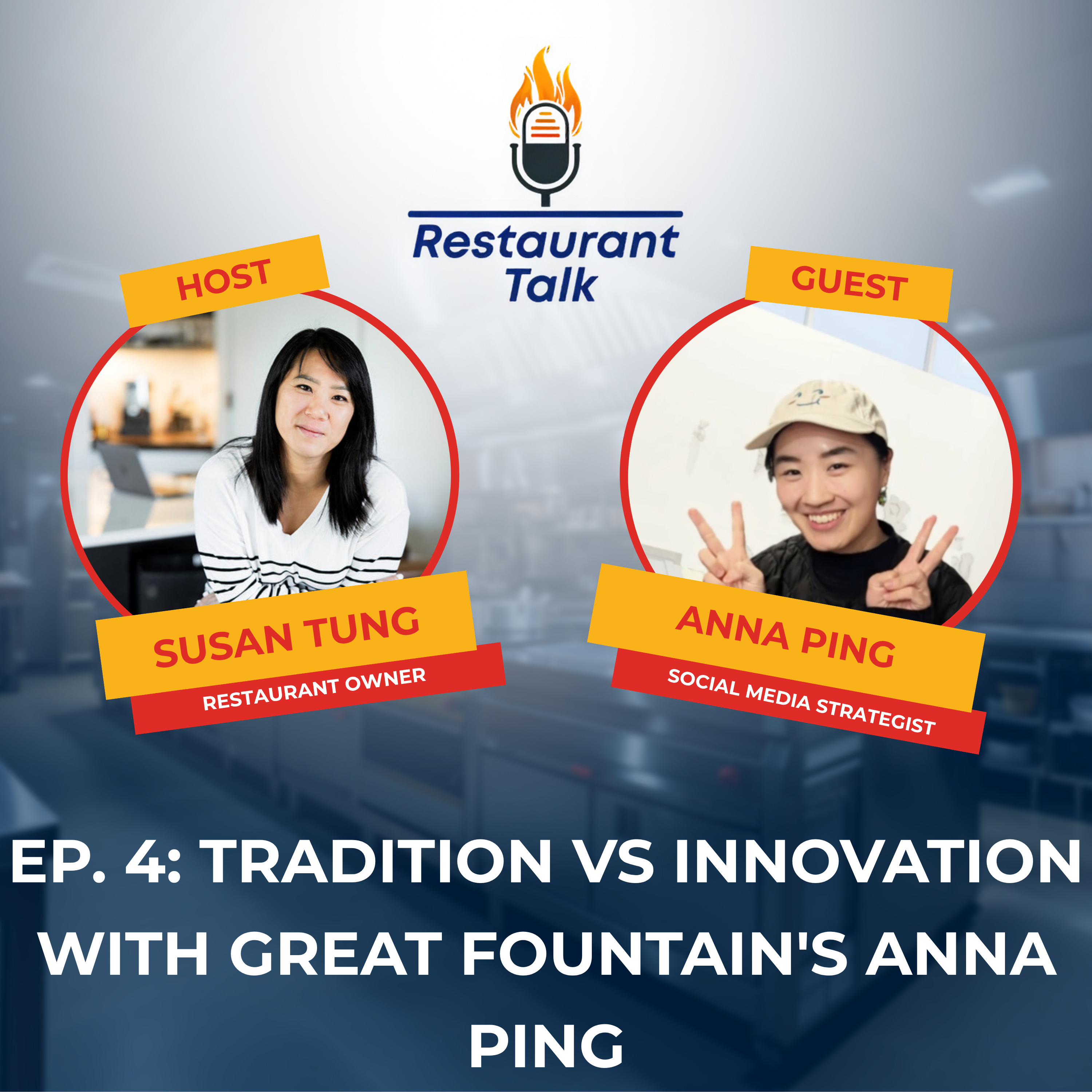
[00:00:00] Speaker A: What's up everyone? Welcome to the restaurant talk podcast hosted by Save Fry Oil. My name is Susan Tung. I am your guest host for today.
For anyone that doesn't know, Save Fry Oil is the maker of Frylo, which is a patented shoebox size cage filled with photocatalytic Japanese ceramic tiles that lives at the bottom of any commercial deep fryer. It slows the oxidization process down that breaks oil down. So operators cut oil use by up to 50% so you can cook a little cooler and faster and the plate will have lighter, crispier food.
Today I have Anna from Great Fountain. I'm so excited to have you here. Anna is the daughter of the owners of Great Fountain, is that correct?
[00:00:50] Speaker B: Yep.
[00:00:52] Speaker A: Okay, awesome. And Great Fountain is a food court stall in the plaza in Scarborough, but I forget what the plaza is called.
[00:01:01] Speaker B: It's the Dynasty center by Vidland and shepherd in Scarborough, Ontario.
[00:01:07] Speaker A: Amazing. Okay, so Anne, I'm super excited to have you here. I follow your social media content and it's amazing.
I'd love for us to get started with just a little bit of background about your business and kind of who you guys are for sure.
[00:01:22] Speaker B: So our business, I'll start off with that. So we do Hong Kong style fast food food in a food court setting. So we do things like noodle soups, Hong Kong style breakfast, like macaroni, satay beef, instant noodle, vermicelli soups, hot plates with like mixed grill, like pork chops, chicken sausage, fried eggs, stuff, stir fried rice noodles, stir fried rice, veggies, meats, things of that sort.
[00:01:49] Speaker A: Amazing. And it's your parents that are the owners, right?
[00:01:53] Speaker B: Yes, they're the owners.
They're also the operators as well. So they're very much involved in the business. And I also work with them running both front and back wherever they need me.
[00:02:06] Speaker A: Okay, so you do back of house stuff too?
[00:02:08] Speaker B: Yeah.
[00:02:09] Speaker A: I just saw the video that you posted this morning of you making fried rice, so I thought that was pretty cool.
[00:02:16] Speaker B: Yeah, most people don't know that I actually do a lot of other stuff other than the social media.
But yeah, well, the funniest thing about working behind is that it came out of necessity. So it was more just like I wasn't supposed to, but then because we were shorthanded, I had to. So that's how I learned everything and then slowly but surely just gained the knowledge of every position in the back.
[00:02:42] Speaker A: That's awesome. Well, I mean, I really resonate with kind of what you're doing, you know, for myself, growing up In a Chinese restaurant. I wasn't serving delicious Hong Kong style food like you. I was serving more chicken balls and egg rolls.
So the white people, Chinese food.
But I totally understand that having to help a little bit all over the place. When did your parents start the business or take it over?
[00:03:08] Speaker B: We bought the business back in 2015. So I think before that, though, the restaurant has been around since like, like as early as the late 1990s.
[00:03:20] Speaker A: Wow.
And where. What were they doing before that?
[00:03:26] Speaker B: My parents were. So I guess I'll backtrack to, like day one.
So my parents immigrated to Canada from China in the late 1990s. And then once they got here, well, my dad came first. So my dad had had jobs like dishwashing.
He was working in a bakery. He was doing beat packing. He was. And then he eventually landed a job as like a.
Like a garment.
It was in a garment factory. He did a bunch of things. He was a manager there as well. And then later down the line, my mom also came and then joined my dad and like, the whole work hard till you get, you know, a little bit more money type of plan strategy.
And so they both worked long hours at this garment factory. And then in 2008, there was a recession, and then the garment factory had to kind of pack up because the business moved elsewhere.
And so that was when my parents decided it would be a good idea to be self employed rather than employed by other people, because they were like, oh, I think it would be more reliable to rely on ourselves for income rather than to depend on someone else for our income. So then that was the time when my parents first bought a fish and chip spot in Pickering, Ontario. So that was called Blue Ocean Fish and Chips, and they ran that for around eight years, I want to say. And then during that time, mostly the clientele was predominantly white, and my parents English weren't that great. And like, I could tell that they were also, like, they enjoy Canadian culture and whatever, but, like, at the core, they still want to be close to their Chinese identity. So during the end of their fish and chips journey, my mom expressed a need or a desire to come back closer to her Chinese cultural roots.
So my parents, well, my dad mostly was just like, okay, let me find a way to kind of make that happen.
So through our accountant, we actually found out that Great Fountain was put on sale by its previous owners.
And so that was how the transaction was made. And 2015 is when we bought it. My parents started owning and operating it ever since. And now it's 10 years.
[00:05:59] Speaker A: Wow. That's amazing. 10 years is a long time to be in the. To be in the industry for any establishment.
Where do you fall into this journey?
[00:06:09] Speaker B: Where do I fall into this journey?
I was still in school from all the way, like, from when they were still open, like from when they stove were taking over until 2020. So 2020 is when I graduated. But then 2020 is also when the COVID 19 pandemic kind of forced everybody to stay home. And so I clearly remember during that time, it was.
It was confusing for me, but it was very, very funny for my parents. And the reason why was because, like, one day you're running the business as usual, and then the next day the government's like, oh, no more dine in. And then I was. I turned to my parents and I was like, are you guys still going to work then? And then my mom was just like, yeah.
She had like zero questions. She's like, why are you even, like, phased?
[00:07:12] Speaker A: Yeah, Asian parents, they're like, oh my God.
Yeah, Asian. It takes a lot for Asian parents to be like, we're not opening, we're not closing.
Yeah.
Like, I think that building has to cave in for that to happen.
[00:07:26] Speaker B: Yeah.
[00:07:27] Speaker A: Yes.
[00:07:28] Speaker B: So I was just like. I was like, shook. I was like, me being born in Canada and then also raised like, you know, I was just like, oh, my goodness.
So that was like, you know, my first kind of. I don't know what to call it, like, a shock from working with my parents. I was like, okay, wow. They're like, really kind of like doing everything that it takes off the bat.
And then also during that time, I was going through the decision of, like, what should I do after graduation?
So in my mind I was like, okay, a. I either find a design job because I studied design. I went to industrial design.
[00:08:07] Speaker A: Yeah, I was going to ask what's your.
Yeah, I was going to ask what's your educational background and like, experience there?
[00:08:14] Speaker B: Yeah, yeah, yeah. So I studied industrial design.
So what that means is kind of like product design. And then what I was wanting to do do after that was product design, like, digitally. So, like, you know, ex. Designing experiences on websites or creating like. I don't know. I don't know. I. I'm so like, detached from that part of my life now. So I don't even know how to explain it anymore. But anyways, what.
[00:08:41] Speaker A: What was your. What was your dream job previous to everything that happened here?
[00:08:47] Speaker B: My dream job was to open up my own design studio and have my own design clients, whether it be graphic Design, product design, or like just having, like, just working with clients on a design level basis, like branding and whatnot. I think that was my dream outcome out of school.
And then quickly I realized that was probably not going to happen because of all of this stuff that was going on. So COVID 19 going. And then my parents kind of like, they weren't verbally explaining that they were, you know, freaking out.
But like, I think after the second or third week of lockdowns, like, my mom was just like, kind of like in a panic mode. But she still wouldn't say that it was like in a panic, but she would just be like, like, Anna, you gotta like, save more money, like stuff like that.
[00:09:44] Speaker A: Oh, yeah, yeah.
[00:09:46] Speaker B: So you gotta buckle up, Anna. And I was like, okay.
So I was backtracking again. I was in a, like a fork of like, where do I go after graduation? So a find a design job, which I did. End up interviewing for one. And then after the second round of interviews, I got dropped off. So then I asked myself at that point, like, do I want to continue doing this? Like, do I want to keep interviewing and try to find more corporate design jobs? Because this is kind of tiring. Even, only, like, even if I only did one, like, I didn't like it.
And then my second option was join the family business. And in that point of my life at the time as well, I started to realize, like, my parents moving and immigrating from China to Canada is a very challenging step in their journey. And they took a lot of sacrifice and a lot of time and effort to kind of like, start from scratch all the way from zero, to raise me and my brother up in Scarborough and basically to kind of like rebuild their lives financially and like, socially all over again.
Like, in my 20s was when I realized, like, that was a lot for them to do. And I think in my teens, obviously I was kind of like, not. I didn't realize it. Like, I didn't appreciate it.
And now that I am at this point in the story where I'm explaining I'm 22, I started to realize, like, wow, like, they did a lot. And then what I was asking myself, like, what can I do to repay it back to them before, like, maybe I do my own thing. So I was like, I gotta be in the family business. I need to grow this with them and I need to let them know that I'm grateful for basically my life, for, like, everything that they've done to raise, like, me and my brother in this new quote unquote world.
And, yeah, then that was the decision that I made. And now I'm working at Grey Fountain, and it's been five years.
[00:12:00] Speaker A: What was that conversation like with your parents when you were like, I'm doing this with you?
[00:12:06] Speaker B: Well, the conversation went like.
[00:12:11] Speaker A: Was there even a conversation, or did you start. Did you just kind of like, it.
[00:12:14] Speaker B: Wasn'T really a conversation, actually. You're right.
I was just like, hey, mom, like, I'm going to work with you now.
She was like, okay, well, wake up at this time. Get to work at this time. Like, and then while we were at work, she would just kind of, like, boss me around. And I remember very clearly hating working with my mom in the first few years. Like, it was the worst part ever.
And it was because our cultural differences. Like, she's born and raised from China. She only came to Canada in her 30s. So you can imagine, like, you know, she's not really trying to adapt, like, so much new information in her life. In her 30s. She's trying to raise a family. She's trying to get income. Like, she's hustling, and she's not really me. Born in Canada and then, like, speaking predominantly English. My Chinese was pretty much broken when I first started at Grey Fountain. We were very two different people. And my mom just kept like. Like, she was supportive of me joining the business because a. That meant, like, she had more help. Like, she would have more hands to help with the business.
So that was a good thing for her.
The only bad thing was because I didn't have any experience, and I, like, was very.
Yeah, let's just say I was very inexperienced.
[00:13:41] Speaker A: You're green.
[00:13:43] Speaker B: Yeah.
[00:13:45] Speaker A: You're very green is what we say.
[00:13:48] Speaker B: Exactly. I'm so new.
Like, my. Like, I'm so inexperienced that, like, I don't even know the menu.
I didn't even know the language. So I had to learn the language on the job for the first year and a half. And then my mom. I remember my parents kind of saying, like, oh, Anna, you shouldn't work in the business because, you know, it's very uncomfortable. You should be working, like, an office job. Because he kind of, like, went to school and you did all this stuff. You should go get a chair and a desk and a laptop and find a job over there. And I was like, you know what? No, Like, I don't want that anymore.
Like, I want to help you guys. And then it was like a whole year of, like, kind of like, you know, them telling me to do this, and I'd just be like, no, it's okay. Like, let me help you guys. And then like, I would get into conversations with customers who would tell me the same thing. I was just like, they were like, oh, you're so young. Did you just graduate? I'm like, yeah. And then they're like, oh, why don't you find like a, like a job job? And like, this is a job job. So it's like just me kind of like battling that conversation out for a while and then.
Yeah.
[00:15:01] Speaker A: And it's really hard because I don't know what your, your customer demographic is like. Right. But yeah, old school people, especially Asians, they all want us to like, I, I get it. I just wanted to be a doctor, so. So, yeah, they're. They don't treat this like a legit profession. It's like a means to an end.
[00:15:20] Speaker B: Right, Exactly. Yeah, they don't. They definitely do not treat this as like a profession. And like, they, they don't treat it as like a career trajectory, like a viable career trajectory as well.
Like the amount of parents that would come up with to me to say like the same thing, like, oh, like, don't you have a job? Like, what do you do outside of this? I'm like, dude, this is my job. Like, this is what I do outside of this. Like, yeah, like our customer demographic is predominantly Asian. Like, we get a lot of Cantonese folks, a lot of Hong Kong folks. Like, those were our original customers. Like, think like, maybe people like who look like my parents age, like 50 to 60 year old immigrant parents who have like the same thing for their kid as well. Like they're like saying the same stuff to their sons and daughters, like, oh, you should find a comfortable job after this, Get a high paying job, study hard, work hard, and then cruise through the rest of life.
[00:16:18] Speaker A: Do you think, do you think when they go home to their kids, they're like, don't be like Anna.
[00:16:25] Speaker B: I think some of them in this day and age, yes. Before, probably not like right now, it wasn't. Our social media game has really kind of skyrocketed. The business as more than just like a hole in the wall kind of place, I think.
[00:16:44] Speaker A: Tell me a little bit about that.
Tell me about that transformation.
[00:16:48] Speaker B: Yeah. So how do I begin in 2018? I want to say is when we first made like our first Instagram account. We only have one Instagram account. Sorry, I don't, I don't know why I said first Instagram. Our first Instagram post is what I meant.
So 2018 TikTok wasn't even on the radar yet for most people.
So that was when we kind of first started posting. And those photos, if you scroll all the way back, are from my dad. And that's. That was because I was like messaging my dad while I was like in class. I was like, can you take a picture of like some of the food so I can post it online later? And he was just like, why?
Because back then in 2018, it wasn't obvious. Like, people were still kind of struggling with social media. The question overall was still like, why should we go on social media right now in 2025? It's like, yeah, if you want to grow as a restaurant, as a brand, if you want to grow a business at all, you have to be on social media. But 2018, it was not the case. It was like, we already have like a, like a audience. We already have like our customers. Why do you want to be on the Internet that you don't have to be on the Internet? So that was our starting point.
And so that was kind of like the first two years of our Instagram. So 2018, 2019 was just my dad taking stuff and then I would just post it online after the fact. And then later when I finally joined the business full time, I would be the one taking the photos and I would be the one posting the content.
And in the beginning, my mom, I would say, was very hesitant about me posting so much stuff online because her concerns were more just like, what if someone thinks we're dirty? What if, like, we get hate online?
Because at the time, like, again, the culture around Chinese food is not what it is today. Back then, it was still very much in the growing stages of cool Asian culture. It was still more just like, oh, you must be cooking cats and dogs still. You'll get these comments. But it was a lot more back then. It was just not cool or you wouldn't see as much Chinese cooking content online.
[00:19:15] Speaker A: Totally. I was doing my parents Instagram for our Chinese restaurant in 2016 and I felt the exact same way, like, exactly. Posting pictures of like general Tao chicken and sesame chicken.
Like, I, I had to work really hard to make that food look nice.
Yeah, visually. And visually appealing because everything's like deep fried and yes, saucy.
So, you know, I'm just trying to like, turn the saturation up every time to make it look more vibrant.
But I, but I totally agree with you. Like, Chinese food content, like, it wasn't cool. And we've really seen a shift in the cuisine, like, just in general. Right. Like, people want to see more what's it like cooking on a wok. Right. Because those are things people don't have access to.
[00:20:05] Speaker B: Yeah.
[00:20:06] Speaker A: Like seeing your dad make the sauce on the giant walk is really neat. Like, it's not an app. It's not your everyday thing, like, content piece they see. Right?
[00:20:15] Speaker B: Mm. Yeah, exactly.
So.
So, yeah, so in the beginning, my mom really, really hated me posting stuff online because she thought it would kind of put a negative turn on the business rather than a positive one. So I fought really hard to kind of continue the momentum.
And why I kept going was because down the line, there would be, like, one or two customers who would come up to the counter and be like, I saw you guys on Instagram and I saw this meal, and I want to buy this meal. And I was like, ding, that's my moment. Like, that was like, okay, this is. This is something. Like, I can work with this. If I get enough of these customers, maybe my mom will trust me more. Maybe my mom will delegate more responsibility to me. So that was. That was the kind of starting stages of the whole Instagram thing. And at that time, we were only having, like, what, like, 700 followers, maybe or less.
So to me, I was just like, okay, like, I don't need a lot of followers. I just need enough of these people who see this content to actually come and pay. Pay us money at the counter so I can then prove to my mom that this is worth the time. So that was the whole game I was playing.
And then I think maybe half a year or like a year later, I started doing, like, a paper tally of how many customers would come because of social media. So, like, if I saw showing us a picture at the counter of, like, I want to order this, I want to order that, and it's all from our Instagram page. I'm like, okay, that's one customer from social media. And then it would be like, just like a whole month of just me trying to, like, do as many tally marks as I can to just to see, like, how many customers came from social media. It would be like 31 month, and then 25 the next month. And it was consistent enough for me to say, like, okay, this is definitely going somewhere.
So eventually we got more features on online news culture sources. Places like Blockto, places like Toronto Star, and then a lot of other independent creators as well wanted to do a little feature with us.
So those were our starting stages. And then we eventually grew up to a higher, I guess, audience community.
[00:22:32] Speaker A: Yeah. What's your following at now? 25. Sorry, what's your following now? I don't even know.
[00:22:38] Speaker B: We're now at 32,000, so we've come a long way.
Yeah, it's been a lot of, a lot of hard work.
But it was more because of like the community kind of like telling me to keep going, telling me to like, you know, do like, whatever.
Whatever they wanted, like at the time I would kind of do. So, like, if they wanted to see like a new menu item, I would be like, okay, like, mom, can. Can we try something new? And then she would be like, staring at me, like giving me the death glare.
But then I would also just kind of be like, but our customers want it. And then, and then she would cave in and then we would figure something out. So, like, it was a lot of years of just me doing a lot of trial and error and just keeping at it consistently without really knowing what I was doing in the first place. And then also at the same time, just being very, very close with our customer base online.
Like, I would be responding to customers Messages at like 1 or 2 in the morning and then they'd be like, oh my God, you're still awake. I didn't expect this. I'm like, yeah, I am.
And then I would also be posting stuff at like 1 or 2am and then also like in the morning, like right after as well. So a lot has gone into the social media stuff for it to come to what it is today.
I don't know. Like, it has changed our customer base quite a lot as well.
[00:24:03] Speaker A: That's what I was going to ask, like, previous to you taking over the social media, like, what's, what's that demographic change like.
[00:24:15] Speaker B: Before? Like I said a few minutes ago, so our customer base is predominantly like Cantonese and Hong Kong style. I'm not Hong Kong style. Hong Kong. Hong Kong parents who just want like a meal, a quick meal with their family or like by themselves after work.
So these people are usually aged like 40 to 60 and they're not the people on Instagram.
[00:24:42] Speaker A: Yes.
[00:24:42] Speaker B: So after we started getting a lot more customers from Instagram, instantly our customer base got younger.
Like people in their 20s and 30s started coming in.
And then eventually, because Instagram is also integrated with Facebook, our content just automatically posted onto Facebook.
And then now we have like 60 to 70 year olds also coming in, like telling me that they, they saw our Facebook post. I'm like, in my head, I'm just like, I never posted to Facebook though.
And then I made the dots. Like afterwards, I'm like, okay, Instagram must have, like, posted automatically on my behalf to Facebook.
So.
So yeah, so originally, because of the nature of Instagram and TikTok, because we started also posting on TikTok, our audience was very young, like 20s to 30s. And then because of Facebook, it would be like, it would attract an older demographic, so like 60 to 70 year olds would also come by.
[00:25:47] Speaker A: I love that.
It's. It's funny because if you're not really.
People don't really realize, like, if you're not marketing, you're actually losing customers because people move away over time. Right. So I think your big shift to being online because that's where everyone is nowadays.
Like now you're seeing the effects of it, which is really cool.
Let's talk a little bit about the. The restaurant itself and kind of like the operations. Is it just the three of you that work there?
[00:26:17] Speaker B: Definitely not. I would not be able to push out.
I would not be able to work fast enough to make our customers satisfied if it was only the three of us. We have around eight, I think, including us is that.
[00:26:31] Speaker A: And that's divided between kind of like the customer facing people and back.
[00:26:37] Speaker B: Yeah, yeah, yeah, exactly. Yeah. So everyone included. There's eight.
[00:26:41] Speaker A: Okay, awesome.
And are they all Cantonese speaking? What's that? What's that dynamic? Like.
[00:26:51] Speaker B: What are they? Yes, there are there. Yes. Actually, yes, everyone's Cantonese speaking. We just. Our newest member is actually from Nepal, but he lived in Macau for 10 years, so he knows how to speak Cantonese. So yes, all the boxes of Cantonese are checked off.
[00:27:08] Speaker A: That's awesome.
What would you say is kind of one of your biggest challenges as of lately?
[00:27:15] Speaker B: Biggest challenges as of lately, I would say is to find staff.
Because the way that Cantonese culture, the food is, it's kind of like a hard to find skill these days. Like for the back end, specifically. Like, what I'm talking about is like the walk position.
There's a lot of people who aren't picking up the skill these days. And it requires a lot of strength. It requires a deep knowledge of the food and the cuisine. It requires, like a hard work ethic. And these are all, like, things that are very rare to find these days in this generation. Yeah, especially in this generation. Like, you do not see the younger folks going to school for this skill. Like, there is no.
There is no school for this skill in Canada.
There might be in Asia. There probably is in Asia, but not here.
And in addition to that, the current labor pool of people who know how to work the walk is also diminishing very Fast because all these people are like 50 to 60 year olds. They're retiring and, or, you know, they're just tired of working because, you know, the job is hard.
And I would say that's one of our biggest challenges. Another challenge is just, I guess, like managing the whole business in a very fluctuating economy.
Yeah. There's been a lot of like, ups and downs the these past few years. Like, a lot of price fluctuations have occurred recently and then, but before this, like before, before COVID like, everything was pretty much stable. So, like, there was no problem with this whatsoever before. But now because of the way like, the supply chain works and because of the way, like, everything in the world is kind of going, like there's a lot of stuff that we can't control in costs. And then because our items are priced so low, like, everything's very affordable, the most expensive thing you can find is $15.50 plus tax. So like, that can give you a sense of like, okay, like, and we're serving things like beef brisket.
[00:29:41] Speaker A: Wow.
[00:29:41] Speaker B: You know. Yeah. So you can, you can. That can give you a sense of like, the profit margins we're making.
So because of that and then because of the way that costs are kind of like going up and going down, just kind of like Willy nill, it's hard for us to kind of like, I guess turn a profit. But then like, I would also say it's in the business's responsibility to also turn that profit. So it's, it's been a struggle, I would say the least, but we're still figuring it out.
[00:30:11] Speaker A: Do you.
[00:30:12] Speaker B: Without upsetting our audience?
[00:30:14] Speaker A: Yeah. And that, that's a really big challenge. I, I deal with it myself. As an owner, do you have these conversations with your parents, like, who is the deciding person when it comes to things like pricing and like that, that cost control?
[00:30:29] Speaker B: Definitely my mom.
She has like this iron fist over the costs of everything because she like a, she, she works the front, so she's very close with our customers and she doesn't want to upset our old time loyal customers.
[00:30:44] Speaker A: Yeah.
[00:30:44] Speaker B: And then b, she's also like doing the book. So she's just like, okay, we're losing money. We're like breaking, only breaking even, but we're working so freaking hard, like, what's worth it?
So like, she's like doing two battles at once. She's like trying to figure out, like, what we should price things at. So it's fair for the business, but also fair for the customer.
And then, and then how do we Also, you know, do all of this while managing all the costs of the business because labor is not cheap these days. So.
[00:31:14] Speaker A: No, it's only going up.
[00:31:16] Speaker B: Yeah, it's only going up. Exactly. So those. Yeah, I would say like that it's, it's been, it's been one of the biggest challenges for us.
[00:31:25] Speaker A: That makes sense.
Out of curiosity, does your mom track prices of things in her head or does she actually have a system slash organization?
[00:31:36] Speaker B: It's in her head. It's in her head.
[00:31:38] Speaker A: No, this is, this is the same as my mom. Seriously?
[00:31:40] Speaker B: Yeah.
They don't believe, they don't believe in spreadsheet.
Yeah, they're not like that.
[00:31:47] Speaker A: The spreadsheets in my mom's head, like back in the day and it was like, oh, this has gone up, so therefore we need to increase this price. And it's almost like she's doing the math in her head and it's like, exactly know what's happening. Like.
[00:32:01] Speaker B: So it's funny, the calculations in the air. Yeah, no, they're, they're definitely all like that. My dad is like that as well. And whenever I like now where I'm at, I'm just trying to systematize all like the numbers and stuff into, on like an online document so I can access it because I'm not my mom. Like, I don't see what's in her head. Like, I don't know what's going on in there.
So I need to make my own system and I can't do like mathematical, mental math. Like, that's not my, my thing.
So I have to write everything down. And so that's, that's where I'm going right now. But my parents definitely are similar to yours.
[00:32:45] Speaker A: Yeah, we are the work smart, not hard generation. I like to believe.
What else have you guys been doing to try to control costs and cut down on things?
[00:32:58] Speaker B: My dad, my mom runs the numbers, but my dad is the one who's kind of detached from it. So he can be a little bit more, I guess, what do you call it? Like ignorant, but in a good way. So what I mean is like, for example, cost of beef brisket has gone up. My mom is like, okay, now that beef brisket has gone up significantly.
Like, what are we doing as a business to handle this? So my, but my dad, he's always like, if you give less beef brisket to the customer, they're not going to be happy.
So like our solution or our strategy, I don't know what to call it. But what we do is we Give the same amount.
Because we, like, if we give less and obviously the customer is going to piss out on us and they're just going to be like, oh, I'm paying this much, and then why are you giving me less and less?
My parents don't want to go through that, so my dad just gives the same amount. And then. And then obviously the price just has to go up. So the things, things just have to shift elsewhere. There's also, like, a different strategy of, like, trying to promote different products rather than the ones that kind of cost you the most. So, for example, pork is fairly, you know, cheaper still.
So for us, we just have to find ways to promote and talk, talk more about pork products.
For example, sweet and sour pork, salted spicy spare ribs, like, things like that, Things that have pork chop.
These are more like the profit margins are better for us as a business. And they, like, also, like, it's a very popular item anyway, so it's an easy sell. And then also it would just help the business thrive more because if we were just selling beef brisket where we're making like, you know, 50 cents each, then that wouldn't be fun. But if it was pork chop, that would be a lot better.
Yeah. And then both my parents would be happier.
[00:35:01] Speaker A: Yeah, for sure. Do you guys do a deep fry a lot of stuff?
[00:35:04] Speaker B: We do, yeah.
[00:35:06] Speaker A: What's your most popular, like, deep fried item?
[00:35:10] Speaker B: I would say it's our garlic fried chicken on fried rice.
So it's just like, it's basically a chicken leg that's the deep fried. And then we just cut it up. It's like a massive chicken leg. So, like, each chicken leg is probably over like a pound.
And then what? We just. Yeah, we just. It's a massive chicken leg. So we just chop it up and then put it on fried rice with black pepper sauce. That's like our best selling item.
[00:35:34] Speaker A: Oh, nice. So, yeah, I mean, like, that's. That's the problem with this industry is if you're not really, like, watching the numbers, you know, it can be really.
[00:35:44] Speaker B: Yeah.
[00:35:45] Speaker A: Like, it's a slippery slope. Right.
[00:35:47] Speaker B: And very slippery.
[00:35:48] Speaker A: Yep.
I think our biggest mental challenge with, like, as owners is just trying to keep customers happy. Right. Really? We're constantly trying to keep customers happy. We want to keep our staff happy, be able to pay them, got to pay the suppliers. But at the end of the day, like, we're the ones that are gonna lose out, you know, if we're not exactly the numbers.
[00:36:07] Speaker B: Right.
[00:36:09] Speaker A: And it's a, it's a Lot of mental load for, you know, that kind of thing. What, what's the, what's the long term play for you guys right now?
[00:36:18] Speaker B: Long term play regarding the numbers or just in general?
[00:36:22] Speaker A: Just for the business in general.
[00:36:24] Speaker B: Just in general. So my parents are getting older, so they're. My mom specifically is talking more about retirement and so that obviously is going to be on the horizon.
And because they're like 62 and they've worked so long for most of their lives, like I know they're really tired, but on the other hand they also like working, so I can't take that away from them.
For me though, I'm very young and we have, I think a lot of potential because our customer base is also very young and because of our, the way that our social media is set up, I think we have a lot of long term potential to, you know, continue this journey along with our customers, along with our community on Instagram and on social media in general.
I don't know. I think eventually I want to open up like a sit down spot like this great fountain in Scarborough as like a food court stall has been my thank you to my parents and it still continues to be my thank you to my parents. But I think after this I want to kind of do a different kind of spot where it's more just like, hey mom and dad, you work so hard. Let me open up a spot so that you can sit down with your friends and enjoy food while sitting down and just chilling out rather than just standing up. Because in our current food court spot, like there's no place to sit.
There's no real place to like, you know, be comfortable with, you know, friends and family when they do stop by.
So I want to do the opposite of this for my parents as kind of like a continuation of this gratitude that I feel towards them. So I think that.
[00:38:18] Speaker A: Would you change the long term, would you change the menu?
[00:38:23] Speaker B: Not dramatically. I think I would. I would, I think would I change the menu is a good question for this concept that I'm talking about. I think it would definitely have to like be a little bit more upscale, but we'll, we'll figure that out later. Like they like their dim sum, they like their like higher end dim sum spots. So maybe something like that, but with my own twist instead.
[00:38:47] Speaker A: That's awesome.
And just, you know, I'm kind of towards the tail end of my questions here. I know you made a post about this, but I forget what was the answer on your parents days off, where do they like to go? Eat.
[00:39:01] Speaker B: They like to go. We have a. We have a few places they like to go to regularly.
Kingsfield by Woodbine and Major Mac.
It's like a seafood dim sum spot. And then they also like going to Casa Deluz.
[00:39:17] Speaker A: Casa Deluze. Yeah. I actually the owner.
[00:39:21] Speaker B: You are. Yeah. So they love going there as well.
And then Skyview, Fusion, they love going there with friends.
Where else?
Those are. Those are just the top three that come off the top of my head.
[00:39:34] Speaker A: Okay, what about you? Where do you go?
[00:39:37] Speaker B: I go wherever they go.
Okay.
Yeah. For me, I'm a little bit more flexible. Like, I like to try different spots that have been trending because I want to keep on top of things. Like, I want to do my research. I want to, like, keep up, keep it up. I want to, you know, be aware of what everyone else is doing so that I can, you know, match for sure.
[00:39:57] Speaker A: My. My kind of final question for you. Actually, I had two final questions. The second last one is, what has been your biggest, I guess, achievement or highlight from building your social media, Whether that's connecting with people you thought you'd never connect with or like something going viral? What's been that. That shining moment for you?
[00:40:20] Speaker B: I wouldn't say there has been like a singular moment. There's definitely like a lot of cool people that I would never have thought I would have met along this way, along this entire journey. Like, I don't know, like, there's been a lot, like, I think this entire.
This entire time of working at Great Fountain, like, I've just met so many cool people, just had so many interesting opportunities to work with these people, and I've done so many, like, small scale projects that, you know, bring me pride and bring the community pride that I think those like, all together collectively bring this sort of like, pride towards the Great Fountain community. So I don't. I don't know, it's a lot of different things. I would say.
[00:41:10] Speaker A: That's awesome. I know. I just, I see you have a lot of great content, so I'm.
I understand your.
It's hard to choose because again, every day I think you come up with something really cool and you're always connecting with so many different people. And I think you just did like a pop up with someone as well. Like a burger pop up or a.
[00:41:27] Speaker B: Yeah, that was our Bear Steak collab. So Bear Steak is this sandwich shop that sells steak sandwiches on College street downtown onto downtown Toronto. And we did a collab with them. So basically we made a sandwich recipe together and then their team would create and sell the product at their location.
And that was basically the collab. It went really well. We sold out in both the days before lunch even ended.
[00:42:02] Speaker A: I think that's awesome. I love that.
[00:42:05] Speaker B: Yeah, those are incredible.
[00:42:07] Speaker A: And my final question for you is if you could have a lifetime supply of anything that you guys currently order, what would that be?
For free? Like, lifetime supply. If you could pick one thing.
[00:42:19] Speaker B: If we had a. Sorry, the question was if we had a lifetime supply of anything.
[00:42:25] Speaker A: Yeah. Of any one.
[00:42:26] Speaker B: For the restaurants.
[00:42:28] Speaker A: Yeah. Like, a truckload is going to show up tomorrow.
[00:42:33] Speaker B: I want to say oil, because that's what you talked about, but then also it's because, like, oil is a very, very, like, valuable ingredient that we use very consistently and we use a lot of it, and it's very important in the cooking. It, you know, affects the cooking so much.
So, yeah, I would definitely say it's oil.
[00:42:52] Speaker A: That's a good answer. I mean, I. I would say that it's a good answer as a restaurant owner, but also as the podcast host.
Like, when I started. When I started the oil costs, like, when I started my business, oil was like $20 for those 16 liter pails. Right. And then.
[00:43:08] Speaker B: Yeah. Now it's double.
[00:43:10] Speaker A: Yeah.
[00:43:10] Speaker B: Triple, quadruple.
[00:43:13] Speaker A: Yeah. And it's insane. And I can imagine, because you have a food court stall, you probably don't have a whole lot of storage space. So it's not like you can, you know, bulk up.
[00:43:22] Speaker B: Exactly.
[00:43:23] Speaker A: When it's.
[00:43:23] Speaker B: Yeah, no, exactly.
[00:43:26] Speaker A: So, yeah, for anyone listening, I mean, if you're trying to save costs in oil and you can't hoard it, then definitely consider something like fry low. It's pretty cool. Have you actually ever heard of it, Rylo?
[00:43:41] Speaker B: I've heard of it. So, like, maybe. Maybe this will get cut off the actual editing, because I actually wanted to ask you about it because I did hear about it on social media, and I was so skeptical because I was just like, does this really work?
[00:43:57] Speaker A: I was skeptical.
[00:43:58] Speaker B: And.
Yeah, well, now you're here, so now I can ask you the question. Does it actually work?
[00:44:04] Speaker A: Yes. It's like magic.
It's crazy. No, like, and. And what I also thought was funny about it was just the way they distribute it. It's like there's just people all over the world that are distributing the item.
So you're almost kind of like, is this like a pyramid scheme? But it's not.
It's very much sold through almost like word of mouth, because I found out about it through another restaurant owner that has A chip truck, and those guys are frying, like, all the time. Right? So then I was like, okay, if you're using this and you're saying it works, and I know you personally, then I'm gonna try it. And, like, you know, it's a. It's a small investment, but I made it back within the, like, four months, which is really awesome because at the time when I implemented it, oil was costing me, like, $70, like, a jug. And I. That was like, liquid gold.
So, yeah, every. Every time we change the fryer oil, I just, like, cried a little bit, and I'm just like, can we, like, wait one more day to fry it? Right? And, like. Or to, like, change it?
But, you know, the oil's, like, black, and. No, we couldn't wait.
But, yeah, I know we can definitely have that conversation on the side. Like, I can definitely give you. I'm not a salesperson. I'm really just, like, a little cheerleader for it.
And just coincidentally, like, they didn't. I don't think they even knew that I used it when they asked me to host.
This was all just coincidental. And I was like, oh, I actually use it, and I love it. So at the time, when I had two restaurants, I was using it for both.
My one restaurant, we deep fry a lot of tofu, and that makes the oil deteriorate really quickly.
So I don't know. Do you deep fry tofu?
[00:45:44] Speaker B: Yeah.
[00:45:45] Speaker A: Yeah. And that, like, I don't know if you find that deteriorated fast, but I definitely did.
[00:45:51] Speaker B: Yeah.
[00:45:52] Speaker A: Yeah. Like, the shelf life of the oil definitely extended for me by, like, I would say about 40, 30 to 40, depending how much I'm trying.
Yeah, it makes a big difference. So just tell your parents, you know, from one Chinese person to another.
Yeah, it does work. And I can understand the skepticism because, you know, not. Not everyone's, like, promoting it, but that's okay. Yeah, but that's why it's important for, like, people like us, like, younger people to leverage social media and, you know, talk about that social proof. Right?
[00:46:25] Speaker B: Yeah.
[00:46:27] Speaker A: So those are all my questions. I am so, so grateful that you hopped on with me. I think you're like a little mini celebrity. You know, what you're doing is so admirable, you know, from like, a, you know, Chinese restaurant kid perspective, but also just as a restaurant owner, I think you're the.
The testament of why we should use social media and how we can use it to transform our businesses. Because you have a food court stall, and that's so cool. And so such a unique business.
Thank you for hopping on with me, and I really look forward to connecting with you again, Anna.
[00:47:06] Speaker B: Thanks. This was very fun. Yep.
[00:47:09] Speaker A: Before we sign off, just once more, tell us where we can find you. Just kind of give me a little business plug.
[00:47:15] Speaker B: Sure. You can find us our food court stall in Scarborough. So we're located at 8 Glen Watford Drive. That's great fountain Fast Food. We're inside the food court in the Dynasty Center. You can also find us online at Great Fountain on Instagram and TikTok.
[00:47:30] Speaker A: Amazing. Thank you, Anna. I hope you have a wonderful day and best wishes to your family.
[00:47:35] Speaker B: Thank you, Susan. This was fun. Thank you so much. Bye.
Bye.