Episode Transcript
[00:00:00] Speaker A: Welcome to Restaurant Talk, the podcast that pulls back the curtain on the industry with real stories and lessons every hospitality leader needs to know.
Sponsored by Save Fry Oil. Frylo cuts fry oil costs and makes food crispier. No power, no chemicals.
Now let's dive into this week's episode.
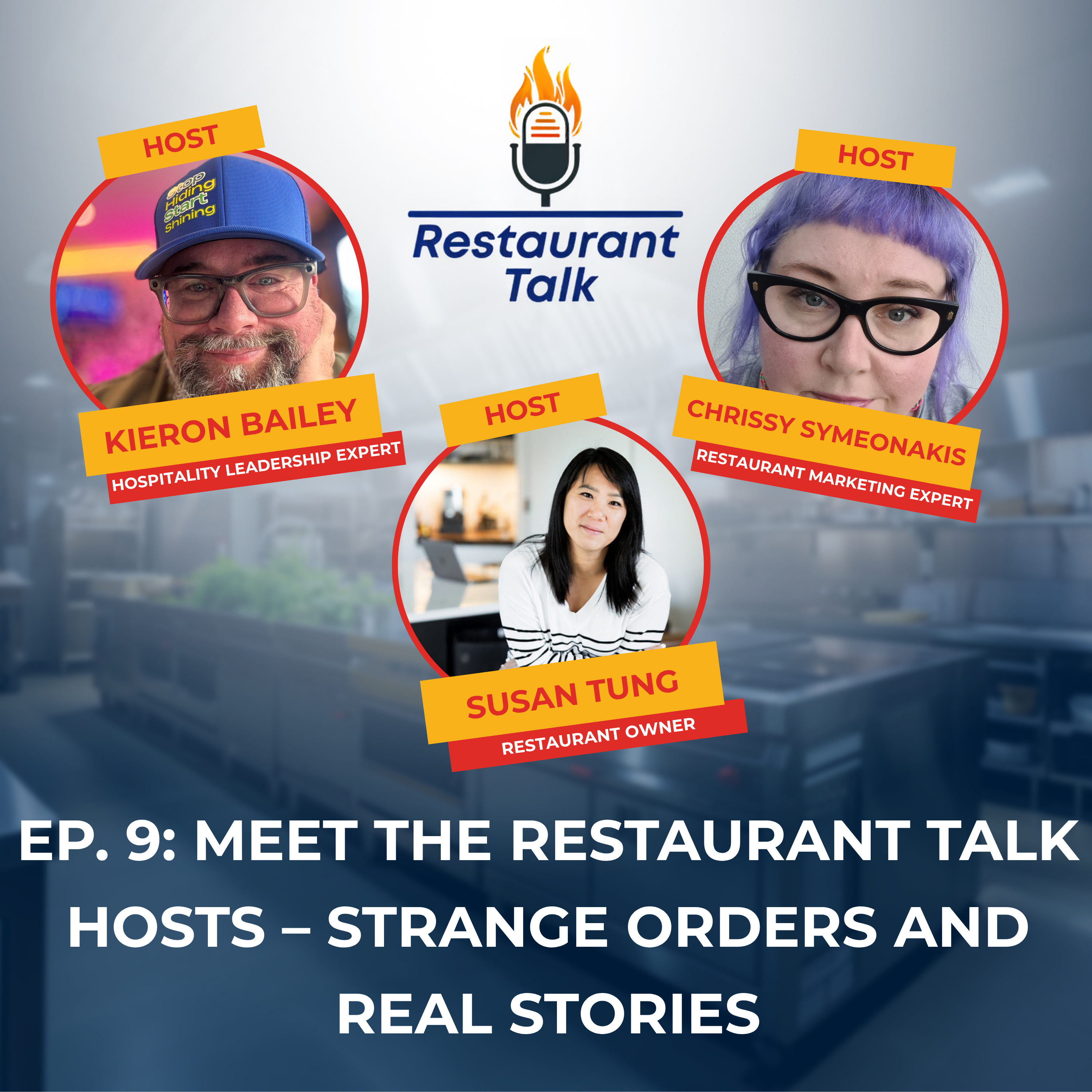
[00:00:30] Speaker B: Welcome. Welcome to this episode, the rebooted Restaurant Talks. My name is Kieran Bailey. I'm joined by my fellow hosts, Chrissy and Susan, who are out there doing outstanding work with this podcast. Welcome, welcome, welcome, ladies. How are you both today?
[00:00:45] Speaker C: Hello, hello. Yeah, good. Good evening from Australia.
[00:00:47] Speaker D: Good morning from Peterborough, Ontario.
[00:00:50] Speaker B: This time zone. Things really messed with me today, ladies. I'm not gonna lie. I'm so glad that I'm a basic man who's got 11:00am on a Sunday morning. We've got Chrissy, it's like 11:00 o' clock on a Saturday night for you. Susan, it's 6:00 clock in the morning for you. We are truly international. It's a beautiful thing. So we're going to be asking, we're going to be asking a few questions and we're going to be getting to know each other a bit. How we got into the business, what shaped us and the kind of getting back to that advice about what we'd give to our younger selves. This is a really nice way of being the audience, being able to pull up a chair and get involved and invite them into our conversations because between the three of us, we love a conversation. So before we get into the heavy questions, because there are some heavy questions, we're going to get to deepest, darkest inspirations and motivations which I don't know for a Sunday morning. We'll see where it takes us.
But we're gonna line in first. So what's the strangest thing you've seen ordered in a restaurant? Who'd like to go first?
[00:01:42] Speaker C: I can. Yeah, sure.
So for me, it was probably when I was working in a five star hotel in the U.S.
this woman was a regular guest. She'd come in every morning and request poached chicken breast, two boiled eggs and raisin toast.
But she'd never actually sit there and eat it. She'd take it to go. So I always wondered, like, did she put the eggs on the raisin toast? Like, you know, was she like prepping for some, like, weightlifting competition? Like, I had all these questions about this woman who every day, you know, ordered the same boring breakfast. So, yeah, nothing crazy, but more I wanted to know what she was doing and why she ordered this bland, boring breakfast every morning.
[00:02:24] Speaker B: Just sounds like, I mean, is it me or does it sound like there's no joy in there at all? To be honest with you?
[00:02:29] Speaker C: No, it's like protein and like boring carbs.
[00:02:33] Speaker B: Let's put some cheese on it. Cheese will help.
[00:02:35] Speaker D: Yeah.
[00:02:35] Speaker C: I had so many questions today.
[00:02:38] Speaker B: To this day.
I mean, it's good that she stayed with you.
[00:02:43] Speaker D: All right. Mine would be so not necessarily strangest thing, but I. When I heard this question, the first thing that came to my mind was the strangest situation where a customer couldn't get something they wanted. I own a Vietnamese restaurant and in our house, special pho, there's a lot of different cuts of beef. So, you know, we use tripe, we use tendon, we use beef meatballs and then like the other cuts. So like brisket and all that. So we had a customer that actually cried like this, this young female, she actually cried because we didn't have tripe.
[00:03:19] Speaker B: I've seen tears because we do have tripe. But.
[00:03:25] Speaker D: And it was just the strangest scenario for my server who I'm, you know, I'm still friends with. He's like, she just started bursting into tears and then her, she went, she go to use the washroom to like excuse herself. And her boyfriend was like, I am so sorry.
You know, again, I have one. It was one of those situations. I have many questions here.
[00:03:44] Speaker B: I mean, that, that's full of follow ups, isn't it? That is absolutely. That's a podcast host dream, really, when you think about it. We look for those answers that give us the opportunity to and sort of see where the conversation goes. But tell me what, where does that come from? Okay, so I used to work for a brand called Wagamama. Wagamama is kind of like a Pan Asian restaurant. Love it. It's great brand. Did five years with it. Quite rare for me. I normally do two years and move forward because I get bored quickly. But we had a guy who'd come in and I swear this guy must come in every week and it must have been for three, four months consistently. And he always ordered a discord the Carrie Lohman. But every time he ordered it, he complained about it. And we, we got to the point and my team, like I had a team member would deal with him. Then they were like, I don't know how to make this guy happy. Then I had a supervisor who would try and deal with him. Like, I don't know how to make this guy happy. Then I've got a front of house manager Kieran. I do not know how to make this guy happy. So you're gonna have to go and talk to him. And he got to the point where I was like, do you actually like this dish? Because every time you order it, you complain about it. And he was just like, it's just not right, Kieran. I just remember the first time I've ever had it, and it's just not the same. And I was like, it kind of is, man, but stop ordering it.
This is the moment where you have to realize, this is.
On that day, it was perfect. But beyond it, it's not happening, man. It really wasn't at all. It was a really strange conversation. I'm looking at this guy, just thinking, dude, just. It's got like. There's like, 50 items on the menu. Have a Katsu curry. Everyone loves a Katsu curry. It's just that simple. It's like, the people are generally weird, aren't they? That's kind of my overarching vibe about the general public.
[00:05:16] Speaker D: You know? That guy likes to hold a grudge.
[00:05:18] Speaker B: Yes. I mean. I mean, I'm with him a little bit, to be fair. I'm not above holding a grudge, to be honest with you. But you've just got to let something slide, haven't you? Gonna let something slide.
[00:05:27] Speaker C: Did he ever leave a review on Google about it or, like, on any other platforms? Or was it, like, pre platform?
[00:05:32] Speaker B: So happily, it was kind of pre platforms. TripAdvisor, he talked about against TripAdvisor. And I was like, dude, I don't care about TripAdvisors. You go, do you? You know what I mean? I'm just, like, killing it. But, yeah, if it. If it was today, like, there'd be. It'd be video me. I'd be. I'd be a TikTok star. Just go, don't eat the Carrie Lohman, man. Just don't eat it. The world. The world's changed. Sometimes for the better, sometimes less so.
So let's talk comfort food. What's your comfort food, Susan? What's your comfort food at the end of a shift? Is it tripe? Is that the thing that's making you happy?
[00:06:03] Speaker D: No. But having worked in the nightlife industry and now back to kind of more restaurant life, you know what? No matter what, my comfort food is always going to be McDonald's. Those guys have wired my brain. I have to go for a quarter pounder of cheese with, like, my. My medium fries and a root beer. That's doesn't matter what time of day after a long shift. My go to gets it done.
[00:06:28] Speaker B: Gets it done. Chrissy, where are you at?
[00:06:30] Speaker C: So I love anything Greek because that's my family background.
But I love, I always love, you know, obviously working hospitality, you finish late, then you drink later.
And then I would always just wind up at the Greek kebab shop and I'd start speaking Greek. Like I, I only really speak Greek with my grandma but like whenever I've had a few too many drinks, like it turns on nice and I'd end up like getting loads of free shit from these Greek men at like four in the morning for my friends. So yeah, a big dirty kebab is my go to.
[00:07:02] Speaker B: I mean there's no one sad about a big dirty kebab, are they? To be fair, Especially when, when you start dropping Greek, I imagine the whole room kind of changed a little bit, was just like, oh, hello. This girl's got some authenticity about her. I like that.
[00:07:13] Speaker C: I thought they can't rip me off. They don't rip me off either. They end up, you know, giving me a free rice pudding or a drink. Like it's a maximum respect thing.
[00:07:20] Speaker B: I like that. I mean, generally when I drink the only thing I start to talk is nonsense. So you are ahead of the game on that one, to be honest with you. I love this idea that like when we all think about the end of a shift, there's generally a, there's a beer attached to it, isn't there? Is the honest answer as well. I kind of, I'm thinking back to the first. I started out running pubs and the first pub we ran it was like, it was a very left of center kind of musically, politically, everything really. But the boys. At the end of a long day, two o' clock would come and we'd just go to the chip shop next door because we're quite basic and chips and cheese, chips and cheese done well, like chips, really nice hot chips and then the cheese melted and grated across the top. It's just.
Oh, it was good. Genuinely. I want that now. I want that in my life. That's might be. That's going to be Sunday lunch. I'm going to tell my wife now, we're going for Sunday lunch. She's going to be dead. Question, do it.
[00:08:11] Speaker C: Is that like, is that like a liquid cheese or is it like grated cheese?
[00:08:14] Speaker B: Oh, no, liquid cheese. Good Lord, no, that's a grated cheese.
A good solid mature cheddar, grated across the top, melted nicely. So it just, you've got the pull. But yeah, it's so Good. So good.
[00:08:27] Speaker C: I'm gonna try it.
[00:08:28] Speaker B: Do it. Honestly, do it. Think me when you do and just. You'll be full of joy. I'll be honest with you. You will be full of joy.
Next question. Biggest peeve. Kitchen, restaurant, pet peeve. What is it? What? Wine? What, what grind?
[00:08:43] Speaker D: You want to go first or.
[00:08:43] Speaker C: Yeah, go for it, Kieran.
[00:08:45] Speaker B: So for me, I, I really genuinely. And this is a. This is a fault of me. I hate indecisive people. I want people who are just going to commit to something. So I, I. It infuriates me greatly when you see somebody take 28 years over the menu making choices, particularly when you know they've been there quite a lot of times before. I'm like, just. Just like, commit, Commit to something, you know? And I'm a man who believes in commitment. God damn it.
I celebrated my 25th wedding anniversary, so I'm all in on commitment is the answer. But, yeah, pet peeve is I just can't stand people who just dither. I'm like, we're all busy. We've all got stuff going on. Get to the point. Make your decision, and I'll get that magnet magical food for you. That's it for me. That's where I'm at. I want commitment and I want action upfront.
Makes me sound joyous. That does, doesn't it, Grumpy old man.
[00:09:32] Speaker D: Well, it's like, how many times do I have to come back to this table? It's just getting more and more awkward now.
[00:09:36] Speaker B: It's weird, isn't it? Like, I'm just going to start to pull a seat up soon. That's going to be it. Like, maybe. Maybe I'll start making choices for us all. Maybe I'll be the one that orders for everybody and it'll be amazing. Like, and in your Greek places, if they did that for you, you'd be happy as Larry, wouldn't you? To be fair, because you kind of.
[00:09:50] Speaker C: Trust people for sure, 100%. What about you, Susan? I'm intrigued.
[00:09:54] Speaker D: Okay. So I started off in front of house. That's my bread and butter. So my biggest thing is when people walked. If you walk into a door of an establishment and no one greets you, it's like, am I invisible?
Like, should I use my invisibility for good or evil?
[00:10:10] Speaker B: Evil.
[00:10:11] Speaker C: Always evil.
[00:10:12] Speaker B: I mean, I don't know what it says about us both, but both of our minds went straight to evil. They didn't. We, let's be honest with you, it's just. We're all. We're all terrible.
[00:10:20] Speaker D: So I. To me, I just think it's such a simple thing that we just. So many people just miss out on. And it's like, it's the first impression. It's the first three seconds, and it. But it carries the whole experience.
And that's, like, the one thing. If I go to somewhere and I don't feel welcome right away, there's a very high chance, like, I won't return.
[00:10:40] Speaker B: I saw those described as invisible irritants, and I really like that as a term. Those invisible irritants that you kind of. You don't necessarily connect with in the moment, but they start to grind your gears, and all of a sudden, then you start to look for all the things that might not be great, rather than actually kind of looking for the stuff that's going to be good. That's a good one, Susan. And you sound much more patient than me as well.
[00:11:01] Speaker C: So I think, for me, I get PTSD when I hear a double bill.
So having worked front of house, I actually worked with my husband, so he's a chef.
And we ran the same restaurant with an open kitchen. And so there'd be food on the pass, and I'd be helping a guest, and we could see each other. Like, we could make eye contact.
But the minute there was, like, a couple meals there, they double bell. And I just had. I just had dinner the other night at my brother's restaurant, and that mofo. I was sitting there having the best time ever hanging out with my nieces and nephews for my birthday, and immediately that double bell and just shitted me off. Like, the rest of my evening was ruined because of that double bell. So, yeah, don't double bell, chefs, please.
[00:11:48] Speaker B: I heard that described as trauma bonds. And trauma bonds are real. We all have those trauma bonds where there's just that noise. That noise that just triggers you right back to a moment.
I was talking to a dude at a tech show last week, and he was talking about kitchen display systems, which is a real offshoot. Bear with me. But he was talking about kitchen display systems, and he said he spoke to a lot of chefs who didn't like them because they missed the sound of the printer. And I'm like, the sound of the printer in the kitchen is the thing that triggers me from never being able to sleep. I still wake up in the middle of the night and hear that, and I'm like, I just want it. I want to. I don't want it. Blew me away. That did. I'm like, who the hell is staying for? That makes no sense to me. Makes no sense. So next one. If we weren't in hospitality, if you weren't in hospitality, what would you do for a living? What did you want to do for a living? Take that. You can take this one where we want, I think. What did you want to do when you were growing up? Was it completely different, or what would you do now, Susan? What. What's. What's on your mind?
[00:12:43] Speaker D: So, like a stereotypical immigrant child, you know, I was on track to go into medicine or something in the healthcare field.
But, you know, growing up in the industry, my parents had a Chinese restaurant. So naturally, I just leaned into what I was kind of raised doing. The funny thing about it was, I still remember in grade one, you know, you had to draw a picture of what you wanted to be when you grew up, and I actually drew a picture of myself as a waitress.
[00:13:13] Speaker B: Oh, nice.
[00:13:14] Speaker D: So even though my parents wanted me to be a doctor, no, I'm like, screw you. I'm gonna serve people.
[00:13:21] Speaker B: How do your parents feel about that? Yeah, I love that idea. No, I'm not going to be a doctor. I'm going to come and be. I'm going to commit to acts of service. How do they feel about that, Susan? Are they. Are they happy that you followed in the path?
[00:13:30] Speaker D: You know what? The first conversation was really hard. So I think they weren't. They were not really supportive, and I had to do it on my own, like, from a financial standpoint. But once I built some success, they actually saw that I could do it.
You know, they wanted me to do it. They didn't want me to do it for the right reasons. Right. Like every immigrant parents, like, they want their kids to, you know, move farther in life than they did in their mind.
But, you know, I think in the hospitality industry, you can be really successful. Like, you just have to have the right formula, the right people, the right product.
So once they saw some success of mine, they got on board, so it was okay.
[00:14:05] Speaker B: Nice.
[00:14:06] Speaker D: And Chrissy, they undisoned me.
[00:14:08] Speaker B: They undisowned you? I love that. I think I'm still on the list.
[00:14:12] Speaker C: Yeah. So I have migrant parents and family and stuff as well. And I grew up on a farm, Orchards, vineyards.
We were made to help as small kids. So for me, I just always wanted a job where there was an air conditioner, because when we used to. When we used to cut fruit, it'd be like, you know, 40 degrees Celsius. It'd be in a shed. It was really hot. So I didn't, I didn't have great aspirations in the beginning. It was just get me an air conditioner. And so my first job was at McDonald's and I was like, yes, aircon. Um, but I always wanted to be a journalist. I always wanted to do something around writing. So I studied my journalism degree. I went to work for tabloid media for a little bit and hated it and then just fell back into nightclubs, you know, being the door girl. I was then, you know, moved into like, hey, we need a membership, can you do that?
Hey, we're going to start sending out emails now. You're the one that does all the writing. So even though I was for a large portion of my career front house, I've also been really fortunate to do marketing, copy, content, all this stuff for restaurants.
So I guess I kind of did achieve that goal of, of the writing. It's just still in that hospitality sphere because that's where I grew up. Right.
[00:15:28] Speaker B: What, what was it in the tabloid world that didn't sort of connect with you, the writing world? What was it about that just didn't write hit?
[00:15:34] Speaker C: It was the bullshit. So I was actually working for a nightclub at the time. It was one of the biggest ones in the Southern hem.
We'd had some, you know, incidents of some young youth underage drinking and overdosing and just what actually happened in house and how it was handled versus how the media portrayed us.
They villainized everything. They embellished and I was just like, you know what, I want to actually work for the people who are doing it. Tough. I need the help to get that narrative correct as opposed to being part of the problem.
[00:16:07] Speaker B: Love that. Absolutely love that.
There's two versions of this for me. There's the kind of the version of 14 year old Kieran who, like, I was a pretty sickly child growing up. Like for the first four years of five years of living, I was like closer to death and I was closer to living. I think my mum described it as.
So I was kind of a quiet child. I had a lot of attention that I didn't really want. At 14. I wanted to be a librarian because I love books, I love reading and I didn't really like being seen, didn't really like being heard and certainly didn't want to be noticed. So I thought a librarian, that feels like the idea, obviously that's someone somewhat changed.
I don't know what the moment was that that occurred to be fair, but something, something flipped in a switch. So that was like, was baby Kieran didn't want to be seen, didn't want to be heard, didn't want to be noticed. Whereas actually kind of Kieran today.
You know what I, the, the thing, I love music and I always think the music and hospitality kind of ties so neatly together in the way that we kind of. The way that we set experiences and form experiences with the soundtrack to it is really, really important, I think. So one of jobs I would love to do I think is being able to kind of think about how do you, how do you kind of position music? So whether that was being TV shows because I think people who get to kind of, people who get to kind of decide what music backs through a TV show I think is an amazing job because you get to really tie it together and it really kind of connects feelings and kind of. And emotions. But I think it would be something like that. I think if I wasn't in hospitality I think I'd do something around music because I can't play it. Try to play in a band once. It was really bad, really bad. I was a singer, not a good singer. Spent the whole.
We played this set to about 100 people and I played 40 minutes staring at the drummer, couldn't look at the audience. Didn't really work out so well to be fair, he thought, and he and I, we, we had this weird connection in that moment. He thought we'd like really bonded. I was like, no mate. I just couldn't look at them, you know, like 100 people that way. There's only one of you on this side. So I think it would be something to do with music for me. I adore music. It just really does kind of connect with feelings and really does connect with emotions and I don't know if it's because I, maybe I'm a, I'm a middle aged man now, but I've all of a sudden got in connection with my, with my emotions and I, I cry a lot to be honest with you, like a lot more than I ever did. Therapy, here we come. Let's avoid that as a simple answer. But yeah, it would be something to do with music. That would be where I would go.
It'd be nice, man. Maybe that's what I'm gonna do. Maybe I'm gonna go make a whole new flip sale change because I'm probably.
[00:18:33] Speaker D: Still have a whole lifetime. You still got a whole lifetime to live. Just you just say, I reckon I'm.
[00:18:37] Speaker B: Going to make 100. So realistically I've got another, I've got another Crack round of this. So we'll see where it goes as the answer.
[00:18:44] Speaker C: What's his space?
[00:18:45] Speaker B: Yeah, exactly. I mean, anything could happen is the honest answer. Anything could happen. So when we think about kind of what first porters into industry. Susan, you kind of touched on it really, that kind of that parental experience, that kind of growing up in that vibe. What was it like growing up in a restaurant? Because I, I never got to do that, you know, kind of my family just.
We didn't have that. So for you, we. What was it that kind of really kind of connected with you and made you think now medical career. Not for me. I'm going to get in this service is my jam.
[00:19:11] Speaker D: Yeah, you know what I. Growing up, you don't really think much of it. It's just like part of your lifestyle. You know, I was like, my life was different from my friends. I just like couldn't have pets, I couldn't have sleepovers because we actually lived in our restaurant.
Like again, very stereotypical. And that was just like my life, right? And then I went to university, studied, I fell back into the industry. I started working in a nightclub, I started doing coat check and I moved my way up to bartender head bartender management, just on and on. But yeah, when I started bartending, that's kind of where it really clicked for me. It was like those feelings of working in my parents restaurant and my skill sets kind of all came flooding back, right? It was about building relationships, getting to know the customers, what they like, what they didn't like, and just kind of getting to know them beyond being a customer, like genuinely actually like caring about them and just being good at it. And there was like, people were kept coming back to see me and it just like it was kind of cool to be like, I'm making money, just making people happy, right. Like, you know, I think when you go to see a doctor, you're. You're seeing them at your worst. You only go see a doctor really when something's kind of wrong. You need a sick note or you know, even like even worse situations, right.
But in hospitality, you're seeing people pretty much like usually bring something or it's like their day to day and you get to keep tabs on them. For me, I think that's such a privilege to be part of people's lives in that, that way that I decided to lean into more of the happy side of serving people because doctors still, they serve people just in a different way. And I have so much respect for that profession. But to me, I just Felt like this was my gift and I have to use my unfair advantage in the world to, you know, to lean into it.
[00:20:58] Speaker B: I love that.
[00:20:58] Speaker C: Amazing.
[00:21:00] Speaker B: What a wonderful thing to be able to use that kind of family connection to find a thing that brings you joy moving forward in life and. And still be doing it. I love that. That's very cool. For me, it was kind of. It was. I guess at 15, I did like a work experience in school, a school in UK schools. I'm guessing it's the same around the world. You get to a point in life where you're thinking about leaving school and they say, go and do a work experience. See what you might do. I have a twin brother and I'd already set up work experience in a record shop for myself, which felt like the best idea in the world. Just a week playing music really was my plan. But my twin brother's useless and. And he hadn't made a single plan. So I had a plan A and a plan B. Plan A was a record shop. Plan B was a local coffee shop twin brother. Like the. Literally the Friday before we were due to go and do work experience the following Monday, he was like, I don't have anything set up. I'm going to get into trouble. I was like, will you take the record shop? Because, well, he also liked music and I'll take the coffee shop. And honestly, in that week, it just. Same thing, that feeling when actually you get to connect with people and you get to bring a little bit of joy to people's day.
It's just one of the best things, seeing how we get to influence people's moods and seeing how we really get to kind of elevate and amplify the good parts of their life when maybe they'll. Maybe, maybe they're not 100%, but we get to kind of take them from 80 up to 90 up to 100%, and really with a little bit of joy and care. So for me, it was just that work week of work experience was led to a summer job in the same place, the guy who owned it was. He's dead now, so I can say he was mental, he was psychotic. And everybody quit that week. So when I. When I took the summer job the first week and I ended up running this little coffee shop at 15 and a half for the entire summer, just had the best time and was like, I like being in charge. I like leadership, I like to do this. And I was just. That was it from then on, just stuck with it to be fair.
And also I Just unlike you, education was never really my jam. I left school with a religious education and an art gcse, which is the lowest form of education in our country.
Don't know how I did religious education. Don't really do God. Don't know how I did art because I can't draw photography. But maybe just because I like a discussion and I drew two good pictures of tanks was enough to get me through. I was in an army phase, but, yeah, that was kind of it, to be fair. So it just. It made perfect sense for me to do this because I love that feeling, that connection that we get to do. Make with people in the fastest of moments where they're just. They're not expecting it, but we get to do it. It works every day.
[00:23:22] Speaker A: Fryer oil drains your profits. Dump, buy, repe, Frylo ends the cycle. This small device sits in your fryer, doubles oil life, and cuts costs by up to 50%.
The result, crispier, lighter, less greasy food.
No risk, nothing up front, no ongoing maintenance costs. Visit, save fry oil and stop deep frying your profits.
[00:23:51] Speaker B: What's your jam, Christy? What drew you in?
[00:23:54] Speaker C: I joke about this a lot. So obviously my dad's a chef. There's like five chefs in our family, so everybody's in hospitality except my little sister.
So for me, my very first memory was my dad learned to cook in a Chinese restaurant, and my mum was a waitress there.
So, you know, they probably didn't have a babysitter all the time. And I remember at probably like 5 or 6, I'd be washing the dishes at the Chinese restaurant, standing on the chair, and my payment was a large special fried rice and a bag of fortune cookies.
So I was motivated by food, and I probably still am. That's a whole other therapy session.
But then, you know, I then have another pivotal moment where I was probably about 14, and my dad comes home and I'm sitting on the couch, and he threw an apron and a T shirt at me, and he go. I said, what's this? He goes, oh, we're short on waitresses tonight. And my dad was the executive chef of a big hotel group. And he goes, yeah, you start in like, half an hour. You're waitressing tonight. And then from there, my dad goes, okay, you're 18 now.
You can go and start bartending when I turn 20. You can now start doing, you know, gaming machines and, like, casino type stuff. So my dad was very much the driving, pushing force for me. I was really adamant that I probably wasn't gonna have a career in Hospitality. But then while studying, especially in Australia, hospitality, actually you can make a lot of money. Like, you know, the hourly rates on a Sunday are like, you know, 60 bucks an hour. Or you know, if you work on a, on a public holiday, it's double time and a half. So by just working those Saturdays, Sundays and public holidays, I was actually able to fund my lifestyle.
But then, you know, probably a little bit like you, Susan, I did a little, you know, bar, nightclubs, restaurants, five star, all the things. And then I actually was really good at the strategy and actually getting people into the restaurants. Like, what is our plans? How do we get more bums on seats? What are our wage costs? Like, I have this big forward thinking brain and I love, I really love to give my restaurant owners because now I run an agency that works specifically for hospitality. So it's hey, let's look at those P and ls. Hey, let's look at that wage cost. Let's get some influencers in. And I just love it when they say to me weeks before, like, for example, we've got a big event called the Melbourne cup coming up, a big horse race and it's a big viewing day for people and we're a month out and I've already got clients saying we're fully booked out. So that actually sparks a lot of joy for me in that I can feel their restaurants, I can make sure that the customers have a great experience. And I can also be really helpful to the restaurant owners because I've had the on the floor experience as well. So I know not to double book them or you know, leave time in between bookings so we can turn tables.
So yeah, I think that's my why and what makes me stay in this space.
[00:26:54] Speaker B: That operation experience is a, it's a game changer for that customer relationship, isn't it?
I work with a lot of, know a lot of consultants and a lot of them have got that experience but a lot of them don't. And you can kind of see the difference between the ones that do and don't. To be fair, really been able to understand the kind of, the pain points and the pinch points for, for, for those operators and then just minimize them is, is, is a great starting point. Marketing is kind of is your joy. It's your jam. Yeah, yeah, I love it. Happy place.
[00:27:21] Speaker C: Except when I have to reply to triple driver reviews and Google reviews and I'm like, man, and like coming into the festive time of the year now and summer in Australia, it's just like the dickhead dial is wound up to 10. Like, I literally look at some of these customer reviews and go, what the fuck is wrong with you? Like, what is wrong with you? Like, don't go out and eat. And I look at the other reviews.
[00:27:45] Speaker B: This is not for you.
[00:27:47] Speaker C: Nah, stay home. Literally stay home, please.
[00:27:49] Speaker B: That's. I mean, that's the thing. Is TripAdvisor in Canada, is that a big thing? Susan? Is it kind of. Is it the pain point that it seems to be for everybody else? I know.
[00:27:58] Speaker D: You know what we're.
We don't really use. We do use TripAdvisor, but, like, it's not as big. Everyone goes with Google here. I think Google is like the. The powerhouse when it comes to reviews and like, accurate reviews. TripAdvisor is like a certain type of person that goes on there.
[00:28:12] Speaker B: An ass.
Yes, that's the person you're describing. And you're very nice. And you're not going to say that, but I'll say a cretin will lean themselves to TripAdvisor. You're right. I think you're right, though. Google Reviews is definitely kind of. Certainly you can feel it taking the. Taking a step up. And that makes sense to be fair, certainly from a marketing perspective, because you go to Google now and like, you get menus, you get opening times, you get kind of peak times. All that information as a customer is far more useful than going to TripAdvisor. And Kevin said this restaurant's garbage because the manager wasn't very nice. It's like, well, none of us are very nice all the time. Can't all be pleasant all the time. That's not possible. I'm a freaking delight. But every now and again, I'm also a total tool, simple as it can be. So that may kind of make sense. And so Chrissy, you kind of touched on there that actually the. The influencing part of. Of kind of what. What really formed you, that relationship with your dad. So is there kind of. Is there an experience in the business that really shaped the way that you think and feel and kind of. And have been able to kind of put into that marketing life, I guess, moving forward.
[00:29:12] Speaker C: It's interesting. I do them my. So my dad's semi retired now.
My dad was one of those angry chefs, you know, like the chefs from the 80s and 90s, like the ones that would throw plates and scream. And I remember once taking a steak out to a table and it was well done. And I took it to the wrong person.
And I come back to the kitchen and I Just remember my dad losing his shit.
And I don't call my dad dad. Ever since I've worked with him, I call him Jim. And I still call him Jim now. Like, it's just, it's just the relationship we have, it's not traditionally father daughter because we've worked together for so long. And man, I did not live that state down for like months every time something come up. Well, don't take it to the wrong table or do you know which one's well done. And I was just like, man, what is wrong with like.
[00:30:00] Speaker B: Yeah.
[00:30:01] Speaker C: And I've.
He's mellowed a lot as he's aged and it was actually quite humbling because he's semi retired now but has a food truck and so. And it's a cool food truck. Like they do awesome stuff in like the regional area that they live in. But it was, I think it was quite humbling because he asked me to do the branding and then the logo and then all the marketing and the socials. Whereas when I first started my business, he just couldn't understand me selling my time to people and selling a service because he's so used to a product base.
Whereas now, now, like I sent a newsletter out a couple weeks ago for him and I, you know, an SMS out as well to let people know. And he just said to me, he goes, marketing works. Like, I don't know what you did, but like we got heaps of extra customers tonight. And I was like, yeah, dude, I sent an SMS out, I sent an email out for you. I bumped up your stories. I'm running some boosted ads. Like so I, I feel like now as an adult, he kind of like, oh yeah, this kind of works well. And I think he also said to me about my career. Cause I was probably a little bit like geekieran, like I'm a jumper, you, I get bored really easily. I wouldn't gel with like, you know, if the direction they weren't taking wasn't adventurous. I just wanted to always be doing better.
And so my dad actually said to me not too long ago, he goes, if you hadn't done all those jobs, you wouldn't be able to do what you do now. And I said, yeah, you're right, absolutely. Thanks for pushing me. So yeah, it was a nice full circle moment.
[00:31:26] Speaker B: I love that idea of your dad's going, you know what? Marketing actually works. So yeah, Jim, it does, it does work.
Unbelievable.
Jim's got it.
[00:31:36] Speaker D: We clearly just all want the approval of our parents. Just saying there's an underlying tone, potential for me, definitely.
[00:31:44] Speaker B: My mum. Absolutely.
That's my father. Complicated, to say the least. Mum absolutely would work very hard to get her approval. And kind of weirdly, actually I was on a podcast and they asked me what's the first time I understood the feeling of hospitality. And it's so weird, but it was in our kitchen when we were growing up and I must have been around sort of 8, 9, 10. And hospitality is about holding space and creating an opportunity and pulling up a seat at the table for everybody and. And I remember my mum used to, on a Sunday, she used to make this thing called cheese and potato pie. So we were pretty poor growing up. We grew up in tough social housing. We were called scum quite a lot by people at school because we didn't have a lot. So we didn't have a roast, traditional English roast. Sunday dinner we had this big thing called a cheese potato pie, which is basically a massive load of mash full of red Leicester cheese and then about 2 inches thick of red Leicester on top and melted. There's a real vibe about what I love in life and it's melted cheese. Started early, obviously, but I remember sitting, doing that and kind of so peeling the potatoes with mom and we would have time and she was. I'm the youngest of six, so she didn't have time to spend a lot of time with all of us. So when you got the opportunity, you would take it. So we'd sit and peel potatoes with it, then we'd sit in mashed potatoes with it, then we'd sit and grate cheese with her. Ultimate. This was like four hour process. That was the only time that I would get four hours with my mum to just spend time talking to her and listening to her. Because I guess like both of your parents, she had a really interesting life. She'd done some really cool stuff that she didn't really get to talk about on a daily basis, but through food and through connection, we got to listen and understand. So, yeah, it's kind of. You've took me off on a tangent there, thinking about my mum. There you go. Thank you. I appreciate that. She's ace. She's dead now, which makes me sad, but I always enjoy thinking about her.
Susan, what's. What's kind of that experience for you that really shaped the way you think and work?
[00:33:36] Speaker D: Yeah. You know what, it's again, back to our parents. You know, my parents, they had the Chinese restaurant and they worked from morning to night, so the only time we could go on a vacation was when they closed. Right. So their days off was Mondays. We actually shut down the restaurant, but they're still doing restaurant things. They're still shopping for the restaurant on a Monday when they're closed. For me, I just knew that that lifestyle wasn't going to work for me if I wanted to have kids one day and, like, you know, enjoy my life. My parents didn't even have friends growing up. I. They have lots of friends now that they're retired. But as a kid, it was just them working all the time.
You know, they never came to my sports games. And that's, you know, a different therapy session right there.
But I told myself that when I opened my own restaurant, I didn't want to have that lifestyle. So it was really important to me that I built systems and delegated and put people in the right places so that it could run without me. So, you know, I've been very fortunate. Within the first year of my business, it ran without me smoothly. And then, you know, I've been able to grow from there and actually hang out with my parents, you know, on like a Friday night, I'm just at home having dinner with them with my kids. And. Yeah, you know, I think a lot of that just came from intention and that experience growing up with them when I was like, I'm going to show you that I can do this.
[00:34:56] Speaker B: I love that. And do they look at that and they look at the way you've been able to approach it. A, with the lessons that you've learned by watching them, but B, by kind of the way you've developed your skills further, because I've listened to some of your episodes and you talk a lot about system and process and how important it is. And I'm with you all day long. I think great hospitality is built on system and process because it's the backbone which then enables the magical stuff to happen, to be fair, because you move to that state of kind of unconscious competence where I'm not thinking about what I'm doing, I'm just doing it because the process and the ritual is set in place. So when the looking at that and then. And they're sitting having dinner with you on Friday night and think, I. I imagine they must be sitting and thinking, we were never able to do this, but it's so cool that you. That you're able to kind of make that happen, that you get to spend that time. They must love that.
[00:35:39] Speaker D: If they feel that, they don't tell me. It's kind of one of those, like, things where like they only say they're proud of me to other people.
[00:35:47] Speaker C: Yes, I get that too.
[00:35:51] Speaker D: I, I know they're proud, but again, it's that, that silent, silent, you know, that I'm experiencing.
[00:35:56] Speaker B: Yeah, I get that. Parents are a weird thing. My mom, like, I, I don't think my mum. For the last. So about 12 years ago, I was made redundant from hospitality and from an operational role. And I just sat and made a list of the things that bring me joy. And now I just do those. And I tried to tell, explain that to my mum that that's what I was going to do. And she was like, so you're unemployed? I'm like, no, mum, I'm not unemployed. She's like, so do you have a job? Did you work for some? I was like, no, I work for people. She was like, but you don't actually work for anybody. I was like, it's complicated, Mum. You know, it's kind of funny of trying to explain to her parent kind of where, where the world is at right now and kind of where what, what you're doing. I mean, it's a very complicated thing. She like, frequently she'd phone my wife. I'm like, so Karen. And this, let's be clear, like my mum once said to me, if you were ever silly enough to get divorced, I want Karen in the divorce. I'm happy to give up on you. And I was like, that's harsh, Mom. But it's understandable. But she would call my wife and say, so is Everton okay? Is Kieran actually kind of. Is he earning a living? And like, she's like, he's really busy, to be honest with you. Like, old folks, they just don't get it, do they? They just do not get it.
[00:36:54] Speaker C: It's really funny.
My grandparents, both deceased now, didn't really speak English much. So, you know, obviously it's a second language. So, you know, we would have, we'd speak Greek at home. And so whenever I would visit them, I'd take my laptop and I'd be doing meetings and calls and whatever. And for the longest time, my grandfather thought that I was like, it support. So anytime I'd. Anytime I'd visit them and there'd be a problem with like a computer, a remote, the Internet, like, I was the guy.
But then I won an award and it actually was mentioned in the Greek newspaper.
And so, you know, I said to my dad, get them a copy, like. And then my grandfather goes, ah, I understand your job now. It's promotions and like, you know, PR and marketing.
But can you still fix my computer? Like, it's.
[00:37:48] Speaker B: I mean, the computer's still broken and that's not going to fix itself. So crack on.
Oh, you've got to love old people. They're an absolute joy. To be fair. I love the idea that every time you walk through the door, it's like, this is broken. It's like, this is not what I do for a living. I was like, it's not my forte. But you know what, what hospitality I think does for us all is we all kind of go, yeah, okay, I'll have a crack at it. And I reckon I could probably do that, to be fair. I think that kind of resourcefulness that it breeds in us makes us kind of think, yeah, I could probably do that, to be honest. Seems like the answer. So let's talk food, because I love talking food.
What's the kind of.
Is there one food memory that really sits with you and really sticks with you, that you just think. Every time you kind of go back and think to it, it just brings up warmth and happiness? Or is the one that fills you with rage? You're all choosing happiness, aren't you? I can feel it in your eyes.
[00:38:35] Speaker D: Yeah, happiness. Come on.
[00:38:36] Speaker B: Always choose happiness.
[00:38:39] Speaker C: I actually had a moment, like a week ago, so my brother Andy, he's gonna be one of my guests on the podcast.
We're four years difference in age, and he's really successful chef, young, up and comer, does real cool things. Opened his own restaurant a couple years ago.
It's a Greek restaurant, but it's like modern Australian with a Greek twist, not traditional Greek.
And so I love eating at his restaurant every time. He lives about eight hours from me, so I don't get to go all the time.
So I went and had dinner and I'd seen this lamb soup on his menu all the time. And I love lamb, but I'm too cheap to pay for it. It when I. At my own house, I just wait till I go to my parents or my brothers to eat it. And so this soup comes out and it's got lamb and, you know, all this garlic and onions, and then there's this, like, broth poured over at the table. I took the first sip. I immediately started crying.
His restaurant has pictures of my grandparents, their story about how they come to Australia.
And immediately in that first sip and smell of that soup, I immediately was transported to my grandma's kitchen.
And, yeah, I just burst into tears. It was amazing. It was so like her soup too. And I. And you know, I know he did do some cooking with her. And, you know, garlic and oregano and, like, even when I walk into the house, if I've been out, if my husband's cooking chicken and oregano, immediately it brings me back to my grandma's and the oregano I use is still from her garden. And my dad will dry it and send it to us.
So the whole family has a stash of her very own oregano that we've had since we were kids. So, yeah, that was a big one for me.
[00:40:23] Speaker B: I love that. That's like, that's such a wonderful moment of connection back to just different times. And I love the idea your grandma's oregano's running through your entire family's kitchens. That's a beautiful thing.
[00:40:35] Speaker C: Yeah, my dad takes care of it. He's the guy, he'll dry it.
She's even got her own, like, bay trees that we've always used, chamomile.
So probably six months I get my dad to do a care package and he'll send us all of those, you know, herbs, spices.
He dries his own fruit. Yeah, we get a little care package from the farm.
[00:40:55] Speaker B: I mean, I'm going to say if Jim fancy just popping one of the post to over to the uk, I'm not too proud to take that. And I'm sure Canada, you'd probably find some benefit in that one as well, to be honest with you.
[00:41:04] Speaker C: Send me, send me Jeets. We could do a. We could do a swap. You can send me some, like, British crisps. And you can send me something maybe with maple syrup, I don't know, just throwing it out there.
[00:41:13] Speaker D: Yeah, that would make a great content, actually. You know, just like a writer unboxing, like.
[00:41:19] Speaker C: Yes, we could do another episode.
[00:41:21] Speaker B: I mean, that's, that's a whole new podcast series. I'm going to be honest with you. I can, I'm now I'm. I'm making notes. This is an idea. This is an idea. So what you said your, your dad lives in the middle of it. Where does he live? Where, where, where's the farm?
[00:41:32] Speaker C: So there's a place, it's called Renmark.
It's like. I live in Sydney, so I grew up, like a couple hours away from Adelaide, which is one of the capital cities.
It's right on a big river, like the River Murray that runs through, like, most of Australia.
So, yeah, growing up, our parents had peaches, nectarines, plums, apricots.
And then in the winter they had, like, grapes to make wine.
And then what else did they have? Oh, pumpkins. So, yeah, I think, like, I never would. Like, the first time I ever had to pay for a pumpkin. I reckon I was in my mid-20s, and I'm like, what? What do you mean? They're this much money. Like, I'm not paying pumpkins. I know, because I'd always just got them for free.
[00:42:18] Speaker B: Like, yeah, you were getting paid $60 an hour. That's really blown me away when you said that. I had to really contain myself in that moment.
[00:42:26] Speaker C: Yeah, it's wild. So I went to the US in 2006 and did, like, a international hotel management food and beverage, like, work study degree.
And when I got there, I was like, what do you mean? I'm getting $4 an hour.
[00:42:40] Speaker B: Like, oh, yeah, but you get proper culture shock.
[00:42:43] Speaker C: Yeah, but, oh, but you get tips as well. I was like, no, I'm used to the good life. Like, you're gonna put me on the money shifts, man. Like, give me all the hours and give me those big days where I'm gonna make bank.
But I did pretty well, like, because I suppose being an Aussie in America, you're a bit of a novelty. And I'd really play it up like. Like, I'd be like, g', day, mates.
[00:43:06] Speaker B: Cool.
[00:43:06] Speaker C: Like, Crocodile Hunter level.
[00:43:08] Speaker B: I love the idea of you running around with a hat with corks dangling off the edge. Just like, really leaning into the Australianness I had.
[00:43:15] Speaker C: I worked a lot of breakfasts, and what I would do is we can get these little, like, sachets of Vegemite, so I'd always have them in my apron, and I'm like, hey, guys. And, oh, you're Australian. I'm like, do you want to try a Vegemite? And my chips were like, through the roof, man. Like, yeah, yeah, I played the game okay.
[00:43:32] Speaker D: One of my best food memories is with my parents. We traveled to BC island, went to Nanaimo, and we stayed at this little house that my friend owned. And, you know, one day we were randomly just watching a fisherman just on the side there, and he actually just invited us onto his boat. Really randomly.
You know, don't get in car with strangers, but. But I guess you can get into a boats with strangers. That's totally fine, totally safe.
We were able to, you know, like, seafood right from the water there. We got oysters and stuff, and we brought it back to the house we were staying at and just cooked it.
And, you know, it was really simple, but, you know, you couldn't get food that was fresher than that. And I think for me, it was just the experience of, you know, it was just so unique. It was beyond your average, like, tourist destination. And the food itself, again, it's so simple, but. But because it was the food of that region, you know, it's so memorable. So to this day, when we have oysters again, we still talk about. Remember that time we had oysters from, you know, from out west? And I'm going out on that boat and staying at that house and hearing the seals outside. You know, I'm a. I love Airbnb, and I think that's what Airbnb was really based off of. Right. Those kinds of experiences. But that was such a very. That was such a unique thing that. That I'll never forget. You know, I. We went in my teens, and I'm 35 now, and it still feels like yesterday that happened, you know, so it's one of those cherished memories I have with my parents.
[00:45:01] Speaker B: That sounds amazing. I mean, I love that idea. Like you say, don't. Don't get in there. Don't talk to strangers, but it's okay to get on his boat. That's fine. Don't worry. It'll all be cool. We'll see some oysters together. It'll be fine. That's. That's a beautiful thing. And that. And again, it's just. It stays with you for such a long time. And. And I. What I love about these memories is when you think about them, you go right back to that moment. You go right back to that moment, right back to that feeling.
It just. It's a joyous thing for me.
[00:45:26] Speaker C: I get.
[00:45:26] Speaker B: I had a really interesting. So I went to Nashville earlier in this year to the Unreasonable Hospitality Summit with Will Godar and his team, which was a lot of fun.
And I've never been to Nashville before. This. Nashville is a nutty town.
Loved it. Really made me happy. Live music everywhere, which was very cool. But I read about this pizza bar that was opening there called show, and there's this short chef called Sean Brock, who'd been. Spent a few years in Japan. And weirdly, the Japanese have absolutely elevated the Neapolitan pizza game, which is something that I was not aware of. But they've done loads of work on it, and they've really kind of taken it up, and they've altered the dough slightly. So I was like, you know what? I'm in Nashville. I'm gonna go and check this place out. I've been open about three weeks, and AC DC Were playing in town that Night. So Ubers and lifts and everything was just crazy busy. So I was like, I'll just get a bus, it's fine. So I got the bus and I'm chatting on the, on the bus and I'm chatting to this guy next to me, Michael, lovely dude. And then the lady across the way from me, Alicia, she was fabulous. Then there was a, a slightly crazy looking dude with his shirt off doing mixed martial arts on the bus, which weirded me out a little bit. But still, I started to kind of, I, I can't help at all to those people as well. Like, my wife hates it. She's like, do not talk to the dangerous people. I was like, it seems like it'll be okay day. But on that bus journey, I've made three new friends. On a 30 minute bus journey, I get to show this pizza bar and it's just so nice. Like it's fresh, it's lovely. I sit at the pass, I watch the way the chefs produce and kind of create the food and that's bringing me joy. And then I kind of start to chat to this guy who's sitting next to me. He's also a solo diner. And this poor fella, I don't know if he was in it for a quiet night or if he was in it for a conversation, but he got a conversation and his name was Mike. And we, we again, we just started chatting and we, we must have spent an hour eating pizza, eating tiramisu, both of us just solo dining. He's from Nashville, but he was just, he was just cool and he was just like, just fancy the pizza. We got chatting and then he pointed me in the direction over this ice cream bar, kind of two sort of about 10 minutes away by the time we were wrapping up. But I love the fact that kind of the food and hospitality kind of, you're able to just connect with people in that way and just have those conversations that there's a lot of people, if most people are working 9 to 5 in an office, they wouldn't feel comfortable to sit and start up a chat with the random guy sat next to them and, and kind of get their life story from them. But I think our industry does that for us. It enables us to just feel comfortable to just talk to anybody. So in that one journey to go and eat pizza, which was amazing pizza, by the way, if anybody's ever going to Nashville, go and check out show pizza bar, because it is the bollocks.
But the people were just so cool. Everyone was just really nice and that's why I think about the food. The food today still makes me smile. And they did, they. I went for a margherita pizza, which I always think there's certain places you go in certain, certain kind of food types where you just say, I'm going to try the most obvious traditional thing. Because if they can't smash that and elevate it, then the rest will be really average, I think. But they just, they put this really nice smoked kind of olive oil on it, which was just. I don't know what, how they did it, what it looked like, but it just. The flavor was superb. That moment of kind of eating that pizza, that moment of having that conversation with that guy sat next to me and he started to talk, we started to talk politics and he started to talk about the state of the US and he started to get more comfortable because at the beginning he was really uncomfortable like to kind of. He was, he was a gay man. He'd been married to his husband for sort of 20 odd years, but been together for 20 years. They got married five years ago. But to begin with, it was really uncomfortable to kind of, to share that because he didn't know whether or not where that conversation was going to go. But once you start to talk and once you start to connect and start to kind of eat, that's kind of it. You start to eat, then all of a sudden we all get comfortable together. And if you're comfortable to share a meal together, then you're comfortable to share stories together. Comfortable to share stories together. You're comfortable to bond together. That for me is just.
I love that about our industry. I genuinely do. I think it's one of the, one of the most joyous things in the world. To be fair.
[00:49:26] Speaker C: I used to get in trouble all the time because working in hospitality, it's your job to talk to people, to greet them, to make eye contact and whatever. So obviously having done it for such a long time, whenever I'd go out to a bar and I'd be standing there to get a drink, I'd be like, hey, hey. Going struck a conversation with people just to fill that space.
And my friends are like, so and so thinks you're hitting on them. I'm like, what? Like a lot of people misinterpreted the attention for like I was trying to make a pass at them. And I was like, no, this is just how I am. This is. I'm ingrained to just start conversation with people and I'm comfortable doing it. But yeah, a lot of people thought I was, like, trying to pick them up. I'm like, no dudes. Just being friendly.
[00:50:09] Speaker B: Oh, good. Thank you. Yeah, absolutely. That. Yeah, I love that idea. And like I said, I said it before, it's kind of what we do is about pulling the seat to. Pulling the seat up to the table for other people. And that's. You said it's filling that space and it's kind of creating that place where people are happy to talk talk, which I guess kind of ties me into the next one, really. It's kind of what excites you most about being part of restaurant talk. And what, what, what do you hope that your listeners are going to be walking away, taking from the conversations that you're hosting? Who'd like to go first? Has anybody got a solid, passionate answer?
[00:50:39] Speaker C: Susan, do you want to go first?
[00:50:41] Speaker D: Yeah, I know, I. For me, I just. I like meeting people. I like meeting new people. I know we get to kind of curate who we talk to and stuff, but I really want to talk to random people and learn about different experiences and their stories.
You know, I think this industry is so broad. There's fine dining, there's casual, there's different cuisines.
You literally can't know everything about this industry. Like, it's. It's really not quite possible.
So for me, I think it's just expanding my own horizons, but hopefully getting stories, and those stories are important to other people and maybe people learn a few things. Things here and there as well. But, you know, maybe I'm being a little selfish, but I'm like, you know, it's cool for me. I get to just kind of expand my own network while just happen to be recording.
[00:51:26] Speaker B: That's legitimately reasonable, isn't it? You know, kind of. We all get to kind of. I, I think from. From meeting you two ladies this morning, we all just like a chat. That's kind of it, to be fair. So the idea that we get to speak to randoms from across the world feels quite a powerful thing. What. What's it. What's in it for you, Chrissy? What's the thing that's driving you? What's. What are you excited about?
[00:51:44] Speaker C: I feel like, you know, everyone sees Australia on the map and they think we're a country, we're not, we're a continent. Like, we're freaking huge. Like, and for me, for me, I really want to showcase that there are some amazing people here doing amazing things.
You know, from a tech perspective, there's some, you know, really cool people that are develop apps that are helping the hospitality sector.
I have, you know, anytime I tell anyone about my family dynamic of having all these chefs and all these business interactions, people find that really interesting, you know, so I, you know, one of my guests is my brother, one of them is my husband.
So I think, you know, I can shed some pretty funny and traumatic experiences with people.
You know, they say, don't work with your family, don't do it. Yeah. So I feel like it's just a really nice opportunity to share stories and experiences from Australia with the, with the wider world. And the thing that really draw me to, drew me to this was, you know, Susan, you're in Canada, so that's a whole other, you know, basket of people that I would never get access to meeting or hearing. I mean, Kieran, you're in the uk, so, like, we really are global and it just, you know, opens us up to so many more different conversations and people short stories to share. I'm really excited.
[00:53:04] Speaker B: Yeah, I mean, it's so cool. And we're really lucky. In the uk, we have a lot of Australians and, and I've had some amazing Aussies, me in pubs and bars over the years who are just like, you know, you kind of, you talked at the start about that kind of $60 pay rate. Well, for that you get a level of professionalism and talent that, and, and real commitment. And, and I've generally benefited from that in the uk. Bar scene has definitely benefited from it, to be fair. So I think it's cool we get to shine that light. For me, I think it's so a lot of people have watched the Bear and a lot of, A lot of randoms who've never worked in industry have watched the Bear. They've seen it on tv and there's tv, TV cooking shows that they, they watch and they like to sort of live vicariously through watching those TV shows. I kind of, I want. I love the fact that we get to share real stories from our industry, from cool people who've done amazing things and, and really kind of help the general public to understand a bit about restaurant life. I was chatting with, with Duncan from Safe Fry, and I was like this. For me, this podcast isn't necessarily for people within the industry. I'm the joy of this, for me is the people from outside the industry who want to get to know about us, who want to live our lives and understand really kind of what we, what we do and why we do it, to be fair, because it's really easy. And then in the uk, the Hospitality industry is not seen as being a kind of a career of choice, which is insane because we're the third, in the third largest employer in the country as an industry. So we really should be, but it's still not so. I love this idea that we actually get to educate people. The fact that there are some incredibly talented people rocking through this industry who have got a breadth of knowledge that is utterly unmatched in so many other areas, to be fair. So people who are listening, they're going to listen, they're going to learn about our systems, they're going to learn about our processes, they're going to learn a bit of respect a little bit as well, to be honest with you, because some folks just don't have that enough.
And also quite like the idea that people are going to walk out of a restaurant and thank a chef and, and just feel cool about that because they feel like they've had a connection to a chef because they've heard chefs like they're going to hear your brother tell his stories and they're going to hear him, hear him talk about kind of opening a restaurant. And Susan, the same for. It's kind of, they're going to hear that, they're going to feel it and they're going to go. Actually that's hard. You know, it's not easy because there's this mad idea certainly over here that kind of restaurants are making huge profits and it's nuts, it's genuinely nuts for anybody's walking away thinking that we, anybody gets into restaurant life because it's a money driven choice. It's, there's a bit of that, but it's not that. Because nobody's retiring a millionaire. Certainly not, not 75 of the people working in this industry. They're doing it because they love it, because they care for it and because it's, we, we get the opportunity to bring joy to people's hearts. So educating the general public feels like a real win for me to be fair. But doing it in night when like there's no, no one's interest in being preached to, are they. You know what, you're both funny. You both get people to open up and you both get people to share their stories and, and I'm genuinely looking forward to hearing your episodes with your parent, with your father and your brother because I can only imagine what that was going to be like.
[00:56:04] Speaker C: I haven't asked, I haven't asked my dad.
[00:56:07] Speaker B: You've got to. But Jim's gotta get on it.
[00:56:09] Speaker C: I know, right? I feel like I feel like I should have my husband, my brother and. Yeah, my brother and my dad. Yeah. All right. I'm gonna.
[00:56:16] Speaker D: It's a whole series. That's a series right there.
[00:56:19] Speaker B: It really is.
[00:56:19] Speaker C: Okay. It's happening. Jim will be on.
[00:56:21] Speaker B: It's a thing. Susan, don't think you're kind of getting out of it because, like, you, you share a home with your parents. You've said you've shared a business life with your friends, maybe gotta get them involved. You know, it's kind of of. I am the only one in my family that ever did a hospitality, to be fair. So I'm. I kind of broke the norm a little bit, to be fair. But mind you, the norm in my family was quite odd. So let's not dig into that one too much.
So we have one question that we always ask all of our guests at the end of every episode, and it's kind of, if you could give day one you a single piece of advice, what would it be?
And I'm going to be kind. I'm going to give you a second to think about this one, because for me, it's dead simple. I'd say start keeping a diary.
If. If I would have start to. Kept. Have kept a diary from day one, all of the stuff that's happened, the insanity, the kind of. The emotion, the just carnage. Because it's been carnage. Like, I'd be sitting on the number one bestseller by now. I'd be writing a book, and it would be so much easier because I'd have notes rather than relying on my dim and distant memory, which is flawed. So my single piece of advice to day one me is keep a diary and be relentless with it and do not forget to do it.
It'll make life so much easier when you get to 50 and start thinking about writing a book.
Simple.
[00:57:34] Speaker C: I actually, I love this and I love that you said that, because I did keep journals of my years in the nightclub industry.
And it's almost like it could be I'm writing a book right now. It'll be out probably next year, but it's that whole rock and roller guy. Richie could, like, direct the film because it's such a experience. Heights.
But my. My piece of advice is invest in really good shoes. Like, you're going to be on your feet a lot. Your feet are going to hurt. You're going to get to my age now and your posture's out and you're old and, yeah, you're aching.
You're going to be on your feet heaps.
Eventually, you're going to get old and your body is really going to hate you. So, yeah, pay the extra and buy the good, the good shoes and get massages and pedicures like chefs. You're on your feet all day. Go and get a pedicure, man. Like, it's totally fine. Your feet will love you for it.
[00:58:30] Speaker B: I love that. Like chefs, chefs look after their equipment, they look after their knives, but they don't look after their single greatest tool, which is their feet. Their feet and their knees. You're absolutely right. What have you got for us, Susan?
[00:58:41] Speaker D: Man, I love, I love all yours. They're so good. Mine would be to know your number. I think a lot of restaurant owners, we go into this business because we love food, we love people, we love the experience.
But if you are not profitable and you don't know your numbers, you are basically on a, you know, you're on a timeline. So from day one, you know, track your food costs, track your labor costs, everything, because, you know, future, you will.
[00:59:09] Speaker B: Thank you genuinely. I mean, I mean, that is great advice because I, I, as consultants, I guess we deal with folks who they rock up and they've got this wonderful idea that they're going to make beautiful food, are going to create fabulous memories, but they don't have a single clue what it's going to cost them to do that. And you just think, oh, my days, you've got 12. You've got about 12 months in the bank if you're lucky to be fair. Beyond that, you will fall short. I mean, that's two really good bits of advice. Good shoes.
And then my, my addition to that would be anybody who thinks they're going to make Converse part of their staff uniform because they're cool is an imbecile, and they should not do that. Converse will ruin your feet.
And yes, know your numbers, please. Know your numbers. Solid, solid advice, ladies. This has been a world of fun. I genuinely think that kind of restaurant talks is in really safe hands. And I love the idea that, like, we get to kind of, we get to cut across nations, we get to cut across oceans, and we get to bring interest in different perspectives from Australia, from Canada, from North America, and certainly from the uk we're going to bring some joy, to be fair. Thank you so much for joining me on Saturday night and Sunday morning. You two are both extreme ends. I feel like I got the best end of the stick on this one. So thank you both so much.
I owe you both. That's a simple answer.
[01:00:24] Speaker C: I can't wait to listen to your episodes, guys. I'm pumped.
[01:00:27] Speaker D: Yeah.
[01:00:29] Speaker B: Gonna be a blast. Ladies, thank you so much.
[01:00:31] Speaker D: Conversations.
[01:00:32] Speaker B: Yes. Let's do some good.
[01:00:33] Speaker C: Yay. Yay.
[01:00:35] Speaker A: Thanks for tuning in to Restaurant Talk. If you enjoyed the episode, please follow, subscribe and share.
Thanks to our sponsor, Save Fry Oil. See you next time.