Episode Transcript
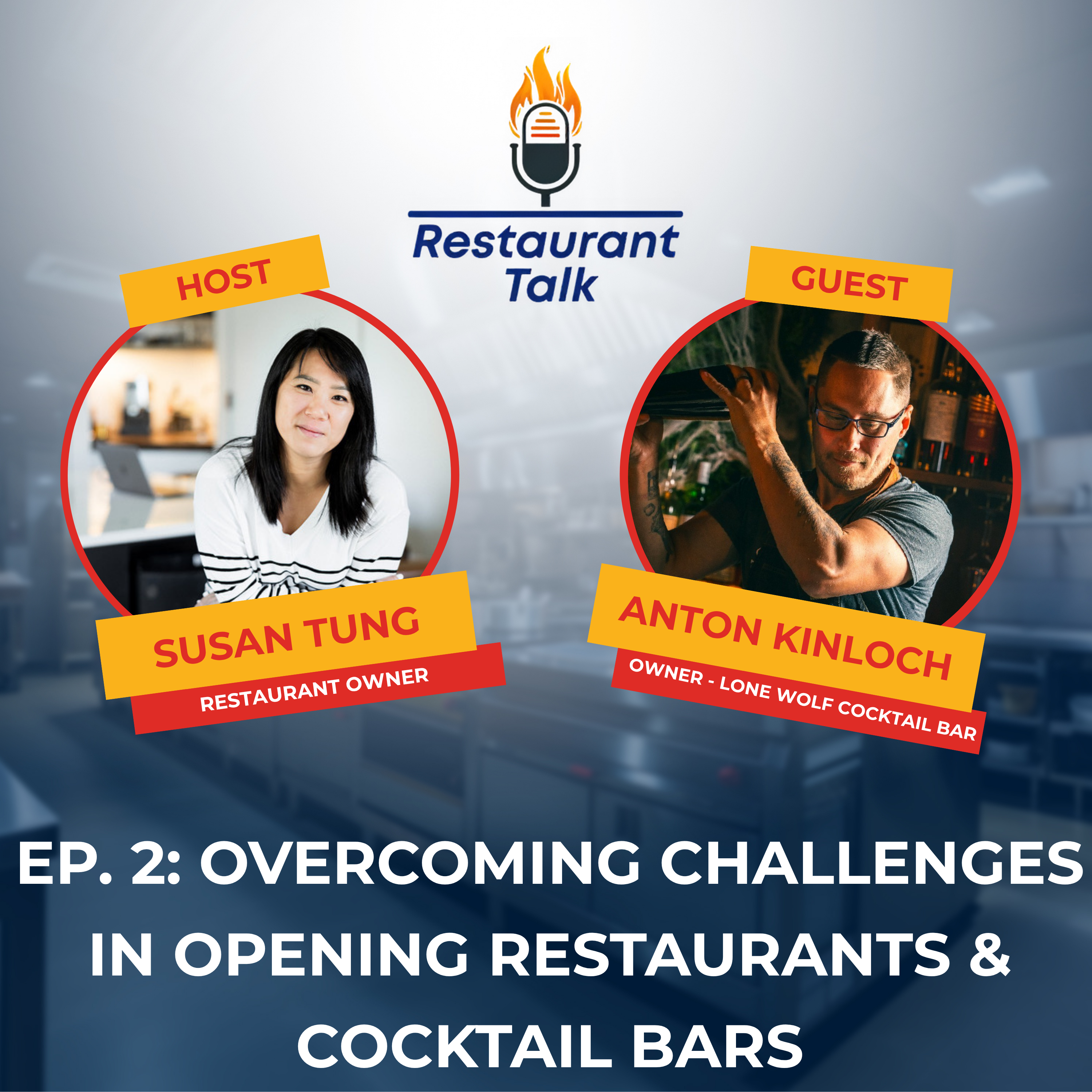
[00:00:03] Speaker A: What's up, everyone? My name is Susan. I will be your host today for the Restaurant Talk podcast. I am joined by my friend Anton Kinloch from Lone Wolf in Kingston. And first off, I want to start off by saying this episode of Restaurant Talk is brought to you by Save Fry Oil. They are the exclusive home of Fry Lo. And if you're in the business of deep frying, you got to listen up. Frylo is a game changer. It's a patented shoebox sized device filled with ceramic, Japanese, Japanese ceramic tiles that live right in your fryer. So there's no cords, there's no chemicals, there's no hassle. It slows the oxidization process, which means your oil stays fresh for longer and it cooks faster at lower temperatures and delivers lighter, crispier food every time. Like, we're talking 50% less oil use.
Coincidentally, I actually use it myself.
And that was just by sheer luck that I'm also hosting the podcast today. So, really excited to have Anton here.
Anton, thanks for joining us on the show.
[00:01:12] Speaker B: Yeah, of course.
[00:01:14] Speaker A: So let's start off. So we are both restaurant owners, so obviously, you know, this is Restaurant Talk. Let's talk a little bit about your business. Tell us a little bit about the background and how you kind of got to where you are now.
[00:01:28] Speaker B: Well, Lone Wolf is originally, it was meant to be kind of a more upscale cocktail bar in a residential area where cocktail bars didn't really exist even in the city of Kingston. Cocktail bars were a very foreign concept. So that was an uphill battle within of itself. But then we also had this ridiculous timeline that we put ourselves under because we had a tiki bar in New Paltz, New York for about five years.
And in September of 2023, we were forced to vacate the premises. Our landlord decided not to renew our lease. And in August, we had just signed a 10 year lease on this brand new property at Kingston. So we put a lot of pressure on ourselves to get this place open to make sure our staff had a source of income coming in during that time. So we managed by some miracle to open venue in just two months. Liquor, license, staff, equipment, everything.
[00:02:23] Speaker A: That's pretty unheard of.
I think, like, that's probably the best case scenario I've ever heard of, like flipping a restaurant.
What was it like previously? What was the space like previous to Lone Wolf?
[00:02:36] Speaker B: So it was another restaurant slash cocktail bar, but it was not necessarily outfitted with the best equipment or the best tools. The space itself needed a fair amount of rehabbing. So it was mostly aesthetics that were done by the previous owners. But the equipment itself was not maintained. The hood system was not maintained, nor was the grease trap. In about three years. So walking in and purchasing all the old equipment and then realizing that all of it has to be replaced, all of the plumbing, all the electrical, all the refrigeration. So there was just one thing after another that just had to go, and it had to go quickly.
[00:03:14] Speaker A: Yeah, I think it's pretty rare anyone ever takes over a space or just, like, walks in and everything's pristine. There's usually a reason why restaurants close. And, you know, that's kind of the effect of lack of care, I guess you can say. Right.
My parents, when. When they took back over their restaurant, like, they had sold it and they took it back over.
We had to do, like, a deep clean, you know, as you can imagine, like, the. The quality of the stuff that was there. And I'm not even kidding you, the sides of, like, the deep fryer were so caked in grease, like, you could take, like, a scraper, and, like, the grease was like a centimeter, like, two centimeters thick. It was like.
[00:03:53] Speaker B: It was gross.
[00:03:54] Speaker A: Yeah.
Let's talk a little bit about cocktails. So why cocktails?
[00:04:01] Speaker B: I mean, cocktails, I feel like, are something that's just part and parcel of the. Of the dining experience. I think that a. The margins on them are significantly better, but balance, it's associated ultimately with kind of celebrating and going out and having a good time. I mean, food is equally important, But I think cocktails are just kind of more aligned with celebration. So we wanted to present the area with something that was a little bit more novel by focusing on education, on delivering a better experience, on presenting new and unique ingredients and maybe new and unique cocktails that people have never seen and really just kind of educating them on what's out there.
[00:04:42] Speaker A: So when you say unique ingredients, I mean, like, every demographic's a little bit different. So in your area, what's considered, like, a unique ingredient?
[00:04:51] Speaker B: I mean, things as simple as, like, Demerara syrup or even, like, using different kinds of mezcal, different kinds of rum. Those are all kind of very novel concepts, because I'm coming from an area where it's very much vodka sodas, tequila sodas, flavored margaritas that have been flash blended to death.
So here we're taking a little bit more restraint and a little bit more care in what we do.
[00:05:19] Speaker A: I have a bartending background, but it's not like your fancy bartending. It's more just getting people drunk. Because back in the day I worked in like a student bar, so it was the vodka sodas and the tequila shots and people didn't care what brand they were drinking, they just wanted the cheapest one and they just wanted to be able to buy the most of it.
How do you get people to step in the door, to want to try that new experience and to be willing to spend more money on something like that?
[00:05:52] Speaker B: I mean, for us, it's always been taking care of the very first experience that they have when they first interact with us, whether it be on our website or on our social media. Just that point of interaction is tremendous. And being responsive is so important.
And if somebody asks a question on social media, like, hey, what are the hours? Hey, where's the menu? Instead of saying, hey, just go directly to the website. No, like deliver it right to them. Hey, this is where you can find this information. Or hey, if you have any additional questions, here's my direct email. Feel free to reach out. So basically being accessible is a great way to start building trust. Once we get them in the door, then it's kind of making sure that we personalize the experience, get to know them, get to know their background, how they found out about us and track that information. So that way when they come back on their second, third, fourth visit, we at least have a good rapport with them and hopefully that positive experience spills over into them telling their friends and other people, hey, I went to Lone Wolf, I had a wonderful experience, I definitely look forward to coming back. And it's just that constant follow through and constant contact.
[00:06:58] Speaker A: Awesome. And you guys don't do just cocktails. There's a food program as well. Can you tell us a little bit about that?
[00:07:04] Speaker B: Yeah. So the food program is pretty much just Pan Asians bites. My wife and I collaborated on the food together. Ultimately her ideas my, my kind of ergonomics of the space and where stuff should live so that way we can clean it up as quickly as possible. But there was a fair amount of R D involved.
So like yourself, you know, making everything from scratch, from the dumplings to the noodles to the rice, like we decided to take matters in our own hands and just do it ourselves because we knew that we had better control of the product and we knew that there was going to be a consistent product there instead of trying to farm it out to a third party company where the consistency might falter at some point.
[00:07:43] Speaker A: Yeah, for sure. R and D is also like the best part, I feel like, about building businesses. Right. Like, you know, it's funny to think people see like, our restaurant spaces and they see like, the pretty stuff, but they don't actually see us, like, grinding it out in our kitchens and making a million batches of broth or like spring rolls and dumplings. Like, but that's like almost the best part about what we do, right? Like, it's creating the product and kind of fine tuning it over time.
What's that experience been like for you? Like, when you guys initially launched your menu, did you have to refine it? Did you find, you know, it wasn't well received? What was that reaction like?
[00:08:34] Speaker B: I mean, the reaction was, was pretty good, mostly because there are, there's already kind of a diverse amount of restaurants in the area. I mean, there's a, a fair amount of like, classic Italian red sauce joints, but there's also like some Japanese, there's some Chinese, there's a fair amount of Mexicans. So people are into something new and unique. But there was nobody that was doing Cambodian or Thai or Vietnamese. And we were like, all right, cool. Like, this is an opportunity for us to kind of step in.
So it was, it was immediately well received, but people were kind of noticing that, hey, we want more substantial dishes. Like, the concept of a cocktail lounge was very foreign because in an area where you're surrounded by restaurants and not really cocktail bars, it's hard to kind of get people to think that way.
So what we ended up starting to do is initially labeling ourselves as a tapas style menu, which again, tapas, not really a familiar term to a lot of people. We had to explain this as small bites. This is shareables. And then eventually after a couple of months, we were like, you know what, let's flip the menu, let's add larger portions, let's do larger plates, let's make some more entrees there and see what happens. And people have been, people have been eating it up. It's, it's good to see. But at the same token, it's nice when people go out with a group of five, six, seven, eight people and they order just a bunch of small bites and they just share it and pass it around. It's like, that's what we wanted it to be.
[00:09:55] Speaker A: And that can be hard, right? Like starting a new culture like that in your area. Because like, I, I, I am in a very, I say meat and potatoes, you say red sauce. I'm in a very meat and potatoes town. So for me to introduce Vietnamese food, people walk in and they're initially like, is everything spicy? Or like, they they're, they're scared of eating like some kind of animal they've never had before. Right. But it's like, no, we use cow, like we use pigs. Like, it's the same things that we have already here. Nothing scary, guys, but trying to get people to change their habits and like, what they already know is really hard.
It's funny. My friend's actually in Spain right now. I've been getting. I've been really obsessed with Valencia. Like, I really want to go there. And I actually have a friend that's there right now and she's always sending me photos and just, you know, obviously teasing me.
But she messaged me the other day and she goes, I wish we had tapas in Canada.
And, you know, and I said, we do. They're just like, not as popular and it's probably not done the same way there, because over there, that is their culture. That's normal. Everyone is looking for that and they're going for that. But here, it's like, it's so foreign that you have to educate people and you have to like, show them actually what it is. Even for me, like dim sum. You're familiar with dim sum, right?
[00:11:19] Speaker B: Yeah, Love dim sum.
[00:11:20] Speaker A: Yeah.
[00:11:20] Speaker B: Okay.
[00:11:22] Speaker A: Dim sum is almost like a tapas style cuisine, right? You're ordering like small plates to share.
When I did a dim sum special at my restaurant, everyone wanted to order it for dinner. But like, dim sum is a brunchy kind of thing. Like, people like, can I pick it up for 4 or 5pm and I'm just like, yeah, I guess you can. Like, there's no reason why you can't. But it's just the way that their brains work. They think like, oh, you know, I'll just order a bunch of things and I'm gonna eat it for dinner. Whereas we're like, we're going to eat it for lunchtime and, you know, snack on it and whatnot and have tea and enjoy it.
So let's talk about your space. It's so beautiful. So anyone that's listening to this. When I first found out about Lone Wolf, I, like, did a Internet deep dive. I went on Google. I checked out their Instagram.
It is so esthetically pleasing and actually so unique.
Can you tell me about, like, the inspiration? How, how the heck did you come up with your design?
[00:12:28] Speaker B: So I have, I have my wife to thank for that. She's the kind of genius behind it.
[00:12:33] Speaker A: Good answer.
[00:12:34] Speaker B: Yeah, no, she. When we took over the space, what we really liked about it was that it was Already kind of forest themed. The previous bar was called Lys, which was Polish for fox.
And I kid you not, there was a taxiderby fox right in the foyer, which just scare the living bejesus out of me and most normal people. And then when you walk in, it's just this eclectic mashup of furniture from different periods. Area rugs. It just looks very kind of disjointed. And the one thing that we took away from it, when we got all the stuff out, we were like, well, the walls are painted this really nice forest green. The ceiling tiles are painted black. Like, we can work with this aesthetic. We just have to now kind of throw. Throw some wallpaper on. So we went through. We got, I think, six or seven different samples of wallpaper from Etsy, and we just kind of, like, plastered them on, and we tested it out and see one. See what works, what doesn't. And we found a couple accommodations, and ultimately we ended up rolling with, like, one combination and then said, all right, let's do all these walls. Let's leave some of these walls as accent walls. And then we decided to take it a step further and design the bathroom. So my wife got one bathroom, I got the other bathroom. And we decorated them in our own styles.
So you get a little bit of personality from. From both of us in that respect.
[00:13:50] Speaker A: I love that. That reminds me of those, like, home makeover shows you walk in. It's like. It's like, oh, you designed that one and you designed that one.
[00:13:58] Speaker B: Yeah.
[00:13:59] Speaker A: So just out of curiosity, did she design, like, the female one and you did the male one or.
[00:14:03] Speaker B: Yeah, I mean, I did the one that was closer to the bar area, just because it was smaller. And then she wanted to do the one that was ADA compliant in the back, which was a little bit wider, so we both got what we wanted out of it. And then when we looked at the ceiling fixtures, we were like, well, these ceiling fixtures are ugly. Let's replace them. Let's get some sconces. We wanted to introduce some wolf paraphernalia, so we ended up getting a couple of sconces that actually were wolf heads.
So that was a nice, nice little touch. And then once we got to the tables and chairs, we were like, all right, let's go on Wayfair and see what's available. Let's go on West Elm, see what's available.
And we ended up settling on marble tables on brown leather chairs. We ended up settling on these really nice navy custom banquettes that we had done up.
And once we got the measurements. We were like, all right, let's do a mock floor plan. So we grabbed blue painter's tape and started laying it down on the floor and measuring out, like, the space in between tables to make sure that that was accessible enough for somebody to get up and walk around.
Because you've been to places where they just stack tables on top of each other. It's just like really, really narrow and really uncomfortable.
So we wanted to be mindful of that and make sure that the space really flowed.
[00:15:17] Speaker A: That's awesome. I love how well thought out that is. But what I'm actually picturing right now is a crime scene because, like, I'm thinking of tape on the floor.
[00:15:25] Speaker B: It literally looked like a crime scene because there was just like blue painters tape everywhere. And we're just constantly mocking stuff up. And we're like, all right, cool. The dimensions of this banquette, if we put it right here, it'll be right in this spot. Okay, now let's grab a milk crate and put it down and pretend this is our table. And again, like, measuring the space out. I think it took us about two or three days just to get that layout done for 35 seats in the dining room, but it worked out great.
[00:15:51] Speaker A: What is your wife's role in the business now? Is there any role there for her?
[00:15:55] Speaker B: So she pretty much handles some of the HR aspect for me. So she does a lot of the onboarding and I handle the payroll aspect. But for the most part, she kind of focuses on her job over at the Culinary Institute of America across the river. So she handles student employment across Hyde Park, Texas and California. So that's her own full time, 80 hour a week gig.
[00:16:18] Speaker A: Yeah. Yeah, that's definitely a big job in itself.
No, I'm just curious because there can be such an interesting dynamic when husband and wives work together.
You know, how did you guys make that work? You know, with the design aspect? And did you guys ever butt heads, like, what was that like?
[00:16:37] Speaker B: Yeah, no, we. We had some. We had some differences of opinion, but for the most part, I basically said there I was like, you know, like, I'm too tired to argue with you about this because, like, you. You have a better vision you have. We go out a lot, especially if we're down in the city or any of the major cities. We like to go out to nicer restaurants and get inspiration. Those.
So I pretty much just defaulted to her and said, you know what, if you have an idea of what this could look like, why don't you just send me A mock up. We'll. We'll talk about it and then from there, okay, cool. Let's order it. And I'll just assemble the furniture and I'll put stuff where retail me to put stuff.
[00:17:10] Speaker A: Awesome.
That's kind of like my husband, like, you know, we.
We kind of, like, know our rules. He's like the. The fixer. And then I'm just the. I'll just point and whatever needs to be fixed. And there was a time we did butt heads, right. And then we had to figure out, okay, like, we can't keep doing this because it's just not conducive for. For the business. But now he has his own business, so he has his own set of problems to deal with, which is nice.
But growing up in, like, an Asian restaurant, my parents, you know, there were times I remember that they would just, like, argue about certain things, but at the end of the day, my mom always got the final say.
So, you know, happy wife, happy life. Right. And I think that applies, I guess, in the restaurant world, if you're working with your spouse as well.
[00:17:53] Speaker B: Yeah, yeah. You also have to know, like, when to step back and realize, like, hey, like, are we even arguing about this one particular topic? Or is this more of an ego thing? Because once ego sets in, that's. It's game over.
[00:18:06] Speaker A: Yeah. And I think that's, like, where a lot of people. That's a lot of people's downfall is they let their egos get in the way. Right. Like.
Like, I get it. You know, we built these businesses, and there's something about it that just really makes you kind of feel like you're higher than you really are.
But then you know how it is. As soon as you get that one bad review, like, the world kind of comes crumbling down and you're kind of questioning your existence. Right.
[00:18:34] Speaker B: Yeah, it's. It's this crazy, crazy thing that, like, we live on this high of, like, serving guests and making people's nights and giving them a wonderful experience. But the moment that somebody has, like, a. A bad experience is like, where the hell did we go wrong? Like, what did we do wrong inherently? And then you just sit there and it eats it away at you. And the first. The first sign of burnout really, is the lack of empathy is like, the moment you stop caring about those little things about how you can improve that experience, that's when you should start being like, okay, cool. Is this industry right for me? Or should I step back or should I change something in my life? Because that's Pretty much the, what I often see with a lot of business owners is like, that's when they start to kind of just stop caring about the business. And then thereafter the staff feel that and then the guests feel that and then the whole thing just starts coming apart.
[00:19:24] Speaker A: Yeah. And again, that's because everything's top down. Right. So once the owner stops caring, well, like, who else is going to care? And I think no matter what, like the, the owner is always going to have to care more than everyone else. Like it. That just makes the most sense. You have the most to gain, so you really should be investing and putting in the effort like the most out of everyone.
So let's talk a little bit. Customer reactions and how, how that's been going for you lately. Like, what's your, what's kind of like your demographic right now? The people that come in, I mean.
[00:20:05] Speaker B: Right now our demographic is still kind of this interesting Mashup of like 70 to 75% people who are visiting the area. So a lot of tourists, especially from like the five boroughs, and then about 25, 30% roughly of locals.
And some of the locals are, are coming back and they're regulars and they're repeat guests and they're wonderful. And then there's also a bunch that are coming in for the first time and they're just like, oh, like, when did you guys open?
I've never heard of you. And it's like, we've been here since November of 23. But you know what, I'm happy that you're here now. Let's get you a great experience. Let's make sure you tell all your friends.
Whereas people who are coming up from the five boroughs and other major cities, they're pretty much finding us on Resi, on Google, on Yelp. So they're kind of using search engines and we just happen to hit all the marks for them. So that's the first thing that drives them to us.
[00:20:57] Speaker A: What are you doing to make sure you're found?
[00:21:00] Speaker B: So it's a combination right now of social media use. So between Google, pretty much dialing in the SEO on the back end for Google, making sure all my pages on my website are being indexed regularly, making sure I'm updating my hours constantly and pretty much just trying to stay consistent on my social media presence. So Instagram, Facebook, just posting, even if it's not like every day, but every couple of days just to kind of keep top of mind.
But for the most part, it's just trying to also put out some stories for anybody who's following along, like, hey, this is what's going on at the restaurant today. Or, hey, this is the dumpster fire that I'm dealing with right now in the basement where a pipe just burst and I'm dealing with a cleanup.
[00:21:43] Speaker A: Yeah, it's just activity, right? Like, I'm not gonna lie. I'm. I'm also someone that I'll go on Google if I'm in a new area looking at restaurants, and then I will see like their social media and see like, what kind of food they have and what are people posting. But then, yeah, the stories is also important because it's like, hey, is there, is there anyone actually, like, you know, behind the, the scenes here or anyone, like, is there a face behind the business?
So I think that's really important, for sure.
I mean, I'm in Canada, you're in the U.S.
are you noticing a trend in like, sales and kind of like, what's going on with, like, the economic times right now?
[00:22:20] Speaker B: Oh, my gosh, it is a, it is a nightmare right now. I mean, we are, we're facing the impact of the tariffs pretty, pretty heavily right now. So my cost of goods has gone up significantly, like anywhere from about 25 to 30%. Some of my models on the back bar being impacted negatively by this. So allocation of product, cost of product has all gone up, unfortunately. And this is, this is just kind of part and parcel of the industry. And some business owners might think it's a good idea to just pass that cost along to their guests by raising their prices. While with me, I'm just like, I'm just going to have to eat these costs because people in our, in our region are a bit more price sensitive. So if we raise our costs, our prices anymore, guess what, we're going to alienate people.
So being mindful of that, it's just kind of like, okay, I got to tighten up the belt a little bit and just hope that we can ride this out.
[00:23:12] Speaker A: So have you seen this mostly with your alcohol or is this affecting your food as well?
[00:23:17] Speaker B: I mean, it's been mostly, mostly our alcohol. Fortunately for us, our farmers are farmer partners that we've been working with, are relatively local, so we haven't seen too much of an increase there. But again, I have cut back on my spending on the kitchen side of things a bit more just by being more conscious of how much we're purchasing, how much we're wasting, trying to dial back anything that I can in any way. So cross utilizing any kind of waste products and also kind of empowering my staff to kind of get creative in. In the kitchen and being like, you know what, let's run a special. Like, we have some excess products. Why don't you come up with something fun, like get creative. And truthfully, not all of their ideas necessarily pan out, but sure, but it's the.
[00:24:02] Speaker A: It's the effort, right?
[00:24:03] Speaker B: It's. It's the effort. And it's like, it's giving them the autonomy to kind of do their own thing that empowers them and makes them feel good about, like, hey, I'm contributing something to this business, and I can put my name on it. So I think that's. That's one positive thing of this whole. Whole mess that we're in, you know?
[00:24:20] Speaker A: Yeah. And I think as business owners, we are forced to adapt, right? Like, you don't have a choice. You got bills to pay.
But it's often in those times that we do get very creative and innovative. And, you know, for myself, I don't know if this happened to you, but during COVID vegetable oil or whatever, oil in general just went up in price. Like, so like these big giant, like, 16 liter jugs.
When I first opened my restaurants, they were 20 bucks, like, Canadian. And then during COVID they went up to like, 75, $80 a jug, which is insane because, like, you know, we deep fry a lot of stuff. Like, we deep fry, like, spring rolls, our tofu, our wings, like, everything. A good amount of stuff goes in that deep fryer. So every time we changed our fryer oil, I, like, kind of cried a little bit inside. And coincidentally, you know, we're talking about frylo here. It's like this little thing that I found out through a friend, and it's. It's insane because, like, you know, you use this thing and it actually, like, prolongs your deep fryer oil. So. Yeah, what's crazy about the. The fry low is like, you put this little device in, and it, like, looks like this little block, and it literally just like, prolongs your deep fryer oil. Basically, I put this little box into my deep fryer, and then the oil can be used for way longer. So just saving on something like that, like, because I got forced, you know, with a high price of oil, I, like, had to get creative. And this was actually just coincidental that a friend was using this and then introduced it to me. But just using, like, something like that really saves a lot of money. Right. So for you guys in your kitchen, you know, I mean, you said that you're running Specials to save money.
Is that like just kind of using up leftover product? Is that what you meant for, for.
[00:26:04] Speaker B: Me, I actually have two students, two workers who are actually CIA students right now. So giving them the opportunity to kind of run a kitchen and run their own specials and kind of get creative has been a lot of fun because they have these wonderful ideas and I'm like, cool. Like, let's, let's see what we have. Let's get creative.
What's, what's turning. We have herbs that are a little funky looking. We have Thai basil, we have cilantro. Like maybe we can turn that into an herb oil. We have some, some scallops that are probably one day out from being tossed. Why don't we turn that into like a ceviche type thing? So like let's, let's play around with things. Let's see if we can come up with some unique dishes. If it sells, it sells. If it doesn't, it doesn't. It's more about the creative aspect of things.
But also I've started to then implement a tighter inventory control by doing inventory daily instead of weekly. So now it's kind of like, hey, check your pars, figure out what your usage is. Let's kind of assess, assess the situation. And I give, give my staff this as an opportunity to be like, you know what, it's my restaurant, it's my money. But this is also a learning environment.
So you're not going to get this opportunity anywhere else. Like, so I'm going to let you make mistakes on my dime, but in exchange, you have to give me 110% of effort.
[00:27:20] Speaker A: Yeah. And you actually bring up a really good point. And I think people forget that, that in our spaces, yes, they are businesses, but they are also learning environments. Right. Like, so the more opportunities you're letting people grow and learn, the more likely they're, they're happy and creative and you know they're going to take away something from being with you. Like, yeah, sometimes there's lifers, but you know, this is the industry. People don't always stay forever.
So if they get something out of just being in your space, like, that's a huge win. Right. For everyone.
[00:27:53] Speaker B: Yeah.
[00:27:54] Speaker A: How do you, how do you maintain that kind of creativity and kind of innovation in the front of house?
[00:28:02] Speaker B: I mean, front of house, because I'm actually down, down a bartender. I'm actually spending more time behind the bar than ever before.
So now it's pretty much me as the face behind, behind the stick, slinging drinks, interacting with guests. But it's nice because I'm also training up somebody from a bar back to a bartender, so I'm showing him the ropes. Initially, for the first six months, he's only been bar backing, so he's been learning where stuff lives, how, how to juice stuff, how to prep stuff, how to make syrup. So giving him all the foundational knowledge. And then starting this week, I'm going to be training him more so on recipe development, on how to work. Work efficiently, how to work clean, how to build cocktails and. And rounds. And once. Once we have a couple of slow nights and I can kind of step back from behind the bar, I can get out onto the floor, interact with guests while he's kind of making. Making mistakes along the way as well.
[00:28:55] Speaker A: Yeah, for sure. I've. I think we've all made our fair share of mistakes. Right. You know, even as owners, like, we're not perfect. And I think it's important that we communicate that with our staff so that they feel comfortable making those mistakes as well.
[00:29:09] Speaker B: Yeah. No, I constantly tell them. I'm like, I will never yell. I'll never scream. I'll you stupid. Because, you know, at the end of the day, we're all adults here. We're all trying our best and mistakes will happen. I mean, I think my. My favorite mistake that's happened this year, actually, one of my wine cooks used 15 pounds of ground wagyu beef and thought that it was for. It was pork.
And he was like, oh, I thought this was just a higher quality pork product. I was like, there's literally a picture of a cow on the side of the box and it says wagyu beef. I was like, I needed this for an event.
So he was like, well, what do we do? He was like, so I can't use it for meatballs? I was like, no, the menu says pork meatballs. I'm pretty sure you can't use it for meatballs.
So we pivoted. We used it as an opportunity to actually do wagyu sliders and just did a black garlic mayo with some shiitake mushrooms with hoisin, and we just threw it on as a special and it actually took off. And now we started making it more of a regular thing as part of our happy hour menu.
[00:30:09] Speaker A: That's awesome.
[00:30:10] Speaker B: So it was a. It was.
[00:30:11] Speaker A: And that's a happy ending.
[00:30:12] Speaker B: Yeah, but. But I mean, the situation could have also been taken a completely different context. I could have ripped him apart verbally and been like, you're an idiot. Look what you did instead. I was like, you know what?
Things happen. Like, this is not the worst thing that you could have done. And you know what? Like, let's see how we can pivot and make. Make something positive out of this.
[00:30:32] Speaker A: Yeah, for sure.
I mean, that's, it's funny the, the industry. Right. Everyone thinks that everyone's like a Gordon Ramsay in this industry when, you know, he's like, actually a really, like, nice dude, apparently.
[00:30:47] Speaker B: Yeah, right.
[00:30:49] Speaker A: He's just. It's like a character. So then you've got like. But then you've got the stereotype of, you know, what owners are like, or like head chefs are like. And they're yelling at people and, and it's such a crappy stereotype to reinforce. Right. Like, who wants to, who, who really wants to be in the industry and go into these, you know, like, lower paying jobs compared to other industries to just get yelled at.
[00:31:12] Speaker B: Yeah. It's not conducive to your mental health. And that's what we're starting to see more of is actually the industry is changing more so to actually encompass and embrace mental health and better working conditions and kind of being mindful and saying, like, you know what, let's change and challenge the status quo that's been permeated for the last 150 years.
Like, we're no longer in Escoffier's kitchen where everybody's getting screamed at in the brigade level. It's now kind of like it is a pressure cooker. But at the same token, like, there's a certain level of respect that is allotted to people now more so than ever before, which is lovely.
[00:31:47] Speaker A: Yeah, for sure. I try to, like, equate it to sports teams. Right. Like, there's times where things are going to be tough and then we all need to, like, come together versus turn on each other and then not work together. Right. Like, in what scenario of any sports team does someone, you know, carry the whole team on their back? Right. Everyone has to contribute. Like, you can't win without everyone else. Right.
So, okay, let's talk about, you know. You know, we'll kind of start finishing off here. If we were to visit Kingston, Describe to me a perfect day in your area. What would that look like if I was a tourist coming by?
[00:32:29] Speaker B: I mean, I would probably start off right on the Rondout. There's actually a historic museum right there. So there's a.
It's a floating barge that's actually doubles as a museum.
So that's got some historical significance. And then you can just Pretty much walk your way up from the Rondout into Midtown Kingston and there's a bagel shop, there's a couple of coffee shops along the way. So there's definitely a couple of really fun things to see. There's also this amazing little dinnerware design museum right on Broadway, which I fell in love with just recently and they do exhibits regularly there.
There's also the Bardavan Theater where they have live, live shows regularly. So again, catch a show, grab a drink at one of the local restaurants, maybe nightcap at Lone Wolf, maybe not. I mean, there's there, there's so many different places and so many different sections of Kingston. It's kind of hard to say, like one is going to be better than the other. I'd say just like come in with an open mind and just see where the day takes you.
[00:33:31] Speaker A: Awesome.
And my last question for you is, and this is kind of inspired by the tariffs, but if you could have a lifetime supply of any restaurant ingredient or supply that you have, what would that be for free?
[00:33:46] Speaker B: Oh my gosh.
A single, a singular ingredient. It would probably be like Jamaican rum.
[00:33:56] Speaker A: Tell me why.
[00:33:56] Speaker B: I mean, I absolutely love, I absolutely love Jamaican rum. It's just got this really, really interesting complexity behind it. There's also a multitude of distilleries that do some really, really cool things. But again, it's one of those products that is also hard to get access to right about now. Like there's some supply chain issues.
So one of the recipes that I make that was actually nationally recognized as the best zombie in the country, I had to modify my recipe because there is scarcity of one of the ingredients in there.
So it's.
[00:34:29] Speaker A: And then for us newbies, what's a zombie?
[00:34:32] Speaker B: Zombie is it is a incredibly potent cocktail dating back to 1944 from Don the Beach Comber. And I won't go into all that detail, but it's a multitude of rums. Cinnamon syrup, grapefruit, absinthe, angostura lime, housemate, grenadine, and flarenum, which is a rum based liqueur made with ginger and ginger and cloven lime.
[00:34:58] Speaker A: That's a lot of stuff.
[00:34:59] Speaker B: Yeah, yeah. So it's almost like the Long island iced of the Tiki world, but a little bit more elegant and fairly more potent.
[00:35:07] Speaker A: That's so cool. Amazing. Okay, awesome. If anyone wanted to reach out to you and learn more about your business, what's the best way to reach out.
[00:35:13] Speaker B: To you best place would probably be our Instagram lonewolfkingston. Or you could always hit us up on our website, LonewolfKingston.com I'm pretty much the guy responding to every single DM, every single email. So I'm very, very excited. Accessible. So catch me that way and we can continue answering any questions you might have. Whether it be about drinks, food, cocktails, hospitality, I'm here for it.
[00:35:38] Speaker A: Awesome. Well, thanks for joining us. And thanks for joining us on this edition of Restaurant Talk Podcast. My name's Susan Tung. If you want to find me, I'm Susan Tung on Instagram. And make sure you guys check out Save Fry Oil. They will save you lots of money. And if you have any questions, feel free to reach out. Have a good day, everyone.
[00:35:58] Speaker B: Thanks.
[00:35:59] Speaker A: Thanks, Antonio.