Episode Transcript
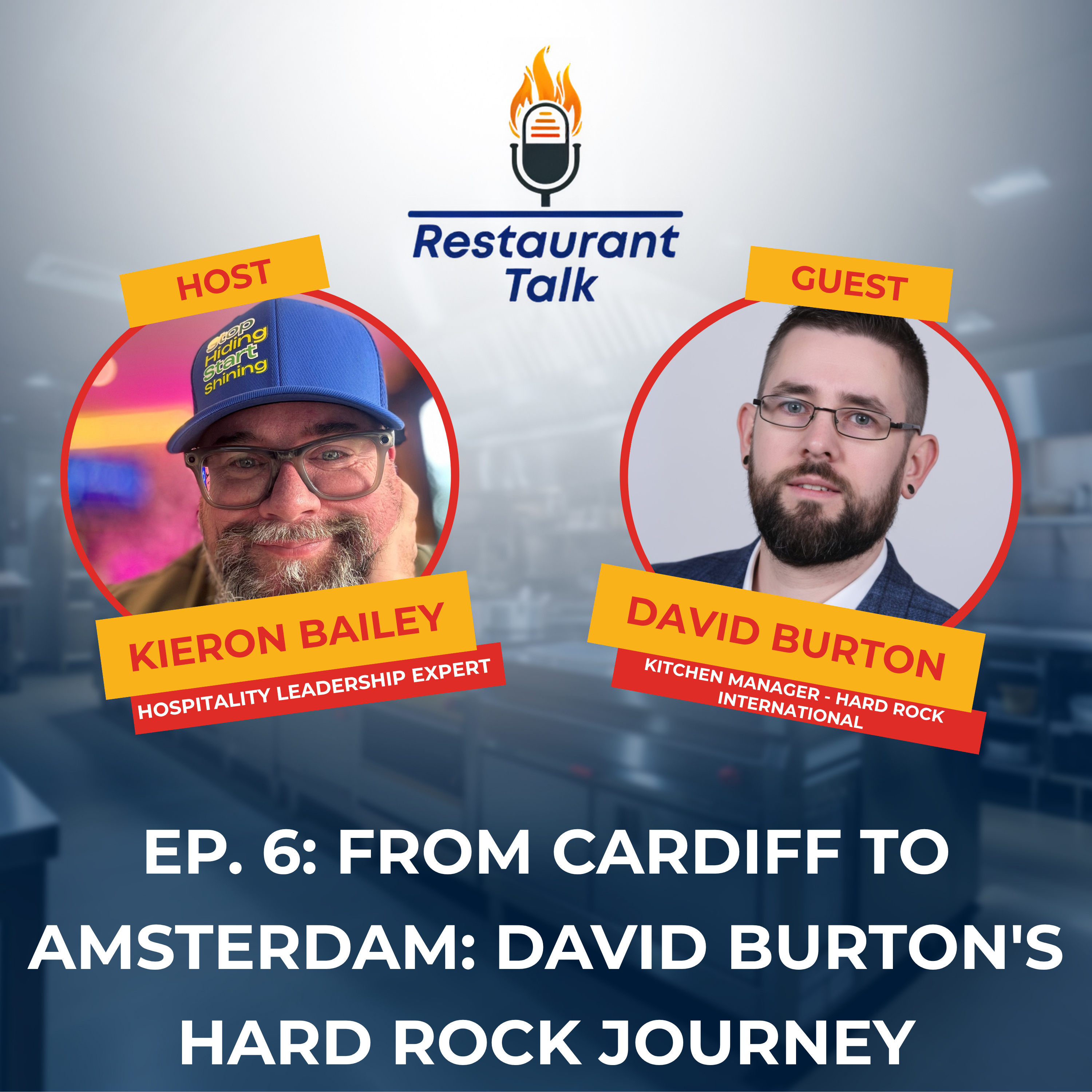
[00:00:00] Speaker A: Welcome, welcome, welcome. This, my friends, is the Restaurant Talks podcast with our good friends at Save Fry Oil. God, that sounded professional, didn't it, Dave? Sounded professional.
We are here to talk restaurant life and it just made perfect sense that the first person I'm going to speak to is somebody that I met.
I don't know, we were both much younger men back then. Oh, a lot younger, A lot younger, A lot younger. I think we both had a lot less facial hair and I certainly had a lot less weight carrying. So it's all progression. It's all progression. So, Dave, tell the nice people who you are, where you're from and yeah, a little bit about you.
[00:00:36] Speaker B: Yeah, I'm Dave, originally from the uk, Wales, good old town city called Cardiff and I reside in Amsterdam. Right now I work for Hard Rock Cafe and I've been with them 20 years now. So all in all, I think I've been with the hospitality sector 22, 23 years. So I've seen my fair share and witnessed a few stories in my time. But yeah, it's been good to go to the live in the uk, but also it's nice to live on the continent now.
[00:01:10] Speaker A: I mean, that's just, it's an exciting time, isn't it? I mean, how long, how long you been over in Amsterdam, Dave?
[00:01:15] Speaker B: Oh, it's 14 years now. 14 years just passed in February.
[00:01:19] Speaker A: Every now and again I feel old and moments like that, you know, you tell me, 20 years of working with a brand and in 14, 14 years since you've been over there. That's incredible, man. That is absolutely incredible. Yeah, 20 years with like, with an amazing brand, like the Hard Rock. I mean, let's dig into that really. Let's, let's talk about it kind of what keeps you in, in a single business for that length of time. And hospitality, I guess.
[00:01:41] Speaker B: Well, it's, it's a strange one.
Everyone knows that hospitality is hard and it sucks sometimes. But with, yeah, with Hard Rock though, I've been able to travel lots of places, lots and lots of places. So just being in Cardiff, it seemed like a small pond as such little fish in a small pond to this major brand. But then I was able to get the opportunity to go to London and work at festivals at Hyde park, which were a lot of fun, a lot of hours, but plenty of fun in the deed as well with them.
But then moving to Amsterdam, I was able to spread my wings a little and I was sent across the pond to Philadelphia to fly into Philadelphia to get to Atlantic City to help open the cafe there.
And that was very, very interesting. My first time in the US and just, just seeing how things are done there. I see all of their training videos, all of their, their guides as such, because everything's the same, virtually the same. But it was just good and interesting to see how they actually do things in the US Opened my eyes and I was really surprised and it was quite nice to see. But then within, with, with that, I've also been down to South Africa. I opened a couple of cafes in South Africa as well.
So yeah, being working with Hard Rock has just made, given me the opportunity to travel a lot. Travel to places I don't think I would really travel to myself or be able to afford really.
[00:03:21] Speaker A: There's the thing. I mean that's a beautiful thing. Is it? So your fingerprints are all over the globe through this brand?
[00:03:27] Speaker B: Pretty much. Pretty much.
And with that, with going to those places as well, I get to see people as well, my fellow colleagues from other countries, from other cafes. And that's what that, that, that's another reason that it's, I've lasted or I've been with a company this long. It's, it's inspired me with just being able to meet like minded people who know exactly what they're doing because of the way that we do stuff within the cafe.
[00:03:56] Speaker A: I love that, man. I love that. And I think, you know, you touched on Hyde Park Calling and we will definitely get into that because that's, that was an adventure to say the least. Yeah.
[00:04:06] Speaker B: Yes, yes.
[00:04:07] Speaker A: Anybody who took part in any of the Hyde Park Calling events has definitely walked away with one or two stories.
I mean, I'm never going to forget just to touch really the, the omelette station in the Cumberland at the time. Like I just, it's a memory, man.
[00:04:21] Speaker B: Yeah, yeah, yeah, yeah, yeah. I, I didn't take the risk of trying to get an omelette from that gentleman, but you missed out, mate, I'm telling you. Oh yes, yes, yes.
[00:04:33] Speaker A: You missed that. Every year on Facebook now I get like a, a collection of people recollections and memories of, of that particular.
I don't think he ever knew was going to be that famous for that long just for banging out a really good omelet.
Amazing. So you've kind of, you've traveled and I think I was chatting with, with somebody on a podcast a couple of weeks ago. We were talking about kind of the, the process of the Hard Rock and what it means to work with a brand like that. And from my perspective, like I did like maybe two years with them, to be fair. So I was never going to never end it for lasting as long as you did, but I really kind of appreciated and understood the level of training that went into people within that business and the kind of, you know, I remember talking about the. I called it an indoctrination. It's definitely an induction done by good old Jim Knight back in the day, who was just incredible at what he did and genuinely kind of inspired me a little bit to kind of move forward and do what I do. But that kind of sense, that training, that consistency is that, is that something that really matters to you and you think makes a huge impact for the quality of a brand?
[00:05:36] Speaker B: Yeah, consistency is the key there.
Just, just, just trying to maintain and make the consistency of the training. But again, training takes all its different ways.
As the saying goes. You can't judge a book by its cover. And different parts of the training need to be adapted for the particular person. And that's something that we teach as well to our staff that then become on, go on to become trainers and train the new members of staff.
But it's, it's. Yeah, we give the tools to make people able to learn. And some of it is hands on some of this theory, some of it's just literature, but a lot of it is just down to making sure the person understands.
[00:06:24] Speaker A: Yeah, for sure. And I think, you know, I go back to my overarching memories of that time and I think the, that process was very much personalized to the individual. I mean, Jim was, Jim was running an induction with 200 odd people in the room, but still it felt like it was delivered to me from my own experience. Hang on, hang on, hang on. Got a cat just walking across. That's corp. Jesus. That's the downside of having eight cats everywhere you go.
Yeah, man. Jim, Jim was just incredible at individualizing that. And I think everybody, everybody that you meet throughout the kind of, certainly throughout the hard rock kind of who are out there training individuals able to do that and personalize that experience to that, to that person. I think I go back to our time in Cardiff, which is kind of where we met. And you know, you think about that from, from, from a team member experience. That was a mad time. If you're honest with. If you think there were three GMs in that building at one point.
[00:07:18] Speaker B: Yeah.
[00:07:19] Speaker A: Which is crazy. You know, just the, the amount of money they spent just on the three of us being there was ridiculous. But how did you find kind of that as an experience of Kind of the, the Cardiff, you know, kind of. Because that's your first introduction. People look at like those kind of those smaller towns and they say, oh, is that necessarily like the representation of the brand? But it stuck with you and it hit home hard with you. What was it about that that kind of made you think, oh, this is for me.
[00:07:45] Speaker B: It was me myself just trying to strive to be better and to do everything I can to make it work as such. Like when it comes down to doing inventories, when it comes down to doing orders, when it came down to doing lots of other stuff.
But it was also a case of if you had ever experienced a match day in Cardiff, if you could do that, you could do anything.
So it just made me, yeah, it made me stronger and then wanting to grow with it as well. And then moving to Amsterdam and then, yeah, working in Cologne, working in Berlin, working in Brussels.
Yeah, it just opens up a load of avenues. And it stuck with me though. And I know that then I want to pass on the information I have in smaller cafes, smaller units, and I see the site Cardiff, in other cafes. I'm like, this reminds me of that. I know how this runs. I can help these people, I can point them in the right direction.
[00:08:45] Speaker A: So, yeah, it's a beautiful thing, man. It really is. And I just genuinely, I kind of, I think back to that time and I think the relationships that we form in hospitality, I don't think it happens anywhere else. I mean, I'm probably biased because this has been my life and yours, but I don't think it happens in that way in other, any other industry. And kind of the connections that I've got with people from the Hard rock. That was 16 odd years ago when I worked for that particular brand. But still, you know, I mean, I was able to drop you a message and like next day you're like, yeah, man, of course I'll come and do this. You know, that's kind of, that's, that's the relationships that you build up and you know, you got married recently, which is a beautiful thing. Congrats.
[00:09:20] Speaker B: Yeah, Yep, yep. Thank you. Thank you.
[00:09:23] Speaker A: Well done. It's the, the. Every smart man finds a smarter woman. Of course, to be fair, roughly indicated to me by my wife, most of the time, to be fair, 31 years. So it's kind of marriage is a joyous thing. But, well, you know, it made me smile when I saw the photos of your wedding and who your best man was. So your best man is kind of your mate from back in the day. Wasn't he?
[00:09:44] Speaker B: Yeah, yeah, I, yeah, my best man Adam, he, he was on the bar in Cardiff.
He joined the, the company maybe a year after me and, or year or two after me and yeah, he was on the bar. He became the bar supervisor there and then, yeah, he, he took the leap of faith and moved to Amsterdam and then I followed a year, maybe a year and a half later. But yeah, from day one we kind of hit it off as pals and then, yeah, I was actually living with him for 12 years in Amsterdam as well. So, so we were, we shared a humble apartment in the Amsterdam east and we, we had that together for 12 years and then we both managed to fly and find women that would put up with us.
[00:10:35] Speaker A: I mean that's for any, any man. That's a remarkable thing I would say to be fair because I, I know every day I look at my wife and think how, how, how did I do that? I'm not sure and I'm, I'm sure you probably have a similar feeling, so. It's been a long time, man. So did you expect that when you first started in Hard Rock way back in the day, did you really always think at that time that hospitality, that was going to be the career? Not necessarily with the Hard Rock? I mean it's fabulous that it has been, but did you expect that hospitality would be the career for this long?
[00:11:07] Speaker B: Honestly, I left school and I did sixth form in the uk.
Then I, I, I wanted to be a pharmacist or pathologist. So this is completely so far away from.
[00:11:20] Speaker A: Same thing, mate.
[00:11:21] Speaker B: Yeah, yes, I suppose, almost, yeah.
But yeah, unfortunately my grades were never there. So I, I did work experience in a pharmacy, I did part time in a pharmacy and then as I left that and sixth form I was like, right, I want to get a job, I want to get a, a well paying job. As such, my experience in a pharmacy didn't really teach me stuff, it was just behind, it wasn't going in depth in anything. So that was like, okay, it's a bit boring. So I actually went to work for a well known British pub chain and it didn't last long with them.
It wasn't inspiring, let's just say that you could see that with some of the staff. But then, but that then pushed me towards again I left there and I was like, I don't want to have, not have a job, I don't want to sign on to get benefits etc, I want to get straight back out there. And I saw that Hard Rock was looking for staff And I was actually looking for the bar and the gentleman interviewing me was like, oh, you've got nothing on the bar, but we have kitchen. And that was. Yeah, that's, that's the end of it. And then. But what it did do is open my eyes to the world coming from Cardiff and yeah, I'd not been that far, not being traveled that much. And yeah, it just opened my eyes to the bigger picture of the world.
[00:12:46] Speaker A: And yeah, and it just makes sense now that this is your career and is, is this, is this where you'll be now, kind of moving forward? Do you think you'll ever one day kind of think, you know, I'm gonna go back, I'm gonna study and I will become a pharmacist rather than a retail assistant, which is trying to make you be.
[00:13:03] Speaker B: I don't think, I don't think I will get that far. But what I do hope is that I can move around within the company as well.
And I'm sure that's possible. There's things in the pipeline, I hope. Yeah.
[00:13:17] Speaker A: As.
[00:13:17] Speaker B: As it is right now, I'm the kitchen manager in Amsterdam, so I oversee, let's say, 45 members of staff.
Yeah, it's, it's an experience and it definitely teaches you new, new feelings and new ways of approaching people and talking to people as well, which we learn as we get older anyway. But yeah, I think it will be. I want to move more computer side. But again, technology is getting there and there's technology within catering as well. And that's the thing that people who design tech don't necessarily know how a kitchen works.
So it's having someone with a kitchen mind able to go, what about this? What about that?
And that's where it comes down to it. A case of someone who knows what they're doing crossing over into that.
[00:14:16] Speaker A: That ability to take that operational knowledge and experience and embed it in a piece of technology or equipment, the kind of creation early on would be game changing. It absolutely would be game changing rocks my world. How many kind of tech developers don't actually employ people who've been within the kind of the operations experience, to be fair? Blows me away. Like, why wouldn't you lean into that experience and kind of learn from lived, learned behaviors and put them in a daily basis? Just makes sense.
That's, that's very cool, man. And I think, you know, like everything you've described, the kind of, the way you've traveled, I think it sounds like the opportunity is 100 there for you to be able to Stretch out and do more. And the joy of a brand like the Hard Rock is they just, they create that opportunity for, for their people and they'll spread it out, so it'll undoubtedly come.
It makes a lot of sense. So let's talk kitchen life. You know, it's kind of, it's been a long time, you know, kind of. I, I, I don't know if you know this, Dave, but When I was 16, 17, I left school with no qualifications. Like, literally, I had a GCSE in religious education and art.
Where was that taking me, mate? I don't know, to be honest with you. Yeah, down the road.
Down the road. And I'm a bit of an agnostic, so I don't really know where it's going to go. But I then went off and spent a couple of years training to be a chef at a catering college. But I realized really quickly at that time that I really had the mouth of Gordon Ramsay. But the talent of a brick.
Not a great combination.
Not a great combination.
Whereas you have got a bit more talent to leans you towards that. And like you, you've just talked about kind of the leadership, kind of experience of running a team of 45 people. That is no small business. That is no small feat to keep all of those folks moving forward. So, I mean, think about kind of kitchen life. What does it mean to you?
What's been the biggest challenge that you faced throughout life in the kitchen?
[00:16:14] Speaker B: It's a bit, it's a mixture. You've got staff and employees and people make the kitchen run.
That's the be all and end all.
You could have robots in the kitchen, but you'd have to have a human being able to do things for that robot.
So, like just being able to deal with people and have the right people and that, that's, I think, has been the biggest thing. And it's not a problem. But I, I feel that finding the right people and they're always there, it's just willingness of people to either step up or step forward.
[00:16:56] Speaker A: Nice.
And I think so with a team of 45, keeping the, keeping those folks happy and keeping them all engaged. Not an easy day out.
[00:17:05] Speaker B: Yeah, that, that, that, that, yeah, you get to know every, everyone individually and you can see when someone's down, when they're walking in, even though they seem happy, you can tell that, okay, something's not right there.
A little heart to heart maybe needed. And just to show them you're human because you're, you're human yourself. And then, yeah, like that 45 people. That's just my kitchen team. There's still a whole army of other people in the building.
So, yeah, it's.
[00:17:35] Speaker A: I imagine all those other people are also looking to you for leadership as well. You know, you kind of. They look at somebody who's got that, the time served, the experience and the quality that you demonstrate, they're going to look to you for leadership. Simple fact.
[00:17:47] Speaker B: 100%. 100%. Yeah, yeah. You'll always have someone walk through the building and they say, I haven't got an answer to here. And a lot of people are just going to go speak to Diamond. Go, go see Diamond. Diamond will have the answer. So, yeah, a lot of time they will.
Someone won't even know who I am, but they'll be told who I am.
[00:18:05] Speaker A: I mean, that's a beautiful thing. And can we just take a minute on that nickname? I'll be honest with you. Just. That's a fabulous thing right there.
Diamond Dave. I love that. Makes a lot of sense. So when we think about kitchen life, let's, let's. Let's dig into Hyde park calling, man. Tell. Tell the people what High park calling is, because you and I are sitting there smiling.
You don't know what it is, what it's all about.
[00:18:27] Speaker B: So Hard Rock Cafe through a festival in the park, Hyde Park. And this was weekend near the Founders Day of.
Which is Hard Rock's birthday. So around the 14th of June.
And we would have.
It would be. Originally it was two days of music, which was stretched to three days.
But what we were there doing is we had fully functional kitchens and fully functional restaurants in the middle of the park.
So when I say fully functional, if anyone's been to a Hard Rock Cafe, you'll have memorabilia on the wall, you'll have proper cutlery on the tables. You'd have proper tables, proper chairs, proper napkins, everything like that. And that's exactly what we did. We had these restaurants built in the park and some of the lucky people, whether you call yourselves lucky or not, you would go down perhaps a week, two weeks before to get the place set up. So you would see it turned from a cornered off area with steel sheets, steel barricades going up 20ft. So you're having a fully functional kitchen in and restaurants in the middle of High Park.
[00:19:37] Speaker A: It's an insane, insane experience, isn't it? First, I remember the first time I walked into that and I think I joined the company maybe four months before and somebody had mentioned it and I was like, yeah, okay, cool. We'll See, and I remember walking into and thinking, oh my gosh, like High park in itself is just huge. It's a massive event. There's no getting around it. And as you say, that moment when you walk in, you see a restaurant that's been built as if and it replicates exactly what a hard rock would be. And I'm like, okay then, are they serving food? Are we serving food from a street food truck or something? What's going on? Like you walk out the back and there's a kitchen. There's like, I mean there was the proper line kitchen. It's like the VIP kitchen. There was the, the public kitchen. There was back of house kit. There was all sorts going on, wasn't there?
[00:20:19] Speaker B: So like again, the, the restaurant side of it was a marquee. And then you would have some porter cabins, not port cabins, like shipping containers attached to the side and in there, this is where we'd have the kitchens all with the extract, everything in there plumbed in water. You would have.
Yeah, you'd have your wash, washing up area, you'd have your dishwasher area, you'd have your fryers, you'd have your grill plates.
Yeah, it was your saladettes, your fridges, everything.
You wouldn't deep fat fryers for sure. For sure.
Couldn't be a, it couldn't be a kitchen without them. But what, what you, what people do see at festivals is this little burger bar and it's a little fryer and a little grill in the corner and they've got all their pre cooked stuff there. No, no, no. This is, this is on another level. This is where orders were coming in and we're cooking stuff to make that order. It was immense.
[00:21:20] Speaker A: It's such an amazing experience that just never leaves you. And the memory of it will never leave you. And there's, there's so many. And do you remember Willow? Willow. So Willow was based out of.
[00:21:30] Speaker B: Yep, yeah, I remember.
[00:21:32] Speaker A: She was amazing. I bumped into her about six months ago and we were just, we were both talking about it and Willow was a prep machine. So I, I remember, yeah, the year I was there, I was, I was running the, the public back of house and Willow and Magda were out there just prepping for days. And both of those women were just incredible. It was like I knew full well that if I needed something, it was going to be done.
They just did not walk around at all. And then the line. Yeah, people, the joy of it. You got. We had people from all over the world, didn't we? Like it Wasn't just like the. The folks from the.
[00:22:03] Speaker B: It wasn't Europe. It wasn't. Yeah, it was everywhere. It wasn't UK and Europe. It was everyone there. People flew in from the us. There were people. Yeah.
As I said, you just get to meet people and these people know what they're doing because they're trained the same way. So, like, Willow could have, would have had maybe someone that she's never worked with. But it's like, okay, I need this being made. Okay, cool. I know how to do that. Give me the recipe.
Yeah, yeah.
[00:22:31] Speaker A: Again, that kind of. You come back to that idea of kind of amazing training, delivers consistency. So you've got 100 people or so, maybe more, kind of bought from all over the globe and all trained to the same standard with the same way, the same approach, the same recipe, the same consistency that they could literally stand shoulder to shoulder, not necessarily be able to speak the same language.
[00:22:51] Speaker B: But I was going to say that.
[00:22:52] Speaker A: Yeah, communicate effectively and just get it done.
[00:22:55] Speaker B: Yep, yep, yep.
[00:22:57] Speaker A: Powerful thing, man. I think I've got such good memories of standing in that back of house just screaming rock and roll. So rock and roll, obviously, was the call. If I wanted a server, then rock and roll was what I would call and a server would run.
And I remember doing that while Chris Cornell was singing on the stage. And I just remember thinking, this is just insane.
I'm screaming for rock and roll while one of my heroes is just absolutely smashing Black hole sun. And just the memory of that is amazing.
[00:23:28] Speaker B: There was one thing that I remember about this is whilst you were caught shouting rock and roll out of the door to get servers in to run food, I remember the frozen tequila bar which was standing right next to us, were looking over going, what the hell are they doing? Why is he shouting that?
And they were just blown away at our organization as well.
[00:23:52] Speaker A: It's a remarkable thing to be able to take that mindset of that restaurant mindset and pop it into the middle of a field in a festival with 50, 60,000 people and just deliver the experience, the hard rock experience. It's an incredible thing, man. Just talking about it just. It just makes me smile, man. It makes me smile. It makes me proud. It's a beautiful thing.
[00:24:12] Speaker B: For sure.
[00:24:13] Speaker A: For sure. Oh, I mean, I don't about you, but when I think about that, one of the other things I think about is the Monday morning when we basically finished breaking down and all the stuff had just gone. The last run had gone to the. The lockup and we're just sitting in that field, thinking, right now we've got to walk to the Cumberland.
And I just remember thinking, my legs are on fire. My. Like, I didn't address. I didn't plan for that. So I didn't kind of go for I'm a chunky boy. So there was some chafing, Dave, let's be honest.
It was on fire. And I'm like sitting in this room, in this field, just thinking, how. How am I gonna get back to my hotel? Who's gonna lift me? Who will carry me? Yeah. Yeah.
[00:24:54] Speaker B: Didn't get a taxi to the middle of Hyde Park.
[00:24:56] Speaker A: I just. I tried, man. I tried, but no one was having it, to be fair. I tried to get Dave Pello. I tried to get Chris Fletcher. Just give me a little hug and hold me and take me, but they were just laughing at me.
Cold.
Cold. Absolutely. Some of the people we dealt with and some of the people we worked with were incredible legends. No getting around it. And, you know, obviously kind of Dave's no longer with us, but I think he kind of made such a massive impact on so many people's lives.
[00:25:20] Speaker B: He certainly did.
[00:25:21] Speaker A: Genuinely remarkable man. A remarkable and funny as urge. Yeah, I was just funny. Like. It's one of the things about restaurant life, isn't it? Kind of. We just. We lean into that kind of that darkness of humor, that gallows humor.
[00:25:36] Speaker B: I don't think there's anyone in the restaurant business that is completely sane. There has to be that. You have to have some sort of.
[00:25:44] Speaker A: Yeah.
[00:25:45] Speaker B: Some sort of part of you which is not natural, let's say.
Yeah. Bit broken.
[00:25:50] Speaker A: Yeah, yeah, broken. I think that's just. It's just who we are, man. There's people. And you know what? I think the fact that we. We find our tribe, we find our community, we find our people, and. And we kind of stick together. That's. It's a beautiful thing, to be honest with you. It really is. And I think in. In times like that, when you're lying in the middle of a field just thinking everything hurts, and. And we haven't stopped. You know, I just think I. I remember we. We kind of kick started that week on the Thursday morning, and I think we just kept going straight through with like 4 hours sleep a night. But nobody complained. Nobody.
[00:26:23] Speaker B: No, everyone. Everyone. Everyone got up for breakfast, had that. Maybe had that omelette. Yeah, yeah.
And then. Then headed over to.
From the. The hotel, which was very close, luckily, and not close enough, but yeah, we into the park to do it for another 12, 13 hours and yeah, everyone was in the same boat. And that's the thing. We just all got on with it.
[00:26:50] Speaker A: Such a mad turn of event. That hotel as well, if you think about the hotel, had a lot of visitors from the Emirates.
I remember we would. We were sitting in that hotel on the Monday morning once we all got back and some people were having a beer, some people were just thinking, I just at some point I. To go and find my bed. And I remember sitting in that reception, just a whole load of broken looking people and then all of these lovely folks coming around just going, why are these scruffy folks in the reception here? This is.
[00:27:17] Speaker B: Yeah, yeah, yeah.
[00:27:18] Speaker A: What.
[00:27:18] Speaker B: What are you doing with this hotel?
[00:27:19] Speaker A: What. What's happening here? It's like, yeah, we belong here. This is our place, these are our people. Absolutely. We do.
[00:27:25] Speaker B: Yep.
[00:27:25] Speaker A: Yeah. So let's talk kitchen equipment. I think we. We kind of. So you've got a vision, actually. You've got a vision about how you can kind of make things better. And I think there's. Have you seen innovations within kitchen equipment kind of over the years? Because 20 years, Dave, I don't want to say it, but it's a long time, brother. You must have seen some innovations through that time.
[00:27:42] Speaker B: I've seen some stuff. The biggest one for me was going from paper tickets to a kitchen display system.
If you. Do you remember the paper tickets, they'd haunt me. I could hear it in my sleep.
[00:27:57] Speaker A: If you've worked in a kitchen that had a paper ticket printer, you can hear that noise now, you and me talking about it.
[00:28:04] Speaker B: Yes.
[00:28:04] Speaker A: Taking somebody back to that moment of ptsd, just like.
[00:28:10] Speaker B: Looking at the clock. Five minutes to ten. Please, please, no, no, no. Yes, yes.
[00:28:15] Speaker A: Just be a dessert. Yeah.
[00:28:17] Speaker B: But, yeah, the biggest thing for me was that when it moved to a kitchen display system, I think it was there, but it just happened a little bit slower and. But once it came in, it was like you're not having to.
Part of it is you lost some sort of communication.
You didn't have someone running the kitchen as such a go. Fire this, fire that. What you had was people able to do it for themselves and see exactly what it is.
So again with. In Hydra Harder calling Hyde park, you'd have someone shouting orders and then you might have 16 orders. You forget it, you can't remember it. But that's the same thing about their kitchen display system, that it was there on the screen and then you could see exactly what it was. You could see what was on the fly. You could see what was.
If there was a special prep or whatever.
So, yeah, that was the biggest one for me.
But then, like, self cleaning fryers, when I saw them, I was like, wow.
Not having to clean a fryer. Yeah, yeah, yeah, yeah.
[00:29:20] Speaker A: And somebody today and somebody reminded me of the fact that every time they've cleaned a fryer, I don't know anybody who hasn't worked in the kitchen who hasn't cleaned a fryer and forgotten to close the tap at some point and then try to reach 100.
[00:29:35] Speaker B: 100.
[00:29:36] Speaker A: If you tell me you've worked in hospitality and you've never done that, I don't believe you. I think you're alive.
[00:29:41] Speaker B: I've done it to myself. I've. Oh, of course.
[00:29:43] Speaker A: We've all done it. You know, you're just standing there thinking, why is this not filling up? This is just. And there's like a weird moment of insanity where common sense should say, there's 20 liters of oil in this tub and this fryer holds 10 liters. Why am I still pouring and this tub's nearly empty? Oh, I know. Because I'm stuck standing in two inches of fat.
Creates an ice rink around me. It makes no sense. Makes no sense.
[00:30:05] Speaker B: Yeah.
[00:30:07] Speaker A: Makes a big innovation. That makes a lot of sense. I think that must have, like, really cheered up the chefs.
[00:30:14] Speaker B: For sure. For sure. Just. Just being able to drop them mid shift as well. That when some things were happening and you're like, okay, I want to drop this. Filter it. Because we've got the lunch rush coming. Let's just filter it out, get it topped up, ready to go. So just. Just the ease of it there.
And. Yeah, mind. Mind blowing. Yeah, Just. Just with the friars, just with the fryers, so.
[00:30:41] Speaker A: Which, I mean, obviously kind of. I sent you some bump earlier about the. What these guys doing. It's just. It's such a simple win. The idea that we can kind of a reduced temperature of cooking. That makes a lot of sense because as soon as you reduce temperature, you're reducing your energy bills, which, let's be honest with you, energy bills. Right now, we're all getting sad on them. Your piano 100. Hard going. I'll be honest with you.
[00:31:02] Speaker B: Yeah, let's not get that.
[00:31:05] Speaker A: I'm on holiday. I don't want to think about that right now. That's fair. It's legitimately reasonable. Legitimately reasonable.
Yeah. Anything we can do to do that, to reduce those energy costs, to kind of improve the quality. And certainly that being able to drop the fryers mid session and just kind of go Right, let's freshen them up. Let's get them on point.
Feels like an absolute victory, to be fair. Makes a lot of sense. I think there's that kitchen display system element that's just. I remember first coming across that and just thinking, oh, my Christ, this is genius. Like, why? Yeah, why, why, why? Why is this taking so long?
Just made so much sense. Although I have had many chefs weep gently as I'm kind of standing, looking down a cook line, I'm like screaming about the United Colors of Benetton on their screen. And I'm wondering, why is that happening?
[00:31:51] Speaker B: Yeah, yeah. From a distance you can see. Why is that ticket red?
[00:31:56] Speaker A: I should not be able to see red. The only red I want to see is when I'm watching my beloved Liverpool Football club. It should not be on that kitchen display screen.
Absolutely should not. Oh, there's, yeah, chefs, man. Absolutely. I feel so. I feel for them, you know, I mean, because all you've done is made it easy for any idiot to be able to spot when something's taking a little bit longer than it should do.
And I was always the idiot who spotted it. And just like I said, Gordon Ramsay mouth, big mouth, put it into action, Made it play. Made it play. Alrighty, so let's talk. I mean, obviously, hard parkour. And we talked about music, but let's talk about music because it makes sense to me. Like, kitchens have run on music, aren't they, to be fair? A happy kitchen, a good kitchen. So tell me, tell me a song that can make you smile on even the hottest day. Now I'm going to tell you, the people that say fry all are sitting, listening to this now, going, why is he talking about music? We didn't agree this, but I'm doing it anyway because it makes me. It makes me happy.
[00:32:48] Speaker B: Right, I'll tell you a story. When I first got to hard rock, I stepped foot in the kitchen and there were two people there. Stephen and Marcus and Marcus.
[00:33:00] Speaker A: Yeah. Yep.
[00:33:01] Speaker B: Yeah, we, we were working there. They were training me. And there was a speaker in the kitchen which had the music, exactly the same music that was playing in the restaurant. Playing in the kitchen. So I was like, all right, this is pretty cool. And then Pink Floyd. Another Brick and a Wall. Come on. I was like, this is really good, this one. I like this one. Really good. And both Marcus and Steve went, give it two days.
And they were right. It was played, I think it was every half an hour. So imagine doing a 10 hour shift. You got to hear it 20 times and yeah. After the first day, it got quite.
Yeah, a little bit, I think we'll say monotonous.
[00:33:43] Speaker A: It got monotonous. Yes.
[00:33:44] Speaker B: Yeah, yeah, yeah.
[00:33:45] Speaker A: But, like, Marcus was not a man to shy. To shy away from Jerry's opinion, was he?
[00:33:50] Speaker B: No, no, no. Not 100. 100. Yeah, yeah, yeah.
The speaker. The speaker kind of disappeared after a while. No one knew what exactly happened to it.
[00:34:00] Speaker A: I think we all knew what happened to it.
[00:34:01] Speaker B: We just didn't know yet. Yeah, yeah, yeah.
[00:34:06] Speaker A: I mean, sometimes you just got to take take control is a simple answer. So it's not another brick in the wall. That's fair. Obviously. I mean, that's.
[00:34:12] Speaker B: No, no, no.
Like my kitchen. The kitchen I work in, the team have got such a broad diversity of music. Some people prefer dance, some people prefer happy hardcore, some people prefer trance, some people prefer dubstep. So there's a massive, massive difference. So what. What we'll find is someone will throw their music on and then it'll just be a mixture.
So it's a lot of the time, if there's anything slow, it has to go because it just. It just slows the whole kitchen down. So a lot of his upbeat, fast, anything that keeps you going a bit like workout music, I suppose.
[00:34:53] Speaker A: It's exactly the same, isn't it?
[00:34:54] Speaker B: It's.
[00:34:55] Speaker A: It's. It's that mindset. It's kind of keeping you moving, keeping you moving forward and just keeping you smiling. There's a simple answer. No one needs Portishead in a kitchen shift, dude. Let's be honest with you. I love Porteous head. I love Porto's head, but Comfortably Numb is not getting it done on us on a busy Saturday night. It's just not. I need to move me forward and. And get me. Get me shaken up, to be honest with you. Legitimately fair, mate. Absolutely legitimately fair. I think you've lost me at the. The happy hardcore that. I just think I'd have to draw a line on that one. That's where I'd. I'd be asserting some authority that.
[00:35:27] Speaker B: That for sure is after service, that.
Cleaning down. Yeah, finishing up, cleaning down.
[00:35:35] Speaker A: That's.
[00:35:36] Speaker B: That's okay, then. But when you're having to try to communicate a little bit as well.
Yeah. You can't be trying to shout over that. So.
[00:35:43] Speaker A: Yeah. Yeah. Ain't getting the job done, is it? So do you still. Do you still have the expo role in Hard Rock now?
[00:35:48] Speaker B: Yes, yes.
[00:35:50] Speaker A: So, honestly, one of my favorite jobs in the place.
[00:35:53] Speaker B: So, like, you got the inside and you got the outside. And for people who don't know what the role is, it's basically the pass.
And it's where the dish is finished off before it's taken by a runner, a server, a bartender, whoever, the manager to the guest. So, like, you're the final bit. And honestly, it's quite enjoyable to do. It's really nice to be there. And, yeah, you basically touch every single plate. That's what you're there. You're there to make sure everything's correct.
[00:36:26] Speaker A: The rule in my world was always very simple. It's like, if you wouldn't serve it to your mum, don't try and serve it to a guest. Simple as can be. So. Exactly. That last pair of eyes, it goes over every single dish. But also the joy of kind of doing expo from. From a kind of a front of house kind of manager perspective. The joy of doing expos. You get to kind of. You get to vibe with the kitchen boys, to be honest, because they're always funny. That's just. They're all. They're always funny and like, we say terrible things to each other sometimes. Some of the names I've been called over the years, I'm like, it is what it is, but it's just, man, it's just. It's a vibe, it's an energy that you just cannot forget. And when you're a part of it, you feel special.
[00:37:04] Speaker B: Yeah, yeah, for sure. And it's. It can never be easy. It's one of the easiest stations in the kitchen, but it's also one of the hardest because once that screen clears in the kitchen, there's loads of people there that they can help each other out, get whatever. You might still have a window full of food and if you've got no servers, you still have to try to get it out.
[00:37:25] Speaker A: Yeah, that's. That's the thing, man. That is a thing. That call for rock and roll just gets louder and louder and louder.
Yeah, yeah. You've got to put your voice to good use. You've got to put your voice to good use, mate. I've enjoyed this so much. Thank you. It's been a real pleasure catching up again after such a long time. It's amazing. Congratulations on getting married, man. I'm stoked for you.
[00:37:45] Speaker B: Thank you very much, sir.
[00:37:46] Speaker A: And. And I will cross my fingers that the Hard Rock will look, you'll pick you up and pop you somewhere. Be beautiful for an adventure this year. It's gotta happen, hasn't it?
[00:37:56] Speaker B: Let's see. Let's see. For sure. For sure.
[00:37:58] Speaker A: I'm all in on manifestation these days, Dave. You know what I mean? I believe we talk about it. We may. We say it's going to happen. And eventually it will happen. So that's what I'm going to do for you. It's the answer, you know? I mean. And I'm an influential man, apparently, in my own head, so. We'll get it done. We'll get it done. Thank you, brother. Much appreciated.
[00:38:15] Speaker B: Thank you. Thank you, Kieran.