Episode Transcript
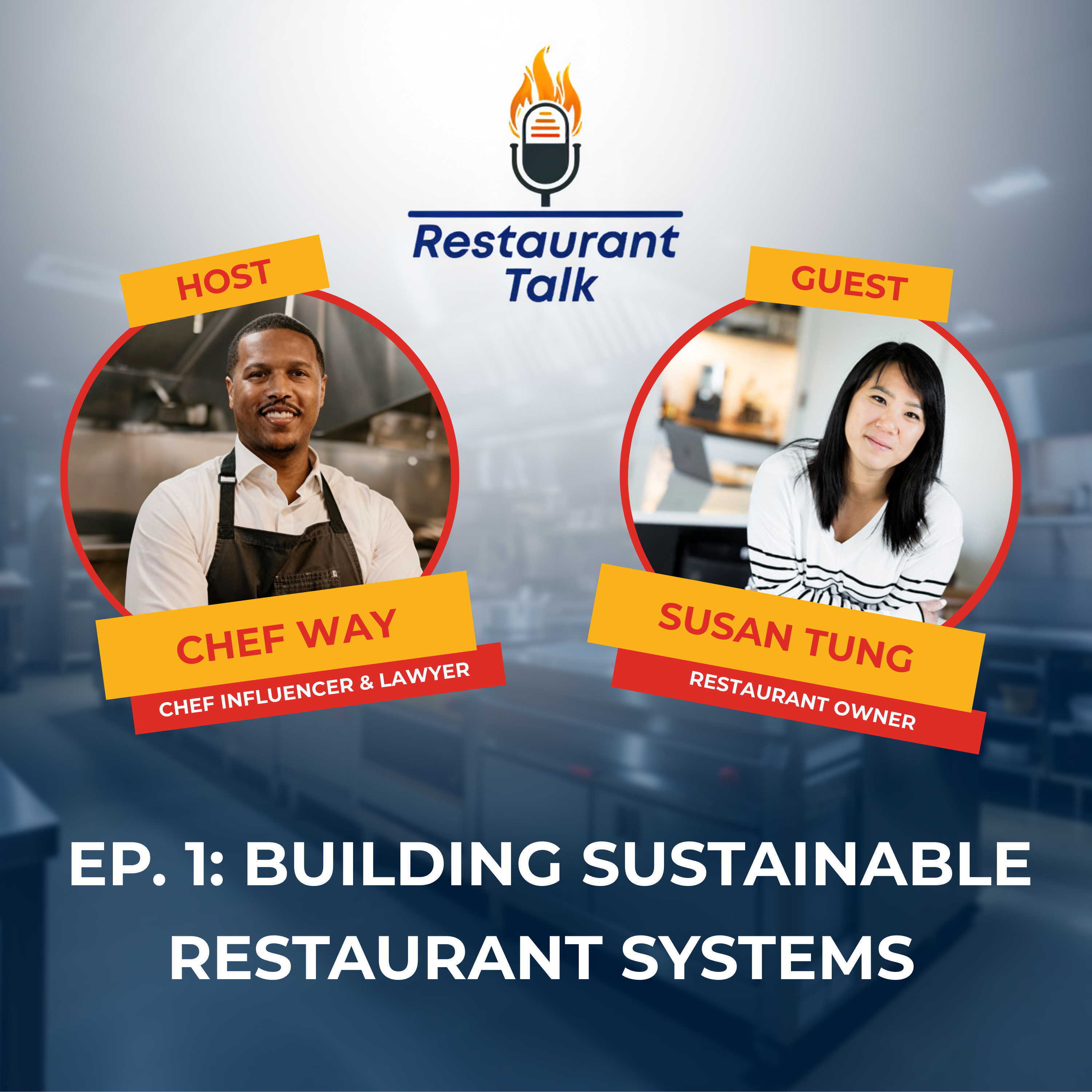
[00:00:01] Speaker A: Okay. Hey, what's up, guys? It's chef way. I'm a chef influencer and will be a first time restaurant operator here at the end of the year. Going into 2026. I have a wonderfully talented who doesn't want to go by chef, but she prefers restaurateur. Susan Tung. Thank you so much for sitting with us today.
I do want to give a shout out to our sponsors, say, fry oil.
One of the best products that they're using pushing right now is Frylo, which helps to reduce the oil absorption and increase the heat transfer of oil for restaurants to meet their bottom line by making sure that no oil goes to waste and that every piece of oil that's used is used efficiently.
So what we want this conversation to be is a candid and casual conversation about the industry.
And I. One of the things.
And can I go. Can you go by Susan?
[00:00:56] Speaker B: Yeah, just go by Susan.
[00:00:57] Speaker A: Okay, Susan. One of the things that stuck out to me was how your family's entry into the restaurant industry influenced the way that you go about running your restaurant. Can you talk a little bit about growing up as a child of restaurateurs?
[00:01:13] Speaker B: Yeah, for sure. I grew up as a restaurant kid. So when you go to a Chinese restaurant, you know, stereotypically there was a kid in the corner doing homework.
So that was me. And for me, every day was take your kid to work day.
So I was very much influenced by my parents, you know, for good and bad. You know, I got to see what hard work looked like and what it's like to persevere even when times are tough, what it takes to become part of a community.
Our restaurant was in a very rural area. Like literally our. Our neighbors were cows.
So my parents really integrated themselves in our community. And yeah, so I learned a lot of good stuff from them, but I also saw the bad. Right. You know, the industry has a lot of problems with it, which we all know and I'm sure we'll discuss.
But watching my parents work morning to night every single day really inspired me to go about the industry completely differently.
I focused on creating a restaurant that didn't need me to be there 24 7.
And I also focused on creating something that was just, you know, sustainable, that one day I could pass on to my kids or we can expand.
And that's kind of, yeah, how my parents really influenced me. There was, you know, the good and.
[00:02:42] Speaker A: The bad, you know, and so would your. Would you say your parents kind of pushed you to strive for excellence? They have like a culture of Making sure that every I, T and I were dotted and crossed.
[00:02:54] Speaker B: Yeah, I think I'm gonna play on the Asian stereotype here. You know, they wanted me to be a doctor or do, like, do something, you know, in the medical field.
And I actually took my MCATs, I took the courses. You know, I was in kinesiology. I, you know, I did all the right things.
But when I was in university, I actually ended up bartending and falling back into the industry. So whether they liked it or not, I still ended up, you know, serving drinks and food because that's just what I know and what I'm good at.
And throughout my whole life, my parents have always just wanted me to be a doctor. They wanted me to be, you know, an A plus student, win the awards, do everything like the best. Right. There was like no such thing as getting a B. Getting a B just like was not a thing, not a letter in my Alphabet.
So, you know, eventually they came around to me being a restaurant owner and they saw the success that I was having and now they're very on board. And, you know, they haven't said it directly, but I think they're proud of me.
[00:04:03] Speaker A: That's awesome. Yeah, it's sometimes hard for parents to verbalize, but you can see it in their actions and the sacrifice.
So I'm right there with you. So I understand your parents restaurant was called the Golden Wheel, and that was in Peterborough, Ontario. Tell me a little bit about Peterborough, Ontario. What size town is it? Is it big? Metropolitan?
[00:04:23] Speaker B: So Peterborough is actually the city. We weren't even in the city. We were actually outside of Peterborough in an area called Cavan.
So Peterborough, the city itself has about 70, 000 people.
It's got a university and a college. And so there's a little bit of stuff going on. You know, it's nothing like Toronto.
Toronto is an hour away from us.
So I'm outside of Peterborough and that is, you know, a very, very farmer. Like just imagine tractors pulling up into our parking lot to come grab a bite because that is, that is what happened. Or people riding on their horses because they're like going horseback riding. And I remember as a kid, I love that I was just like, oh my God, there's a horse outside. And go and take photos. And so, yeah, very rural area where, where we are from. And Peterborough itself is very meat and potatoes, you know, a lot of burger places, a lot of chains.
So even for myself right now, you know, as an existing restaurant owner, I have a lot of work to do when it comes to Showing people what our food is, you know what I mean?
[00:05:30] Speaker A: And. And Susan, what is your food? Can you describe to us what type of cuisine do you cook?
[00:05:37] Speaker B: So I currently own Hanoi House and that's a Vietnamese restaurant.
Our specialties are pho vermicelli's, Banh Mi's, which is like the Vietnamese sandwiches. You know, we do all like the fun Asian apps, you know, your spring rolls, fresh rolls, like the stuff with the peanut sauce and all that.
So that's my main restaurant now. Four months ago, I actually sold my Japanese restaurant which was specializing in ramen and more like late night Izakaya eats.
And I let go of that in November and then. Yeah, so I've always just been very known in my area for promoting and making Asian food simply because that's what I'm most passionate about.
[00:06:23] Speaker A: Awesome. A couple of my favorite Vietnamese dishes. Bon thome and for pardon my pronunciation.
[00:06:30] Speaker B: Don't worry, I'm also not Vietnamese. I'm just a huge fan of Vietnam.
[00:06:35] Speaker A: Yeah, we have Bunkot and then.
[00:06:38] Speaker B: Oh yeah, yeah.
[00:06:40] Speaker A: What's the Kurang Moi? It's a crab dish with tamarind.
[00:06:44] Speaker B: Yep.
[00:06:46] Speaker A: I really love my mother in law. She makes this.
Man, I can't recall what they are. They're like inside of banana leaf and they have dried shrimp with a rice noodle.
What they're called?
Yes, yes, one of those.
And then she makes the best. It's a soup with shrimp and pork based soup with egg noodle.
It's fantastic. But Vietnamese food is definitely one of my favorite foods. My wife's Vietnamese. She doesn't cook a lot because I love cooking.
But yeah, fantastic cuisine. Tell me a little bit.
[00:07:23] Speaker B: So much sense. Because you are naming dishes that are not like your typical popular dishes. And I was like, oh, you're eating someone's like home cooking. Like that's awesome.
[00:07:33] Speaker A: Yeah, it's. It's a fantastic, is a fantastic food. Absolutely.
[00:07:38] Speaker B: Now I gotta ask, what do you like to cook? Do you ever cook Vietnamese food? Do you try?
[00:07:42] Speaker A: Yes.
So like, honestly, I really got really scientific about cooking.
It's called a Vietnamese caramel man. I think it's. I cannot remember the name. But needless to say, if you ever seen a Jamaican make oxtail in the pan, they typically will put a sugar to caramelize and brown within the pan. And then they use that, that color instead of like a browning to get color into the dish.
So I've used that to great effect with some maitake mushrooms. A lot of what I do is a combination of Japanese Italian and French techniques.
And so we recently just had one of my supper clubs. We served 32. We had 23 covers night one and nine covers the next night.
Fantastic. More of a European style tasting.
And I used one of the techniques called extraction.
Guy. Out of France with 17 Michelin stars, chef Yannick Jeleno takes vegetables and spices and cooks them for 12 hours at 176 degrees Fahrenheit. And then he freezes it or either puts it into a centrifuge to remove the excess water. And instead of using heat to reduce it, he uses freezing and thawing.
And so that was an interesting dish. I was able to take about 5 pounds of turnips and reduce it into about 8 ounces of liquid. And I got a chance to pass it around to the guests as they paired it with the duck dish.
[00:09:05] Speaker B: So that's cool.
[00:09:07] Speaker A: Yeah, that I'm really, like, a brainiac in the terms of the food.
I love to cook, and I love the technicality. I think that's what's so interesting about Frylo is that it's charging the oil with electrons. And I never thought about how efficient heat transfer could affect.
It would make your product less oily.
So let's talk about systems. I think what stuck out to me was that you're able to contrast your current operations with the way that your parents ran everything, which it seems to be off of memory and more spoken instruction.
[00:09:43] Speaker B: Yeah. Can you.
[00:09:43] Speaker A: Can you help me out with that a little bit?
[00:09:45] Speaker B: Yeah. I mean, this is really common for mom and pops, right? You know, it doesn't even have to be, like, Asian restaurants. It's really just your average mom and pop nowadays. Any ethnicity, they really just believe in. You know, they're so passionate about food, and they love cooking by feel, you know, with, you know, grandma's recipe, which is in their head, but nothing's actually documented.
And at the end of the day, that's great. But you see, the problem is only one person can replicate that.
And, yes, the food tastes amazing, but if you're the only one that can do it, you know, that's not. That's not a great business model, because at the end of the day, when you open restaurants and. And you're in the food business, it's a business first.
The. The passion stuff, the culinary stuff like that all comes with it as well. But at the end of the day, the dollars and the numbers, like, that's the most important thing. You got to pay your bills.
So, yeah, with my parents, you know, I never. Not a single Recipe. I've never used a single recipe on paper.
Even my mom measuring things was so obscure. Like she would use random objects to measure quantities of things. Like one time she showed me very recently how to make like honey garlic spare ribs. And then she's like, okay, now you're gonna take this container and you're gonna fill it one third and it's like. And you're gonna put that like this much garlic in there. And it's like, well, like that's really a random object. So she just kept taking random things to measure.
So, you know, she just doesn't know it any better though, right? Like, she just did what she was taught and that was the best way she knew how to do it.
When it comes to doing the math or Excel spreadsheet or something like that, that's completely out of her realm.
Even food costing, right? She's not actually doing anything on pen and paper. She's just kind of doing like rough math in her head.
You know, she knows how much food should cost and how much should be priced. But it wasn't perfect. It's like, well, you know, the chicken costs this much per kg and therefore it should be like this again. It's great because only she's the one doing it, but not sustainable, right? So, yeah, I think with documentation, it's just you gotta start somewhere. And I think a lot of mom and pops just struggle with knowing where to start and what, what they actually should be writing down, you know?
[00:12:16] Speaker A: Absolutely, totally agree. And I want to, I want to bring out an exhibit to obviously I forgot to say I'm a lawyer as well. And so this is like an extreme hobby.
But what you said about the system, right. I think, you know, as an attorney that would be running a restaurant, I've raised all the capital I'm entering into all of the transactions and the hiring.
We've raised about 1.1 million.
I'm a first time operator, so it's nothing short of remarkable.
I have my occasion to do supper clubs. But one of the things, and I think, as you can hear when I diverge, when I was describing my techniques at my last supper club, is there's a lot going on up here and sometimes it's not easily translatable, especially for my people that work with me that are more experienced. So I keep plate bills with me.
Oh, that's awesome. So my butter's molded, my bread's sliced.
For the instance in this dish, of course, all of the sauces are made, but I want to show the chef How I talk in my brain, and I want to make sure that they can understand it. And so, you know, while it probably won't be a flip book, I think in our restaurant we do want to have a plate build and a plate spec so that they don't have to call me when I'm in trial and ask me about what it needs to look like.
And just by the virtue of doing this, I'm able to touch more tables, make bigger connections.
I'm able to employ people and have them not feel like as if they can't plate without finding me. It's been delegation that I think is the scariest. But I think one of the most fundamental parts, you know, the amount of risk that you're going to take on as a restaurateur.
That's another thing that I want to ask. I'm probably asking for myself, how are the numbers working? And just generally, what would you advise to somebody coming into this for the first time, you know, how to stay afloat and even in hell and Excel when, you know, we're facing inflation and all the different things that food restaurateurs face.
[00:14:08] Speaker B: Can I ask you, do you already have a space?
[00:14:11] Speaker A: We're currently on our fourth letter of intent. The way it works in Texas is that the landlord and I engage in a semi formal letter in which we propose the terms of our lease.
After a back and forth, we will enter into a letter of intent, and that letter of intent will serve as the basis for a lease. So the answer is yes on the space, yes on the terms, and it's a good location with a landlord who sees us as a partner and one that adds to the space rather than someone to make rent money from. So that's been the thing in other areas of town. They don't have any tenant improvement allowance. They don't care about, you know, what you bring to the table, just pay their rent. They don't care if you live or die. You know, you can fill out in eight months. They don't care.
[00:15:00] Speaker B: I think finding the right landlord is really key. You know, they come in all shapes and sizes.
The very first thing. And it's funny because I'm actually kind of in talks as well with someone right now about another project.
And the landlord tenant relationship is like the foundation with which you're building your business on. Right?
You know, your rent, where you pay it needs to make sense with inflation. That's what really scares me right now for people is they. They sign up for rent spaces that they can't actually Afford.
So for someone like yourself, you know, if your rent is, you know, X amount of dollars, your net sales needs to be, you know, your rent needs to fall under 11 of, of the, the net sales based kind of your projected sales. I mean you don't, you haven't opened yet.
That's the first step. Because I often see people going into spaces and then I'm like, oh, what's your net sales and what's your rent? And they're telling me, you know, they're paying basically 30, as high as 30, 35 I've seen towards rent. Like, and, and again, this is people, these are people that love making food but just don't understand the business side of it. So that's the very first step.
Rent needs to be under 11.
And then the next thing is you gotta track your prime costs, right? So your labor and your cost of goods combined, ensuring that that stays well below, you know, 65%.
Right? And then the rest, you have your utilities and your profit.
To me, like tracking your numbers from day one is probably the most important thing. And I will say I've made that mistake. You know, when I first opened, I was one of those people that was so excited about my business, about people coming in to see it. I was just like posting on social media, focusing on the marketing and growing the business.
I, I was not focused on looking at my numbers. I look at my P L, you know, on a monthly basis.
But by the time your monthly numbers come around, you know, I get you. If you get your January P L in March, like, that's too late. Like what, what are you gonna do about January now? Right? So knowing your numbers, you know, the week of or the week after, having a really good pulse is really important. That's my biggest, my biggest advice for anyone that's opening a restaurant is know your numbers.
[00:17:24] Speaker A: Yeah, I totally agree. And I, I mean, part of going through the underwriting process with the bank, I mean nobody's going to give you a million dollars unless you got some piece of paper showing that you can do something. So I actually go by cost guidelines. There's a 40 year restaurant tour in town. Her name's Tracy Vaught. She's going on her sixth restaurant.
I know that as I look at the base rent that I have to multiply it by a certain percentage to know that if I don't make this number, I'm losing my ass. And I tell that to my leadership gm, my chef and my beverage director.
If we are not making $1.6 million a year, we are on our way to closing. If we are not making above 1.8 a year, we are literally just basically like, we're one. You know, in Texas, we have hurt. We're one hurricane away from me filing for bankruptcy.
So I love that the numbers come first. And I think, you know, one of the best parts about pitching, I did about 35 pitches. I closed 14.
These. There are people that are only there for the numbers. And, man, it's just so important. I think the biggest disconnect, I think right now is that a lot of the chefs can do their art, but they don't know the business. And they have this pent up aggression and anger towards ownership, but it lacks the insight of seeing what exactly the owner put forth to be able to open a space for them to do their art in. And so one of the things that, in terms of the culture that I'm creating is being able to create an open dialogue, understanding the mistakes of other owners, but also not allowing, you know, disgruntled artists to try and rule the day. There has to be a balance. So I'm sure, I don't know if you dealt with that in terms of, you know, the cuisine that you're doing. I'm trying to do Michelin level, James Beard stuff. And these are chefs with 10, 15 years ego might be bigger than the building I'm in right now. So that honestly, the people part, how do you manage the personnel of the restaurant?
One of my pop ups, we had four people call out in one day, and I'm. And I asked around to other people with more experience, and I said, that's normal. So how are you dealing with personnel? How are you creating a culture that people are buying into?
[00:19:29] Speaker B: Yeah, so for me, actually, personnel is my strong suit, funny enough. So my weak suit. My weak point was numbers. So I had to learn the number side. What I'm really, really strong at is people and you know, building a culture of, you know, everyone buying. And, you know, you mentioned the call outs. For me, that actually very rarely happens.
I never have to worry about my doors not opening.
And even if someone and I. It's almost terrible. Like someone's sick and there's no coverage, like they're gonna show up because they know people are counting on them.
So the first thing is when we hire, we hire for values.
It's very challenging in this industry because, you know, for someone like yourself, you're looking for people with, with high caliber and experience.
Right. They're like the OGs.
Hard.
So in my, with my Concept. I'm able to take people that are less experienced and train them and hire for. For values and character.
For a concept like yours, you're definitely a little bit more narrowed in the kind of people you can find that can do your menu.
But I think it's really important to have a training system, you know, to build up your. Your rookies, the ones that are not skilled and the ones that are going to stick with you for a long time. They might not be as experienced, but they're going to step in when the time is right because the systems have been built for them to, you know, carry the business forward.
So when we hire, we hire based on values. The questions we asked. We asked in the interview are based on values.
You know, it's about finding a. It's asking, like, a person about them and their family and what they like to do and can they carry a conversation.
Is this someone I actually want to, like, hang out with and talk to on a daily basis?
Someone I. And I will literally hire anyone with great character over someone with, you know, triple the years of experience, like, any day. Any day. My best.
My best employee was actually someone that was a basketball player and, you know, super tall guy working in the kitchen. Awkward, lanky, but he was so coachable, and he'd never worked in the kitchen before, so he worked his. His way up from, like, dish to line, and then he could, like, rock a Friday night because he was coachable.
[00:22:00] Speaker A: Yeah.
[00:22:02] Speaker B: And those are the ones that are going to stick with you and they, like, buy into the brand and.
Sorry. So I can't really necessarily speak for your, like, kind of hiring practices necessarily, but I always. I always, like I said, just I think people.
People in character over experience, you know, any day.
And I think that's the way you have to, like, look at things and you reward. Reward people based on values, too. Right. Like, when we have our annual holiday party, we do kind of, like, awards for, like, most improved and, you know, a customer service hospitality award. These are all things that are based on our values. So one of my biggest values is growth and having a growth mindset.
So one of my awards is, you know, most Improved. Right. Just because you came in here and you've never worked in a restaurant before doesn't mean you don't deserve an award because you just, you know, you grinded out for the last, like, year. You learned everything. You went from being green to being, like, a veteran.
We're not gonna. We're not gonna look, you know, shy away from that. We want to like, you know, highlight how amazing that is and inspire other people to also keep improving as well.
So that's my biggest thing, I think, just creating a culture of people that, like, you know, are good people. Really, you know, how are culture is what happens when you're not there.
You know, if you weren't at the restaurant and you're on vacation or whatever. Culture is what's happening without you having to micromanage or have a conversation with someone. It's just like the natural rhythm of the place, right?
Yeah, that's how I feel about it.
[00:23:45] Speaker A: Yeah. I mean, it's. It's great to.
Especially to have you speak from your experience and wisdom.
You know, I'm a litigator. I do business work, but people are fighting when they come to me about their business. And so one of the best things I think about my current experience is to see people in their business context at their worst, at their most disappointed at the end of a handshake deal for a million dollars about something they should have had in writing.
So, you know, I think one of the things that we're going to do with the leadership is make sure that the culture reflects. Can you. Everything all right?
[00:24:20] Speaker B: Yeah, I just. I just blipped for a second, but I think I'm good.
[00:24:23] Speaker A: Okay.
To try to make sure that the culture reflects something that is sustainable. You know, I just hear so many horror stories about the way people are treated and the way leadership has allowed themselves to become accessible and to allow themselves to be involved in things that, you know, if you were at a company, no person would be, you know, at a bottle section in a club with their, you know, inferior employee in terms of someone that they supervise. Just uncommon. So creating a system to weed out that level of fraternization and to support those that perform well. I don't want anybody around me that's not the Kobe of exactly what they do.
You know, anyone else that's looking for a job, I think there's a place for you. But you don't belong in leadership. Not yet.
So we're bringing in about 45 years of experience, and I've been able to navigate the ego side of it to find people I think are aligned. But we'll see. You know, I. I see that the restaurant industry is their. The people part is more important than systems, you know, numbers and anything like that, because without them, you can't run it.
[00:25:26] Speaker B: So, yeah, you could have the best systems in place. You could have dummy. Dummy proof systems. But if the people don't care and they don't like, they don't care. They're not going to follow it. Like that's, it's as simple as that.
I think also one of the biggest challenges is often people are in management or they're in leadership roles when they shouldn't be. And this, this often happens. No. Right. And this often happens because owners, they promote and I've made this mistake before. I'm not perfect. So again, speaking from wisdom here, we often promote the person that's best in that position. Right. The best cook, he's going to be the next manager or leader, like, because we want everyone to be like him. He's so fast and he's so diligent.
But they don't know anything about being a leader or a manager or handling those kinds of problems. That's where training comes into a place. Right. And I think there's a huge gap for people that go from, you know, like a low level employee to, you know, a leadership role. There's just a bit of a training gap, I think from what I've seen.
Is that something that you have seen or had to deal with?
[00:26:40] Speaker A: Yeah, I think that there. And I guess I've been fortunate enough, especially working with chefs, much more experience than I and have significantly more in restaurant experience.
I've been fortunate that they've been to teach. Even me. Yes. And then obviously to teach, I often will have interns.
Honestly, I lucked out. I think I've certainly run across people that have the greatest attitude and maybe weren't as personable. But when it comes to the craft, I did find that for these people, regardless of personality type, the light turned on and the spark of what got them to start cooking is something that while doing my events was on and the light was on. And so that's good to see.
One of the most rewarding experiences about doing pop ups right now is working with chefs who are currently, you know, working 18 hour days. And to hear them say, I'm having fun again, you know, one of, one of, one of my favorite, you know, co workers in my events is, you know, she's 15 years in, she's doing 300 covers a night at a huge brewery. And I mean, when she comes to do my events, she's like having fun making things she's never made before.
I want that. I know that can't be the reality of every time, but if the organization, even in its infancy right now, can provide a place for people to feel reinvigorated about the art, then that's great. And fortunately for her as well, she's so passionate about systems.
And so, man, if you find that well rounded individual who buys into the system, who understands that, you know, and not that you put that on everybody like, oh, I'm a file for bankruptcy if this loses. But you know, you can't trauma dump. But you know, that's the, that's, that's the wager, right? It's if this doesn't work out, yeah, you guys lose your job. But I'm probably losing my marriage. You know, this, there's a lot, you know, I'm not going to lose my marriage. But it's. Dude, it is.
[00:28:36] Speaker B: For you, it is hard.
[00:28:37] Speaker A: Yeah, it is intense.
[00:28:38] Speaker B: Your family.
[00:28:39] Speaker A: Yeah.
[00:28:40] Speaker B: You know, I think restaurants are one of those things where it bleeds into your personal life just like any other career. Every career bleeds in your personal life in some shape or form. But with restaurants it is just, it bleeds so physically into you. Right. So physically demanding and it's like, like emotionally draining. And then you add in the financial challenges and like I've, I, you know, you see people lose their homes and their families and it's wild. You know, if you were actually to like take a step back. It is wild that we put all that on the line to sell food. Like, if you were to just actually granularly look at it, you're like, I am giving up my, like my life for this.
You know, I'm gonna, You know, some people are living out of their, their trucks now because their, their shops didn't work out.
I personally know someone that, that is in that boat. Unfortunately, you know, family kind of fell apart and it's super tragic what happened. And that's kind of why I'm actually being more vocal online and creating more relationships with other restaurant owners is because I want to see more people succeed. I think everyone that wants to do this has the capacity to create a restaurant that is successful, that can run itself and also make money. Right. Like, you know, I think it's possible to be a restaurateur and have weekends off and enjoy time with your family.
Except for today, because I normally I pick up my kid from daycare, but today's a separate, you know, a special exclusion.
[00:30:11] Speaker A: Awesome. And I'll. And for that I want to segue into family. Tell me about how you manage your. You know, one of the things that's so important in my marriage is the physical presence that's accompanied by the mental presence my wife's big on. You know, when we're together, we're on A date. You put the phone down, she knows a lot of business deals are going down. I might have a chef quitting. I might have, you know, a vendor needing payment. How do you manage the expectation with kids or your significant others or even your parents or any of your other loved ones?
[00:30:42] Speaker B: I try very much to get all my work stuff done in the workday, right? So I. I generally work a very basically daycare hours. You know, I work from like 9:30 to about 3:30, Monday to Friday. I do all my important meetings and admin work in that time. After that, I am clocked out.
However, I'm not gonna lie, I do like checking my phone at the sales. I like looking at the cameras to see how people are doing.
It's just a bit of an addiction.
And I. And I am very accessible to my customers, unfortunately, because that's. I love what I do.
I do try to draw boundaries. You know, when I, you know, when it's dinner time, you know, I'm sitting down for dinner and I'm not gonna look at my phone. If I'm playing with my kids, I'm playing with my kids. And I'm not always perfect. There are times when I get, you know, caught up answering an email.
But I think it's just intent and really acknowledging the fact that it's so important, you know, these, like, first five years for. Especially my. I have two kids under three.
These first five years are just super crucial for them. Right.
And you know what? Sometimes I involve my kids too. Right? Like, I bring them to my restaurant, they get to see what I do.
And my employees, they ask how my kids are doing. They see them as well. And, you know, I. I think there's ways to make it fun for everyone. But, you know, as a mom, I. I think it's always. You're always going to have that little bit of that guilt where you're like, I'm just not enough for everyone. And that's okay. That's just. You have to be okay with saying that's enough. Right.
[00:32:15] Speaker A: That's so important. And. And you have two daughters.
[00:32:19] Speaker B: I have a son and a daughter. My daughter is the oldest.
[00:32:21] Speaker A: All right.
[00:32:22] Speaker B: And my son is turning one in a couple of weeks, actually.
[00:32:25] Speaker A: Oh, wow. He's young. Young. So is big sister.
[00:32:29] Speaker B: How old yourself? No kids.
[00:32:31] Speaker A: No kids. How. How is big sister adjusting to the addition little brother?
Has she seen the spotlight be taken off of her somewhat?
[00:32:42] Speaker B: Sorry, you just cut. You just cut out when you were answering my question.
[00:32:46] Speaker A: Oh, my bad. I was just saying, how is big Sister adjusting to her little brother's importance to the family. I'm sure she was the one and only. Right. For some time, wouldn't she?
[00:32:55] Speaker B: Yeah. Yeah. So she's two years older. Right.
[00:32:57] Speaker A: So, all right, she's.
[00:33:00] Speaker B: She's cool with it. She's young enough that it's just normal for her now.
And, yeah, you know, they're gonna be. I feel like they're gonna be restaurant kids, but in a good way. You know, they're. I. I lived in my restaurant, so growing up, I actually lived above it, and I caught my school bus in front of my restaurant, and I would, like, pay my friends and chicken balls to drive me home.
Whereas my. My kids actually have, like, a normal house, and we have dogs and we have chickens, so we live a very, you know, normal lifestyle, and they get to come to the restaurant, and that's, like, a fun thing for them. They don't have to sleep under the counter like. Like myself.
[00:33:35] Speaker A: Do you give them iPads or do you let them, like, do some. Some point? I guess they're too young for point of sale.
[00:33:40] Speaker B: I'm pretty. Like, I try to minimize that. I can't be on my phone. You can't be on an iPad. That's not fair.
[00:33:46] Speaker A: That's awesome. Do the kids still play with toys now? I know I played with toys, but now there's all. They have devices. They have action figures still.
[00:33:54] Speaker B: Yeah. You know, I think kids still play. They have their imaginations. Everything is a toy. Like, you could just give them a pot and pan, and it's like a drum.
[00:34:03] Speaker A: That's awesome. Would you encourage your children to take over the family business? How would you feel about that?
[00:34:08] Speaker B: Totally. I, you know, as someone that's lived it and I, I, I truly believe in this industry and what it has to bring to our society and how important restaurants are, you know, as, like, third spaces and whatnot.
If my kid was like, I want to open restaurants, I'd be like, heck, yeah, let's do it. Like, let's open one together. Actually, no, probably not. But, you know, I would definitely mentor her or mentor them and, you know, make sure that that's what they really wanted to do. And, hey, if they. They tried it and they don't like it, that's okay too. I think that's the really beautiful thing about life is, like, you know, my concepts. I opened and closed a restaurant or sold one.
It's not a forever thing. You know, you just have to really love doing this if you want to be in it.
[00:34:52] Speaker A: Yeah. And that's, that's good too, that you would just support them often. Think about what my future kid may want to do. And you know, being a lawyer is stressful. Being an entrepreneur, no matter what, everything's hard. It's just stressful. Hell. Being a teacher, being a cop, it doesn't matter. It's stressful.
[00:35:08] Speaker B: Absolutely.
Choose your hard. That's the way I like to say it.
[00:35:13] Speaker A: Absolutely.
So I want to go back to a bit of your history managing bars and nightclubs. Were you like a mixologist at one point or were you Tell me about your bartending skills.
[00:35:26] Speaker B: So my bartending skills are incredibly amateur in that I was a nightclub bartender. So I am not a, you know, I don't have the techniques, but I'm, I am incredibly speedy. So think about like, have you ever watched Coyote Ugly?
[00:35:43] Speaker A: I've seen some clips, but I'm, I haven't seen the whole movie.
[00:35:47] Speaker B: So like grungy shots of tequila, everyone got Canadian in their hand. Like that kind of vibe. Like body shots off the bar, having to throw people out.
Those were the kind of places that I, you know, was kind of brought up in, in like the industry.
And yeah, even, even my Chinese restaurant was one of these places, believe it or not. So it used to be a honky tonk before my parents took over and turned it into a Chinese restaurant.
And when I came back to my small town to help my parents with the golden wheel, we actually had country music, like concerts and live music and so you could eat like chicken fried rice and then like go line dancing. And it was like this total vibe. It was so fun.
But yes. And you know, in Toronto, my, my background with like bar and nightclubs was very much on the volume side of things, but providing really great experiences, even in a capacity, even in a venue that's like, you know, 700 people, we're still providing really great service, you know, making it fun. Because that is the point of like everyone going out to these places. It's about making it fun and, and memorable for the most part.
[00:37:09] Speaker A: That's good. And I think too it speaks to your charisma. I think from, at least from the Houston side, many of the chefs are shy of the limelight. And for the bartenders I've met, it doesn't matter. I've got a bartender I know at a Michelin restaurant from bartender I know at a. One of the Canadian chains.
I think it's called Moxie. Maybe Moxie, no, maybe it costs something else. But the charisma of bartenders and the Ability to carry a room and tell a story of bartenders is something I think is really unique to, to their craft.
It's certainly something that I've taken notes on myself. It is an incredible people school.
[00:37:45] Speaker B: Yeah. And it's not, it's not for everyone. You know, you're, you never know who's gonna walk through the door.
[00:37:52] Speaker A: And I don't drink either. So they're always helpful with getting me mocktails and never letting me feel like I'm left out. So. And being a bartender is an incredible skill.
[00:38:01] Speaker B: So it's, it is such a fun.
And it's such a fun career, like really. And again, you know, it is a career, right, for people that are really in it. And I think a lot of people don't immediately think of that. For me, it was definitely more a part time job on the weekends I was like in university. And then Friday start Thursday, Friday, Saturdays, you know, that was when I went into like my, my part time gig. Right.
And I think the amount of stuff that I learned and was able to practice when it came to thinking on the spot and dealing with challenging people. Right. Especially with like young people that are obviously like hammered.
It is like a different, it's a completely different skill set. One that they don't teach you in school, unfortunately.
[00:38:48] Speaker A: What did you study at university?
[00:38:51] Speaker B: I have a kinesiology degree and then I actually have a teaching degree as well.
[00:38:55] Speaker A: Kinesiology. Then that was what your original. You wanted to be in because a physical therapist. Remember you said you about the mcat.
[00:39:01] Speaker B: So I actually, I wanted to be a doctor and I wanted to use that, you know, I wanted to really focus on exercise science and really promote healthy active living, you know, by being a physician, you know, inspiring people to like live healthy, better lives and whatnot.
But you know, I, I look back at it and I have no regrets not following through. But you know, I think my true calling is being in this industry and that's why I actually got my teaching degree after that is because I feel like the way to make our society better is through education and education in our industry.
You know, there's a lot of gaps and holes with it and I think, you know, smart owner operators should capitalize on that and really build up their training systems and education systems to really like contribute to their, their sustainable businesses, you know.
[00:39:58] Speaker A: Totally agree. I, you know, for me, in addition to just the family experience with food, it was a seventh grade, which is about in America when you're probably. For me, I was 12, it was called Home Economics and it was a semester long course of making food. We did Rice Krispies, spaghetti and I'll never forget when instead of using ragu, she was like, take the canned tomatoes, take the basil, take the oregano, combine them to the proportions you like. Now you have a sauce. So that was something that really impacted me in terms of the lawyer side. My 10th grade English teacher, I wrote an essay on Mark Antony's speech following the assassination of Caesar. She wrote on it with a good grade, said you'd make a good lawyer. So now both my parents are educators. My mother has been a kindergarten teacher for 25 plus years. My father was a principal for 20 years. So education was super important.
But those moments as well as the way that you see it really highlights the impact that people who teach can really make on individuals lives.
I also want to ask, do you do any consulting? Because it seems like you're a wealth of knowledge and experience. Do you consult for other businesses?
[00:41:12] Speaker B: I used to work for a coaching company a couple about a year ago now over a year ago.
And then when I so I didn't own it, I was just like a coach that was just working within with other coaches as well.
And I ended up leaving the company because I was having my second child and it was just becoming a little bit too much for me.
Currently I do not actually consult or I don't actually have any clients or anything like that. So my goal is to create more content online to just help other owners and then eventually, hopefully put together some kind of course or community that is going to help people like myself. You know where I was five years ago basically yeah.
[00:41:55] Speaker A: Consulting is often times for the professional chef or even bartender more lucrative than the consistent job I got. I've known several guys, they're like all right, I'm just going to Atlanta for two months and I'm going to Denver for two months. And I mean hell, they're, hell, they're making as much money as me as a lawyer. So that being able to have a second stream of income there is an incredible opportunity.
I wanted to ask you talk about the content. You said you're on social media a little bit about me. I have 400000 followers.
A lot of the followers I was able to gain was through the cooking and the teaching component.
What is your, what's your current like sort of content? Do you keep a schedule? What are you currently doing?
[00:42:36] Speaker B: Honestly I'm, I'm personally having challenges like figuring out what my, what my brand is, my personal brand is. So right now I'M really just creating content, seeing what people like, seeing what kind of conversations I'm drumming up.
You know, as a mom, I think it's really challenging creating content consistently. So I think one of my biggest challenges now is doing it, you know, figuring out how to do it in like batch format or doing it in a way that does not involve too much time invested.
Obviously. Obviously. As you know, right. You can post something and you spend all that time on it and it doesn't really.
And like, that's, that's fine. It happens.
So for me right now it's just kind of figuring out finding my voice. I think I'm trying to find my voice online. That's really what it is, you know, my brand about my personal brand values and what the goal is at the end of the day and kind of communicating that.
So, you know, I've posted things like day in the life and, you know, little advices here and there.
So, yeah, I'm still very much in like an experimental phase.
[00:43:44] Speaker A: That's good. My first video was doing a sous vide steak. It was, it was like my iPhone was like sitting inside of the microphone. I'm inside of the microwave, which is, I have one of those little units that had the stove and the microwave above.
And it didn't do much. And then I just, and I did jambalaya, then I did chicken and waffles and it slowly ramped up. And I mean, now I'm, I'm, you know, I'm making, you know, crazy dishes.
The best part about, at least for the content as a chef, is that I'm actually able to self teach in a way that's public so others can learn with me.
But it's, it's incredible because you have the time in a chef content context to experiment much, much similar to the way that you experiment with your current content.
[00:44:33] Speaker B: For sure. I have a YouTube channel and I started posting videos of like the location that I'm in right now. I started making videos about, you know, me opening this restaurant.
And then once the restaurant opened, you know, things got busy and I actually just stopped posting.
So now when I look back at it, like, it's like this really funny gap. You know, it's like I made videos and then I disappeared. And now that gap, like so much has happened in that four years since I last posted the video. So now I'm basically going back right now and trying to fill that gap and kind of come up with how I can share what's happened in the last four years with, with people and what my lessons were. So I guess that's kind of my story like from a YouTube sense that I, But I've been really more so focusing just on Instagram and trying to connect with more people. And because I'm such a big collaborator, I love meeting people and learning from them, you know, so that's probably my biggest what really drives me when it comes to creating content right now.
[00:45:34] Speaker A: Yeah, I think, you know, I've been influencing since 2020. The, the name of the game is, is access.
And I found that. And again, I mostly only speak for chef influencers. This, the chef influencers who put that camera right at the edge of the cutting board and just talk while they chop and about their day, about why they're cooking this, about what they wanted, you know, and that's, that's even at a level of access that, you know, I just, I want to cook and just talk about technique. But you know, the most successful are often giving up such a large portion of themselves for others to consume. And it's done tastefully. But I found that that can be the turning point is the amount of access. And again, you have to balance that with your privacy concerns and you may not want your children, you know, on TikTok, you know, so it's, it's a balancing act, but it, it pays in dividends. The, I mean, you're talking about, you know, people, one DoorDash deal, you know, 40, 40,000, 50,000. And you know what's good about the way that the influencing industry has changed over the last couple of years is that it's no longer focused on, you know, the guys and gals with a million followers. There are people with 40,000 followers who are generating six figure salaries just off of collaborations alone.
So the, the, the 10x potential is, is, I mean it's higher than a normal career in terms of influencing.
[00:47:03] Speaker B: I see some owners that kind of complain nowadays. You're like, oh, why would kids want to get restaurant jobs when they just want to be youtubers and make millions of dollars?
Which is true. Because like absolutely, there's just so much opportunity out there. And I think that's why when it comes to hiring in restaurants, we need to give people purpose and growth and things to learn. Right?
[00:47:25] Speaker A: I mean, you think about my parents, two teachers who at 23 and 21 had me and bought a home. That's not possible anymore for two teachers to buy a home, not without a significant gift portion. The economy is not the same, the dollar is not the same and everything has gotten more Expensive.
So of course younger generations are going to gravitate towards things that have higher 10x potential.
And I think that also puts a responsibility on the restaurant industry to try and pay a livable wage. We know the margins are super thin, but that's another component which I will say that money is not a way to band aid a poor performing business or a poor culture. But it to me at least sets a base level of saying, hey, I appreciate your sacrifice. You should be able to afford child care, healthcare and have a manageable work life balance. And so that's something I'm trying to implement and certainly with my leadership. How do you manage paying and at least having a pay structure that reflects your employees ability to try and have a livable wage, how do you feel about that?
[00:48:37] Speaker B: For sure, I think we just have to be very empathetic with the realities of today. Right. And understand how much things cost and just really strive to make sure your people are taken care of.
Especially like, you know, some of the people that work for me, like, yes, some people are working like 30 hours a week. Right. Like they're not really full time. So we have to take those people into consideration. Like, I think empathy is just the most important thing. And asking the questions of like, you know, making sure they're taken care of and having a pay structure is probably one of the most fundamental things when it comes to restaurants. I think often people, when they hire, it's like, here's a range.
And then when that person gets hired, okay, like I'm gonna throw this number at you. But then there's never like an opportunity to move up or a conversation on how to move up or how to get paid more.
I think that is one of the most key things that people need. Like when they start working for you, they need to know how they're going to make more money and that's going to make them want to get better and stay longer with you and really buy in. Right. But if it's like, oh, I'm hired, this is how much I make, this is just how much I'm going to always make. Because people are shy, they don't want to ask, you know, and if they find other job opportunities that pay them better, they're just going to go there because you haven't had that conversation with them.
So transparency, having empathy for your employees and just having an actual like tangible structure for people to rely on, I think allows us to be on the same page.
[00:50:17] Speaker A: Totally agree. You know, that's obviously, you know, people say what they want about lawyers. But there are many benefits to being a lawyer and one of those is understanding the employment side of it. I, you know, for my chef now I'm in, I'm doing a set amount of dollars for Michelin stars, recommendations and James Beard as well as some of the local awards.
You know, I've got a clear cut structure on bonus and the amount that he can request in an increase within any given 12 month period. And I've also got a bonus structure based on our gross sales above a certain number.
To me I know that money is not going to motivate somebody who's unmotivatable but I also want to have it there for them. And you know, you can look at what was available and whether or not you take advantage of it I think is going to be remain to be seen. But I'm big on that. Incentive, incentive, incentive.
But I know that money is a band aid.
I have a very difficult view of money. It's an important component, but it really is just a side issue because who you truly are is going to continue to be that no matter how much money you make or don't make. So.
But yeah, you know, I think we've covered a lot of ground and I want to thank you for your time today and if you could, before we log off, could you please tell us what your current best selling dish is and why you think it is at your current restaurant.
[00:51:47] Speaker B: At my restaurant our best selling dish is our standard beef.
It's you know, sliced rib eye with brisket, you know, cooked in a broth that's you know, man, I don't even know, I don't know, 24 hours bone broth.
And you know what, it's the best selling because you can eat it for any like anytime you can eat for lunch, dinner, if you're hungover, if you're happy, you're sad, like you can eat it at any time. It is the best multi purpose food and it's like healthy for you. You know, you're sick. You, it's the best like truly you can also like you know, spice it up. You can add sriracha, you can add hoisin, whatever. You know, that's our best selling dish. And I will have to say our second one is actually something called garlic noodles which is basically is like kind of like an American Vietnamese dish that we kind of stole from people.
And it's basically like thick noodles tossed in the wok with like a garlic oyster sauce and yeah, that's pure, pure comfort food right there.
[00:52:55] Speaker A: So that's awesome. I. I think I'm familiar a little bit. We do something like that here in the States with like, they use fish sauce, garlic and Parmesan. Is it around those veins kind of similar, maybe you don't use.
[00:53:07] Speaker B: Yeah, similar. Yep. It's like a French, like a fusion dish almost.
[00:53:09] Speaker A: Yeah.
Incredible. The umami between the Parmesan and the fish sauce is incredible.
[00:53:17] Speaker B: I haven't tried it with the Parmesan, but now I'm going to.
[00:53:19] Speaker A: No, yeah, add that. Just be careful. It's Parmesan and fish sauce. That's a lot going on, but it's incredible. It's very good.
Well, I want to thank you for your time today and for providing insight on the industry. And I think like you stated, you got to get content out there.
For first time operators like myself, as well as for people all over the world who could benefit from your knowledge.
We would appreciate to see more owners like yourself, especially second generation restaurant tours who are carving out success.
Your input is so important because we don't want another person to open up without thinking of numbers and without thinking of personnel and systems and just those things that could save a world of heartache and a lot of money. So we do appreciate your time today as well as your contributions to the industry and to your local community.
[00:54:13] Speaker B: Thanks for having me.
[00:54:15] Speaker A: All right.