Episode Transcript
[00:00:00] Speaker A: Welcome to Restaurant Talk, the podcast that pulls back the curtain on the industry with real stories and lessons every hospitality leader needs to know.
Sponsored by Save Fry Oil. Frylo cuts fry oil costs and makes food crispier. No power, no chemicals.
Now let's dive into this week's episode.
[00:00:26] Speaker B: Foreign.
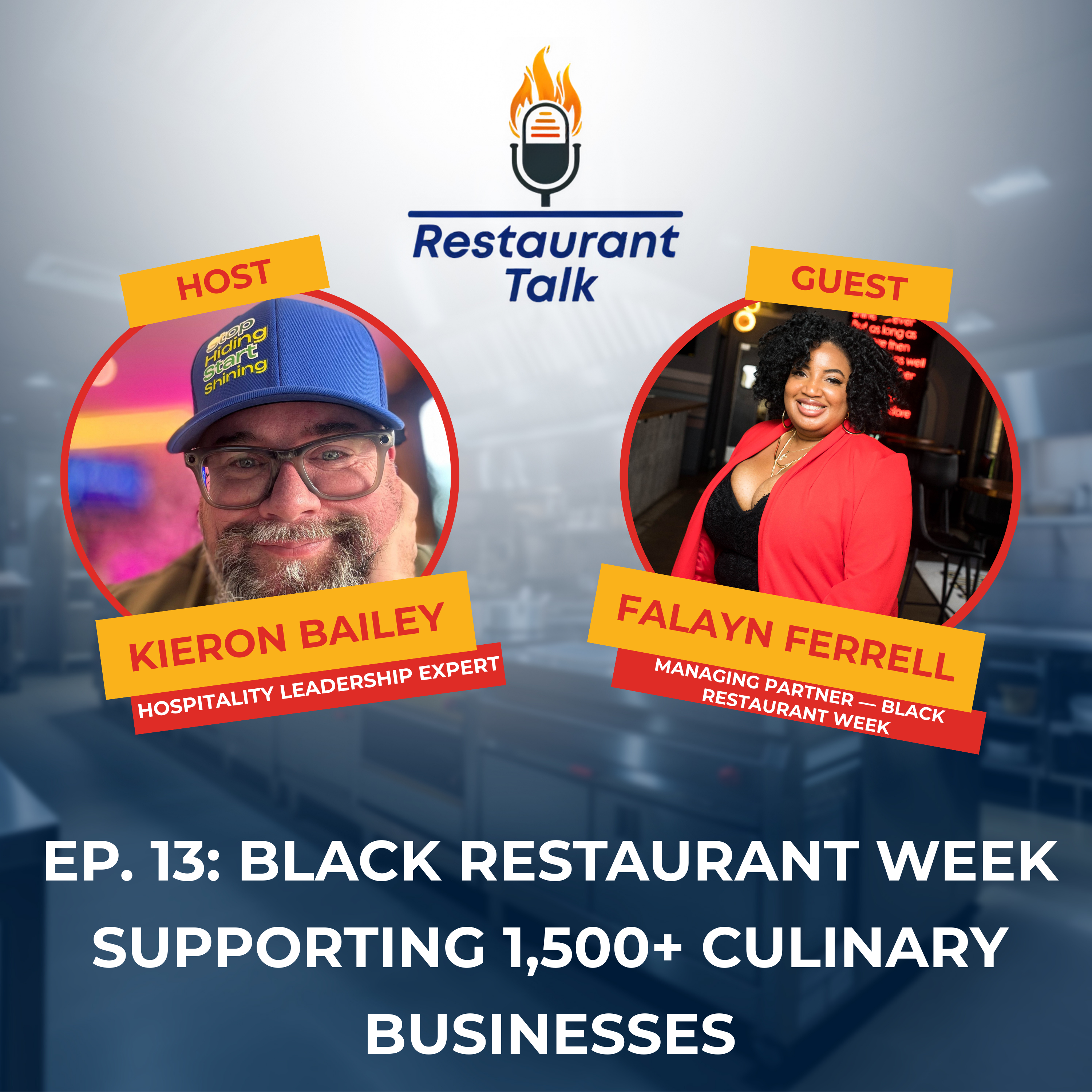
[00:00:31] Speaker C: Welcome to Restaurant Talk Podcast. I am your host today. Kieran Bailey and I have the pleasure of being joined from Texas, Fallon Farrell in Texas. How are you today, Fallon? You good?
[00:00:43] Speaker B: Yeah, I'm doing wonderful.
[00:00:45] Speaker C: Amazing sunshine in Texas.
[00:00:47] Speaker B: It's a lot of sunshine in Texas.
We'll get. We'll get to fall soon, but we got to enjoy the sunshine.
[00:00:54] Speaker C: I mean, you've got to take it while it's coming. You've got to take it while you come in. Fallon, I'm really stoked to be talking to you today. I think we're going to be talking, touching on the report that your organization has produced and how you're going to help be able to influence and impact the careers and the kind of support for small businesses. And I love that. So let's dig straight in.
Where are you from, Farrellon? What are we talking about and why are we here?
[00:01:19] Speaker B: Yeah, so, hi, my name is Fallon. I am from Houston, Texas, and I represent Feed the Soul Foundation. And we are here because we spent two years working on a industry report. I'm really interviewing small culinary businesses across the nation to understand what their pain points were, their challenges, but also their success stories.
And really a way that we could create programming to make sure that we could kind of close the gaps to some of the issues that they're facing.
[00:01:48] Speaker C: That's very cool. As a man who kind of is very, kind of closely connected to their small businesses here in the uk, you see that there are challenges that will be global challenges. And getting the information to folks about funding that's available to them is such a useful thing. Such a useful thing. So let's talk about why we're here in the first place and kind of what drives you to support hospitality because you're a marketeer by trade and a pretty talented one from what I can see. But you're really passionate about this industry. Where does that come from?
[00:02:18] Speaker B: Yeah, I would have to say, just growing up, my family was always attached to the culinary space. My dad was an executive chef and he got into the field through his uncle who had a catering business. And they've catered for presidents and Saudi Arabian princes. And, you know, when you think of a African American family kind of doing that at that time of the industry, it's really amazing. So I've always just had an affinity for the culinary space. I worked in restaurants in high school and college, really went into the marketing space. And then just through work I did with the Greater Houston Black Chamber, I met my business partner, Warren Luckett, and he pitched the idea of doing Black Restaurant Week, wanting to spotlight culinary businesses in Houston. And so the first year we did it, 2016, we had 20 restaurants.
Now we average about highlighting over 1500 businesses across the nation.
And I think when you really start to understand how impactful restaurants are to the local community, I always say they hire first, they're the first to give back in times of need.
When you really start to now understand what we did with the report is how even some restaurants, when they come into a space, crime goes down, other businesses next to them, sales go up. So, I mean, restaurants just have a way of creating direct impact to our local community. And when you start talking about what are ways we could solve some of the local challenges we have in underrepresented communities, it just seems that, you know, this is one space that gets kind of overlooked, but it's probably the one space that's making the greatest impact.
[00:03:55] Speaker C: I love that. And I think, I mean, I totally agree. Certainly in the uk, the hospitality is the third largest employer across the country.
And we, again, like most, in most countries, we get the least amount of support from government, which is just bizarre. So it's impressive that kind of you and your team are out there kind of really lobbying for that support and that funding to really help those small businesses. So let's touch on Black Restaurant Week then. So tell me about kind of like, what are the challenges of doing something like that? Because you start off kind of relatively small to begin with, and then it's like, right, let's grow this. Let's make a national impact.
What are the challenges and how are you overcoming them?
[00:04:35] Speaker B: Yeah, so I think it takes a little bit of insanity, first of all. Right.
But no, I think first of all, it's fun. I will say. Food is fun. So as we kind of delve into this, I mean, one aspect I always tell people is the easiest part of my job is telling one to some go, you know, telling someone to go eat. Right. It's like, we love food as a. It always unites people, it brings people together. So it's a. It's always a feel good project, I would say. And that really kind of inspired us to want to do more. So actually, the first year when we did it, one of the Top restaurants that was participating. The chef came up to us and said, next year, make it to.
And we were like, oh, I guess we're on or something. And so.
And we did it. Just kind of funding ourselves out of pocket. Like, we. We were just doing research. You know, we've never really organized a restaurant week campaign, and. And we just tailored it and kept growing it. And so how we grew the first few years, people would call us from other cities and say, hey, I saw what y' all did in Houston. Bring it to Philadelphia, bring it to New Orleans, bring it to the Bay Area. And that's how we really grew. The first few years, it was other communities saying, our businesses and our community need this here. And then when Covid hit, we just kind of restructured and was like, okay, well, let's support as many businesses as we can. And so we restructured it where we were doing regions and states, and it just kind of grew from there, working with corporate partners to really offset the cost. So we made it free to the businesses. So they're essentially getting free marketing, which a lot of them couldn't afford.
During COVID is really where you saw businesses come to us and say, like, if it wasn't for y', all, my restaurant would have closed. Like, you know, and so, you know, never underestimate the power of marketing. I would say, never underestimate the power of word of mouth. Like, it does. It does make a difference. Don't underestimate the power of pr. We've had restaurants that emailed us two months after a campaign saying, like, I'm still getting foot traffic from when I went on the local TV station, you know, that you booked me on. So I think being a part of something that you see direct impact is really powerful. You start to chase that.
Being a part of, like, organizations that have been in the communities for years, but you don't always get to see the economic impact of the work that they do. And then being able to create something and hear a restaurant owner say, no, this changed my life. Like, hear chefs say, I was homeless, but now I'm, you know, my business is thriving and all. Like, it is such a feel good project and such a powerful project. And really, I always tell people, show the power of community, how much we can help each other when we come together and unite around something that's, like, good.
[00:07:23] Speaker C: You know, I love that. And I think. I mean, hospitality is. Is often at the core of most communities, to be honest with you. I think one of the things that we talked about a little Bit beforehand was that in times of strife, in times of trouble, restaurants, bars, kind of, they're the folks who are stepping up and kind of helping out where they can if there is a particular challenge. And we saw that here in the UK through Covid.
Lots and lots of pubs and bars just doing amazing things to feed people who was really struggling. And I imagine it was exactly the same over there in the U.S.
yeah.
[00:07:55] Speaker B: No, it really is, I think. I mean, even just recently in Los Angeles with the fires. Right. I mean, the amount of restaurants that were stepping up to feed the community and just kind of help out where they can. So, you know, restaurateurs, you know, like you said, our nonprofit is called Feed the Soul. I mean, they really are the soul of the community. I mean, when you really talk to a restaurateur, most of them didn't even go to culinary school. You know, they're taking their grandmother's recipe and, you know, they probably got laid off from corporate America. Like, every time I walk into a restaurant and I'm talking to them of who's participating? I'm like, why a restaurant? Like, why did you do this insane business? And, you know, I mean. But you'd be surprised. I mean, we've talked to people that were like pharmacists and chemists. I mean, they've had these complex jobs, and then they turn around and are like, I'm gonna open up a restaurant. And so that industry is so much based off a passion and a heart to serve. And I just think sometimes we lose sight of that as a customer, we don't really understand that part. And so, yeah, I just think restaurateurs really are the soul of the community as much as they do for it.
[00:09:05] Speaker C: Love that. So that idea of kind of.
For me, I think there's a lot. I work with a lot of small operators across the UK and they don't have or they don't know how to find access to that kind of advertising space, that radio space, certainly that TV space, feels like the unattainable dream, to be honest with you, because the cost can be so prohibitive. How are you helping them to find an access to that? And let's talk about the impact of it. What sort of business impact have you seen so far?
[00:09:35] Speaker B: Yeah, so I really say the support of corporate and community partners. They essentially underwrite a lot of those costs.
And so basically, we're able to run, you know, social media ads, hire influencers who are starting to get very costly. But, yeah, that's a whole another story. But anyway, so really figuring out ways to bring attention to local restaurants, you know, even some of the smaller restaurants don't even have websites, right? So even having a listing on our, our website essentially becomes like a digital footprint for them. And so really I think it's through all that support that kind of helps. So what we've seen is direct financial impact. We don't take a percentage of sales that the restaurateurs get during the restaurant week campaigns. So literally they're able to look at their sales year over year and say, hey, during April when I participate in this, I saw a spike in sales, right? You'll see restaurants that may sell out a day or things like that, and they are able to reinvest that money back into their business.
And so the beauty is I've literally watched businesses kind of grow year over year, right? Get new restaurants, open up new concepts, just really achieve these amazing things because now they're known in the community. And you know, the old adage was in every community there was always only like one or two chefs of color kind of promoted like you never knew, like you just like those are the only chefs in the city. But this platform just allowed so many other chefs to have a voice. And so now it really does become a resource where I've also seen the chefs start to network with each other. So when we have events, the chefs are like, I've never been in a room with a bunch of other chefs that look like me, that understand my pain points, that, you know, we talk the same language. And we've seen those chefs partner and go after major, you know, corporate catering contracts. I mean, it's the power of like unity and networking. And they're so used to doing business alone and you know, in their restaurant, not leaving their restaurant.
And so they need that, that sort of community themselves. And so there's just so many takeaways that we've seen firsthand from, from doing this work.
[00:11:53] Speaker C: I love the idea of kind of building that networking community. I think, you know, I think back to my days when I was in operations.
I hated the idea of networking. I was terrified of it. I just, I'm going to walk into a room full of strangers and start trying to talk about myself, how great I am. And like a 51 year old version of me is pretty comfortable to tell you how wonderful I am, to be honest with you. But a 30 year old version was a bit like, no, that's not for me. But actually kind of once you start to work out how to make that work for you, and you start to feel that there is a place where you can walk in and you feel like you belong.
That becomes so impactful.
[00:12:24] Speaker B: I love that. Especially when it's, like, people that, you know, y' all talk the same talk, y' all understand the same things. And, you know, I feel like people assume outside looking in, there's, like, this competitive energy, and it's really not. I mean, I've. I've been in.
We had, like, a tasting event, and the three kind of, like, legendary soul food family restaurants were all in the building, and they all took a photo together wearing their polos with their logos or, you know, barbecue restaurants.
If you're in this neighborhood and I'm on the other side of town in this neighborhood, there's enough money to go around. And so I think some, you know, some assume that there's this. This competitiveness going on, and it's like, not really. There's enough energy for everyone to kind of feel the love and get the support they need. And so I've probably been most inspired by that. Like, they're not even coming to this space, you know, with this air. They're coming to the space open and ready to receive, you know, that energy. And I think that's been kind of cool, too.
[00:13:25] Speaker C: I mean, that's such an energizing experience when you see people who are coming into a room and thinking, we're just gonna. We're gonna work each. We're gonna work each other. Yeah. I mean, that. We talk about kind of competitive. Maybe that competition is, you're gonna drive me to be better and to do better and to be more innovative and to be more creative. But that's not a fight. That's just, like. That's just motivation is a simple answer.
And then the whole. I mean, the whole ecosystem then benefits from that relationship.
[00:13:52] Speaker B: Correct. Correct. I wholeheartedly agree. Like you said, just driving each other to be better. Right. And understand how to be better. And this is another pain point I always tell people.
So you'll see people chatter, customers chat online. They're like, went into this restaurant, customer service was terrible. And they kind of say it with this air of. That the restaurant owner doesn't know that their restaurant has these certain pain points.
And that's, like, a huge misconception. A lot of times when you talk to the restaurant, they're like, yeah, like, my customer service sucks, and I just don't know how to fix it. Right. And so I think people have to realize, like, running a restaurant is probably one of the Most complex small businesses you can run and the amount of fires that they're putting out at multiple times. And so it comes to a point where they just don't know how to fix it, or they don't have the money to fix it, or they don't have the resources to fix it. And so I think that's something to also take away, that they're really, genuinely trying. It's very far in between that you meet a business owner that really doesn't care. You know, I think the ones that don't care, they're probably doing money laundering or some other like that is not the people that genuinely want, like, their business to succeed, they care. They're like, man, like, I don't know what to do. And it's more so that frustration that you're experiencing versus, you know, I mean.
[00:15:13] Speaker C: No one's coming in and busting their backside every day because they don't care. You know, it's just like we see where we're falling short, as you say, then it again, it becomes about that kind of accessibility of kind of. Of tools to be able to create and correct. That, I guess, is a simple answer.
And again, I'm with you. You know, I kind of. I probably shouldn't say this on a podcast, but I have clients, like big corporate clients who pay lots of money. And then because they do that, I'm able to go and help the smaller businesses and do it for a much, much, much smaller amount of money because they need that support. And I think we've all.
And I love this sense from you that actually kind of. You've taken this sense of accountability and ownership of kind of trying to solve this problem. That's an amazing thing.
[00:15:56] Speaker B: Yeah, no, thank you. I appreciate it. And I think that's really been. There's just been, like you said, a lack of support. Right.
There's chambers, there's other things. But a lot of businesses that go through some of the programs we have with the foundation, they're just like, I've been a part of other small business cohorts, but this is the only one that is built for restaurateurs for this type of business. And even when we were building some of our programs, we had to tell one of our banking partners, like, make all your examples applicable to the food industry. Right? Like, don't come in here talking about a lawnmower company, you know, like our consulting company, like, these are restaurants. So if you're gonna be talking about balance sheet statements and whatever other examples you're giving make it food based. And so she restructured the whole program so that we were talking their language. And I think that's just even more power in the work that you do firsthand working with those businesses.
[00:16:57] Speaker A: Every day, fryer oil drains your profits. Dump, buy, repeat, Frylo ends the cycle. This small device sits in your fryer, doubles oil life and cuts costs by up to 50%.
The result, crispier, lighter, less greasy food.
No risk, nothing up front, no ongoing maintenance costs. Visit save fry oil and stop deep frying your profits.
[00:17:27] Speaker C: I think kind of that has been such a smart move to kind of, to use that language that makes sense to these individuals. Because, you know, like, I mean, I, I've been in hospitality operations the best part of my life. I left school with two very low end qualifications. I mean, I was looking at your resume and you're very well equipped. It's quite impressive. Me, I Left School with two GCSEs in religious education and art.
Don't really believe in God and can't draw photoffee. So I don't know how that happened, to be honest with you. But you know, I'm not the most academically minded and I think I'm kind of representative of a lot of people in our industry that we're doers by nature. You know, we want to go out there, we want to make people smile, we want to bring joy, we want to bring happiness and we want to inspire love. You don't necessarily do that with kind of having a bachelor's degree. That's not key part of it, you know, having the care and the love. Happily you've got the perfect combination of two, which already feels like a win. So how are you kind of, you've got a team, how are you inspiring them to kind of to, to follow through with this? And how are you picking those people to come in for part of your business to say, actually this is, this is our purpose, this is our drive.
[00:18:29] Speaker B: I think we all genuinely, we all genuinely are inspired. I think, you know, like I said, the restaurateurs are very vocal. So we, even when we get testimonials, I share it with my team. And you know, a lot of, a lot of times I tell everyone, like a lot of the greater community really hasn't heard some of those stories, like some of those impact stories. But our team sees it, we deal with the restaurants.
They're very vocal to tell you too. And so I think that inspires us to kind of keep moving. And then I think there's the power of seeing you directly Impact someone, right? Cause you could work on a project.
It's almost like a call center. We're calling restaurants all day, like, hey, fill out your paperwork. Hey, send me this. Hey, send me your menu. But then when you walk away and then you actually hear them pick up the phone and say, like, hey, this is the direct impact of me working with you. It does make you feel good to say, okay, well let me keep going. Like, let me keep striving further. And so I will say they're inspired just as much as I am from the restaurant owners and just the relationships we've built amongst that, I think it's really what keeps us going.
[00:19:38] Speaker C: Yeah. Seeing those moments of success and those moments of impact, that's proper soul food. Life's hard. And keep coming back and keep pushing forward.
And as much as kind of getting that funding from those corporate partners, that's hard going. You know, you've got to persuade people to give cash is a simple answer. And that's never the easiest thing in the world to do.
So let's touch on your report. You've spent two years kind of, kind of going through and, and I, I love the fact that you've done this because I think operators and hospitality people, we're very much kind of, we, we're driven by gut and our instinct. And I kind of believe that actually if you partner that up with great data, clear data, all of a sudden you start to become unstoppable. So let's kind of tell me about the report. What, what's taken two years? What was the objective to begin with? Have you and have you achieved that objective? I guess as a starting point?
[00:20:25] Speaker B: Yeah. So we would do a lot of press interviews and they would even ask us like, do you have data? Right. Or do you have a data point on this and data point on that? And we were just like, no, like really? The National Restaurant association unfortunately didn't have the deep dive data. And then there just wasn't any conversation. Especially when you looked at minorities in the industry, we would just see reports like 40% of the industry, you know, has minority ownership. But that was it. It's like, what else? And so we just really approached it with curiosity. Right. Like we assume things, but what is really happening? And so we were just, we met with University of Houston, their global hospitality program, and you know, two professors just kind of work with us. Like, we spent probably like two or three months developing all the questions. We actually have so much data, it's going to be two reports.
This is just the first Ed so the first edition, we really want to understand the impact of restaurants to their community and the whole conversation of is the community giving back like they should, to the restaurants and what does that really look like? The second edition is really going to be looking at the operational side because we know we always say restaurant owners usually start off with a lack of funding, but there's never been any data to correlate how that impacts their day to day business operations, right? So if you walk and you're like, hey, I only have this amount of money to start a business, there are certain aspects of my business I can't afford to do, right? I can't afford marketing, I can't afford technology. You know, I can't hire a human resource professional to come in and build out an employee training program. Like, I gotta do some of this stuff on my own. And so then that does start to affect your operations and your sales. And so we wanted to kind of get the data around that. Where are they kind of cutting costs because they couldn't necessarily afford it from their startup costs. And so that's, that's really what we wanted to dive into. There's just been talking points you've heard a lot about gentrification. Like that's a big urban word, you know, but is it helping or hurting, you know, your local mom and pop restaurant, what are their thoughts on that? And so it's been really insightful.
We approached the report saying like, hey, we want to interview you. Because I'm like, restaurant owners love to talk about themselves. So they really do.
[00:22:49] Speaker C: You gotta get them a cup of tea or a cup of coffee, sit down and let's rol.
[00:22:53] Speaker B: Like, we're not going to call it a survey, we're going to call it an interview. Like, tell us the breeze.
And so they were very like open and we just heard amazing stories and we, you know, a lot of them are captured on video. And so I think that just really kind of under helped us process. Like, is the work we're doing helping? Where does there need to be more support?
And that's kind of where we're going with it now. Like now how do we take this, get it to the hands of the people to say, oh, okay, here are five solutions to gentrification or something, you know, like these are things we could do to make sure our small culinary businesses are involved in some of the local policies that we're making for our community.
So that was really what we wanted to do with the takeaway of it.
[00:23:39] Speaker C: So, well, let's Touch on gentrification, kind of what has been the impact?
Is it a positive impact or is it actually kind of causing challenges?
[00:23:48] Speaker B: It's a mixture of both.
So, you know, costs are going up, right? When you really start talking about rent prices and things of that nature. And that does start to have an effect on a small business.
We've actually seen cases where small culinary businesses could have been in a community for 20 years, and then the landlord comes in and is like, I don't wanna renew your lease because I wanna bring in, like, a new poppin, you know, fancy. And so that business has to close or has to relocate. But I've been in this community for over 20 years, right. And it's just like I don't have a say so in that.
I think you see those instances, you also see the flip side where they get new foot traffic, there's new money coming in. So some are saying, well, hey, my costs are going up, but I'm also getting new customers in and new awareness, so that actually may help.
And then there becomes this conversation about cultural awareness. You kind of hear it especially in epicenters like Harlem or something. We're like, we're losing the culture. Right. And if you think about culture, food is at the heart.
And so if the culture of the community changes, the palate changes too. And so, you know, you do start to see that affect. Some of the restaurant owners say they've had to either adjust some of their menus or adjust the palate. Maybe I don't need to make my food as spicy or something to appeal to the new group. But there's really been a mixed effect, I think, of gentrification. So one of the things we say is, I think when redevelopment is happening in a community, can we start bringing the restaurant owners in that have been there like staples in the community? Should we make sure that they're involved in some of this urban planning so that either we're building around what they build, or at least they have the knowledge to know what's coming? They're not just waking up one day and seeing buildings being tore down. Right. Are they able to offer their insight on what they've seen as a business owner in the community? And I don't know if that necessarily happens as much as it should.
[00:25:52] Speaker C: Yeah, I mean, I would say, certainly, again, from a UK perspective, we. We don't have enough of that.
And I imagine that's very much the same across the world, to be fair, because it's easier to. To do things and to make change for Developers and kind of the money people, if the folks whose lives who are going to be impacted by it directly aren't in the room to have those conversations.
So from a kind of. Are you helping kind of businesses get access to their. Their counselors and their district councillors? Because again, over here, it's not something that happens a great deal. You know, always think that every major city should have a hospitality, a hospitality czar, if you will. The kind of that advisor who is the link between the businesses and the council and the bureaucracy, I guess, is the reality. So are you able to help them get access to the councils to be a part of those conversations?
[00:26:41] Speaker B: Yeah, so that's where the conversations start. We literally met with our city council member two weeks ago, right, to start to have these conversations. I am starting to see some cities that have this nightlife, entertainment, kind of like you mentioned, position through the mayor's office because you start to realize how much of a financial impact this industry has on a city and, you know, just weather and all the stuff that goes along with that. So you are starting to see that pop up in certain cities. I know Atlanta, Dallas has that. That position.
But I agree. I've actually been a part of, like, redevelopment authorities, and it's usually like this call out to the community. But the question becomes, when are you hosting the event? Right. Because when we do any programming for the restaurant industry, we always do it on a Monday because either they're closed for the day or the business is slow so they can actually leave their restaurant. And so if you're really intentional about wanting certain impact, are you really doing it where the business owners have a chance to participate?
And I think some of it is a call on the business owners. I met one restaurateur and she told me, like, hey, every time I get a new, you know, representative, I invite them to my shop to have coffee. And I was just like, you know, that's such a small thought process, but it's a big impact. So if her restaurant gets flooded out from one of the many hurricanes we have in Houston, like, she could pick up and say, hey, knock, knock, remember me? Like, tell me where the funding's at. And so I think also educating the restaurant owners to understand the power that they have. I don't think they process the power they have in local government and how much they can move the needle.
And so there is the independent restaurant coalition that is starting to do more advocacy work. They did a lot of advocacy work during COVID to get certain funding and the revitalization fund for restaurants, I think the restaurant industry is starting to realize we need to organize a small independent operator so that the big chains don't always get all the funding.
And I think to your point, now it's our job to start to make the connection to these different groups and the restaurant owners.
[00:28:51] Speaker C: I mean, it can be so impactful. I mean, in the UK we've got London, Manchester and Birmingham each have one of those kind of nighttime advisor roles, and which is great, but the nighttime economy is only a small part of hospitality. You know, you kind of. You have a lot of businesses that are operating. I mean, anybody who's serving a good brunch, they are my happy place, if I'm honest with you. So I want those folks to get the support as well, because, like, I'm old now, I'm not going out to nightclub. So I'm not really benefited from that, from really honest with you.
[00:29:17] Speaker B: Right.
[00:29:17] Speaker C: So you've got to kind of of COVID the whole base and make sure the whole industry is getting that level of support and protection.
I love this. This is. This is really working for me. So kind of, what else did you come across through the report? What, what else. What were the kind of the big points that you just thought, bam. Was there anything that really surprised you?
[00:29:35] Speaker B: So when you talk about tourism and it's something you kind of knew, but you, you know, so I think we saw a majority of restaurants were not connected to their local visitor center tourism bureau.
And we really start to process the amount of money that's going into, like, culinary tourism has become its own thing. Right. You know, due to TikToks and Keith Lee's and all these things, people are literally traveling to cities just to eat. And so.
Or when we talk about major food festivals and conferences coming to cities and a lot of those smaller businesses not being attached to that, just the amount of money they're losing.
Everyone in the US Is prepping for the World cup next year. Right. And it's just like, how involved are small businesses, small culinary businesses in that process to make sure that when this wave of tourism comes, you know, that they're getting involved in and some promotional opportunities, some corporate activations. And so I probably say that's like the biggest red flag because it also lends itself to other food and beverage contracts with a lot of small culinary businesses say they don't. Aren't aware of either.
So I think understanding that connectability piece, when you talk about revenue being so tight and it's like, if I could get this great catering gig or something like that that could help push my revenue over for this month. So I think we have to start to figure out ways to get them involved in that type of funding that's just naturally already happening in the city.
So that's probably been another big takeaway. We've seen.
[00:31:08] Speaker C: I love that. I mean, as a man who truly loves football and has done from being a boy, the World Cup's gonna be a great opportunity for your country. It's gon huge.
Football fans travel and they travel in numbers and they like to eat and they like to drink.
Big combination.
So there's a massive opportunity for you there. And I think also you kind of. You touched on the idea of kind of food tourism. I was in. I was in Nashville earlier in the year and I went to the unreasonable hospitality Summit. But rather than kind of staying in Nashville, in the center of Nashville, which was a party, that thing, that place is insane.
I kind of, I. I heard about this restaurant on Instagram, show pizza bar that's kind of taken kind of this Japanese pizza dough and just done something really different with. I was like, well, boom, I'm in Nashville. It seems odd that I wouldn't go there, to be fair. And I find myself sitting on a bus traveling through Nashville chatting to. To local residents who were just like, what are you doing, dude?
I'm wondering for pizza and like, 35 minute bus. I've made three friends by the time I've got off that bus fell. And I'll be honest with you, like, you just got to be open to the world, hasn't you? I think it's kind.
So from your perspective, kind of, what's the one objective that you want to achieve with this first report and then certainly with that second one. I love the fact you got that much data.
[00:32:25] Speaker B: Yeah. I think really, when they say data is oil now the power is in data. So I think now we can have better conversations. Right when we are talking to different cities.
For instance, we just finished Atlanta Black Restaurant Week campaign, and there were a couple of local visitors bureaus that stepped in to kind of help support the campaign. And now we have the data to say, hey, why this is important and how can we connect y' all so that you could do more things with the restaurants even after we leave? Like, here are all the restaurants that participate in your district. What are other ways we could offer them different contracts? And so it just allows us to have way better conversations with corporate and community leaders to see where are the gaps that are easy to be filled?
I think when you really get in this grassroots community groundwork planning, there's this assumption everything has to be fixed at this top federal, national level, right? And the reality is a lot of things could be fixed locally just by people coming together.
One coalition we are part of is called the Moore Coalition. It's like James Beard foundation, regarding her Southern smoke. All these phenomenal nonprofit food and beverage organizations and, and even some of the work we're talking about doing together is like, hey, like, you're doing curriculum training. You're doing curriculum training. Like, why don't we just kind of partner together? Or if I'm looking to launch a new program, like, instead of me trying to, you know, recreate something now, I could go to one of my nonprofit partners and say, hey, do you have some curriculum I could pull? And so I think that's the beauty. Like, now we could just.
Just be more effective to the restaurateurs and the food and beverage workers that we're serving.
And we have the data now to back up to say, this is where they need help with. And here's an easy solution.
Honestly, there's probably programs that are already happening that just need attention to it. It's like, you could probably talk to city councilmember, like, oh, well, we already have a program that does this. It's like, nobody knew.
[00:34:34] Speaker C: You should just whisper about it. Yeah, stop whispering, man. Start shouting.
[00:34:39] Speaker B: Okay, cool. And I always tell them, I'm like, you know, we. Our email newsletter that we sent to our restaurant list, our restaurateurs, has a 50% open rate. I'm like, we're the ones that are getting them the data, getting them the information.
[00:34:52] Speaker C: 50%.
[00:34:53] Speaker B: 50%. So I'm like, a lot of the restaurants in our network are not attached to the restaurant association, are not attached to the chambers. So if there's a grant, if there's a program opportunity, like, like, send it to us because they're. They're opening it and they're going to look at it. And so, you know, so that was. We were telling her, like, just let us know of what's going on, because they're not getting this information any other way.
[00:35:18] Speaker C: I mean, that click. That open rate is. Is.
[00:35:20] Speaker B: Is.
[00:35:20] Speaker C: Is. Is. Is a magnificent representation of your work as a marketeer, to be fair. I mean, I know businesses that would crave a 50% open rate, to be honest with you.
Genuinely, that's. That is quite outstanding.
[00:35:32] Speaker B: And it's really because we become resourceful. It's like, they know that when I open this email, like, you're here to. You're here to help me. Right. And so it's like, okay, you're not sending me fluff. You're sending me information about training, a grant, some other opportunity that I wouldn't have known about. And so, like, you said it. Yeah. So we get. We get a really good engagement with it.
[00:35:54] Speaker C: Well done, really impactful.
So tell me what. What's the. You're obviously talking to a lot of food businesses and a lot of food trucks and kind of businesses like that, I think, which is where a lot of really cool innovation comes from. What. What's. What's coming next out of Texas that's going to blow people away. Is there anybody that you're linking off is just like, oh, my. So good.
So are you not allowed to have favorites?
[00:36:18] Speaker B: No, no. I. Well, yeah, but no, I actually, I love the Houston food scene, but I would say West African food is really starting to trend.
So you really. There was a list that came out.
Chopping Block, which is a Nigerian style restaurant in Houston, is doing really well, and they're starting to get a lot of national recognition. And then there was a list that came out today, and was it Dakar Enola in New Orleans? So I think just, you know, it's still an untapped, I would say, flavor profile for the US Is African cuisine. And so we're really starting to see that pop up. Amazing. You know, what Chef Kwame is doing in New York with Tatiana? So I really think that is. Is the new wave of, like, flavor profiles is, I think, gonna be, you know, African foods. And then there's this fusion between them then marrying it with other, like, Caribbean. There's a restaurant in Houston called Ray's where they kind of do a Caribbean and African kind of, like, fusion of food. And so it's just. I think that's gonna be the next wave of flavor palette.
[00:37:23] Speaker C: I love that. I think we're on a similar kind of path.
There's a restaurant in London and the branding is superb. They're called the Flyger, which I freaking love that name. It's so good. Such a good name. And, like, they bring the energy, they bring the party.
I met them at a. At an award ceremony, and by God, those two ladies were outstanding. Blew me away. But the food is incredible. And you can start the flavor kind of explosions are just like, bam, bam, bam.
And I know my man who doesn't really do spice by any real nature. My wife is embarrassed of me for that. But I love. I love a deep flavor. And you Kind of start to feel that coming through.
So my final question, thinking about you on day one of kind of coming up with this as a basic premise, as an idea and kind of having this moment, inspiration, is there one piece of advice that you would give yourself now, knowing what you already, knowing what you've learned in this time? So what advice would you give? Day one, You.
[00:38:28] Speaker B: So I think two things. So, actually met a restaurant owner in California, and she told us this, like, year three or four, and she was like, you know, when you start a business or you start a project, you're kind of on this go, like, I gotta get to success. I gotta be successful. So you're kind of like chasing the rabbit, essentially. And she mentioned, you know, basically to stop, look around and appreciate everything that you've done and where you're at now and, you know, stop trying to look ahead, like, appreciate the moment. And I would just say that's probably been the most impactful. I think even during this report process, we just kept being like, you okay, Is it ready to come out? Is it ready? You know, like, we kept trying to rush the process, and it was almost like it needed to come out when it came out. Right. And I think anytime in entrepreneurship, you get too caught up in trying to chase something that you kind of lose the small moments. And so I really, really honestly appreciate that more. There are a lot of times, you know, I just look up, and if we're in a city that I've never been in, talking to a restaurant, like, you have to appreciate those small moments and be present in those small moments as a business owner you could be in, but still thinking about 30 other things and not just seeing the beauty of what that moment is. And so that's really kind of helped me a lot, just kind of process a lot of things that we've done to understand just how powerful the work that we've done. And so I'm able to talk about it with a smile. Right. It's like not saying that I haven't struggled. And even now with everything going on in the economic climate and the funding that's starting to dry up, but I'm still passionate about what we do. I still know that we're doing something good for the community. Community. And so I just, you know, have belief in God, that he's going to, like, make a way, because he's always made a way. You know, like I said, we. We did not start off with funding the funding out of pocket, and just God has just blessed us along this path and I truly believe it's because we're genuinely supporting communities and genuinely want to see people win. And then it's like the final thing, people, when we were starting this project, we would tell our publicists, like, don't give us price.
Like, give the restaurant owners press. Like, they're the ones who want a platform. They're the ones that we want to really show to the community. And we've just gained their respect and their hearts. And so, you know, I don't take that lightly. Like, I genuinely want to make sure that we're setting them up for success for future generations. So that will probably be my takeaway to just like, really live into the moment.
[00:40:58] Speaker C: I mean, it matters. It matters. We get so caught up with thinking about what comes next, but just taking a moment, taking a beat and just thinking, actually, this is pretty cool. Fallon, I'm kind of. I've thoroughly enjoyed this conversation. At some point, I'm going to come to Houston. I'm going to hit you up for a guided tour.
And I'm kind of. I'm thinking about your.
[00:41:16] Speaker B: You. I'm going to tell you, my favorite pastime now is watching British kids eat American food.
[00:41:22] Speaker C: Like, that's a hobby and a half. That one.
[00:41:28] Speaker B: One episode, they were eating, like, Popeyes chicken. They're like, it's so crispy. And then, like, another one, they were eating, like, brisket, and they were just like, oh, my gosh.
[00:41:37] Speaker C: Yeah, changing the. It is.
Popeyes have come over here and they've absolutely killed it. They really have. They've absolutely nailed it. So it's nice to see kind of some of those brands making their way across, to be fair, and indeed, some of ours coming across to you. You know. Yeah, I say I was. I mean, Wagamama is one of my favorites, but they've, I think, three sites in the US now, but there you go. So I'm. I'm genuinely. This has been an absolute joy. And. And I'm kind of. I'm thinking back to. To your dad, and I'm thinking back to kind of the work that he did. And I'm thinking he must be sitting there feeling incredibly proud of the impact that you're having.
And I would say thank you so much, because it is our industry and it is a beautiful obsession, and it feels like one that we share.
[00:42:18] Speaker B: Thank you. Thank you. I appreciate it. Thank you for talking to me today.
[00:42:21] Speaker C: It's been an absolute joy. Thank you so much, Fallon. Have an amazing day.
[00:42:24] Speaker B: Okay. Thank you.
[00:42:27] Speaker A: Thanks for tuning in to Restaurant Talk. If you enjoyed the episode. Please follow, subscribe and share. Thanks to our sponsor, Save Fry Oil. See you next time.